google.com, pub-5827770858464401, DIRECT, f08c47fec0942fa0 https://misteri1963.blogspot.com.esgoogle.com, pub-5827770858464401, DIRECT, f08c47fec0942fa0https://misteri1963.blogspot.com.argoogle.com, pub-5827770858464401, DIRECT, f08c47fec0942fa0https://misteri1963.blogspot.com.cogoogle.com, pub-5827770858464401, DIRECT, f08c47fec0942fa0https://misteri1963.blogspot.com.brgoogle.com, pub-5827770858464401, DIRECT, f08c47fec0942fa0 Misteri1963

Translate

Panama papers, gürtel plot

Correa visited Panama at least 26 times between 2004 and 2008
The Spanish justice also asked about a possible request for nationality Bonnet Gürtel in the Central American country FRANCISCO MEDINA
Francisco Correa, the principal involved in the plot Gürtel, turned their trips to Panama into a routine that during the years of greatest splendor of the plot, rather appeared to convert the Madrid-Panama in their particular aerian bridge.
In fact, as stated in one of the volumes of the indictment in the High Court on the activities of Correa, only in his last year released, 2008, perhaps it besets because I knew that justice was on his trail, man-Gürtel He traveled to Panama on seven occasions.
26 trips in just four years
Of course, as a document of the National Directorate of Immigration and Naturalization of the Ministry of Government and Justice of Panama between 2004 and 2008, Francisco Correa entered his country at least 26 times. Many of them, incidentally, not only flying from Spain but also from the United States and, on one occasion, from Colombia.
This entire period, the year 2007 was in most cases Correa traveled to Panama to nine times. He traveled in four in 2006 and three in 2005 and 2004 to the total of 26 trips that seemed more menudear as their legal situation was complicated.
Double nationality
In fact, many trips to Panama evidently aroused the curiosity of the Spanish justice, which made numerous requests to the justice of that country about the adventures of Francisco Correa there. Moreover, at a certain moment, the police and the Spanish prosecution alleged corruption detected movements Correa to try to get dual citizenship. Suspicious activity that led them to send a rogatory to the Panamanian authorities, who conducted investigations turn which were derived at least some illicit efforts by a local law office.
The conviction of justice was that Correa was moving to settle in that country to evade the Spanish police actions. A society Panamanian screen So far in so-called 'papers Panama' has not been implicated directly to Francisco Correa, or any other person involved in the Gürtel, but does appear in the summary of the High Court that the lawyer's office Mossack Fonseca I think in that country for Correa himself and the former mayor of Boadilla del Monte, Arturo González Panero, the albondiguilla, along with two other people, a society screen, Itelsa. Society was liquidated shortly afterwards and whose funds were distributed among other companies involved screen.

Catalonia holds with its economy to Spain


Oriol Junqueras: the Spanish deficit is based "largely" in the Catalan growth
The Minister of Economy of the Generalitat, Oriol Junqueras, said Wednesday that the Spanish deficit growth is based "largely on economic growth there in Catalonia".
In response to a question from JxSí in the control session the Government, he said that the Catalan economy grew 3.4% in 2015, while the deficit was 1.9%: "It is clear that the economy grew much more that debt, while the Spanish state debt grows much more than the economy. " Thus, it has been argued that the State's indebtedness represents 100% of GDP and that its increase depends on the Catalan economy continues to grow, so has asked the central government to note that "the growth of the Catalan economy is good for all the world".
Source: Europa Press

An old Strauss-Kahn company created 31 companies in tax havens


An old company Strauss-Kahn created 31 companies in tax havens 
A fund of Luxembourg investment, chaired until 2014 by the manager former director of the IMF Dominique Strauss-Kahn, helped set up 31 companies in tax havens A fund of Luxembourg investment, chaired up 2014 by the former director manager IMF Dominique Strauss-Kahn, helped set up 31 companies in tax havens, the newspaper 'Le Monde' thanks to the data obtained in the 'papers Panama'. The Leyne, Strauss-Kahn & Partners (LSK) fund, created by his partner Thierry Leyne, opened and managed companies in havens such as the Seychelles, Panama, Hong Kong or the Virgin Islands for clients such as French investors Asian or rich audiovisual producers, adds the newspaper. the fund served its subsidiary Assya Asset Management Luxembourg (AAML) to operate those companies whose data appears in the leaked documents Panamanian law firm Mossack Fonseca. Most of these structures opened domiciled bank accounts in Switzerland, Luxembourg, Panama and Hong Kong with the alleged aim of "hide the real identity of the beneficiaries of the funds , " adds Le Monde. However, it specifies that the activity of AAML dates back to before the arrival of Strauss-Kahn to LSK presidency in October 2013. Just a few months earlier, the former director of the International Monetary Fund (IMF) attacked before the French Senate "unjust consequences" of the tax havens, which "deprive the state of tax revenues". at the same time, the former economy minister criticized those "financial instruments founded on opacity" which is "very destabilizing". In March, the French prosecutor has opened a judicial inquiry into LSK by organized fraud and abuse of social goods and trusted band. LSK left a liability of about 100 million euros and a total of 150 creditors, many of them attracted by the aura of solvency attributed to French politician 

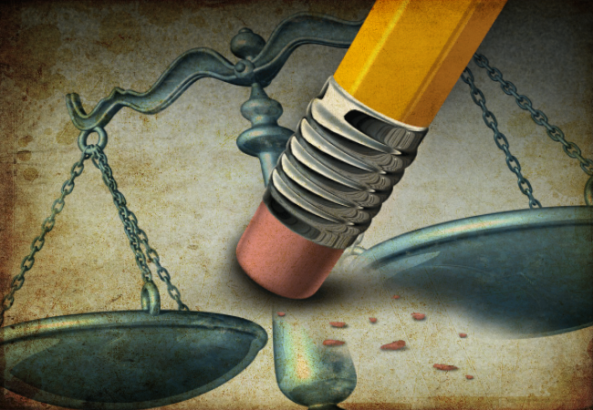
WHY IS IT SO JUSTICE "SOFT"


It is a reality that every day we see on the news and makes us angry.
Unscrupulous murderers, murderers of all kinds, cruel and despicable rapists and fraudsters are judged unaccountably later released. Sometimes it is because of errors in the procedure, others for lack of evidence or contamination, and sometimes just seems that to the judge on duty the pot has gone completely.
And it is especially bleeding cases in which, moreover, is a recidivist criminal. When it comes to a person who, despite not being rehabilitated in any way, is released and a few days comes the news that has found a new victim to that attack, kill or rape.
A_00000
All this leads to say to many people, and with a point of reason, that the Spanish justice is too soft, that is too garantista . Our legislation tends to protect the criminal and leaves too completely helpless victims and their families. And in fact, all now come to mind the image of a desolate Sevillian family has spent years waiting for justice for the murder of his daughter.
But there is a question to ask ... our righteousness is as guarantor for those who break the law?
100,000
Recall that persons have been sentenced to prison for writing tweets of 140 characters for refusing to demolish their house or even steal a chicken (true) in Spain. People like Miguel Montes Neiro, who have spent 36 years in jail despite having no violent crime, or the creator of a website sentenced to 6 years in prison for "violating intellectual property" downloads.
The Spanish penal code, contrary to what many people think, is one of the toughest in Europe. So the problem is not that the law is too soft. The problem is in  how it is applied . And besides, itseems that justice is particularly lax only in those cases highly  media  and spread terror among the population when dealing with murderers, rapists or child molesters.
But why does this happen? Are our judges are idiots, or they feel sorry for criminals and a strong commitment to human rights?
Let's stop for a moment. What happens when someone with serious crimes has been released?
1 2_00000
The first effect is that we think that "justice should be tougher." It comes to mind that should open more prisons, that the penalties should be longer, and even that torture is necessary to obtain certain confessions and that should allow the death penalty.
This is a first psychological reaction of the population. But then comes the second effect ... and that is, obviously, to be released very dangerous people indeed increases insecurity in the streets, or at least perceived by society as well.
What they never tell us is that this is a propitious for subjecting the population to a new level of vigilance and alienation, under the pretext of "security" culture. If in our peaceful city released suddenly a murderer vicious serial wreaked havoc decades ago, if every day we see in the news cases of people assaulted or raped in the street without the guilty tread jail ... who is not afraid ?
It is the perfect strategy to slowly lead to the sheepfold. If we have so lethargic, so inefficient and so liberal justice that leaves dangerous criminals on the streets ... We'll have to do something to protect us , right? And here comes into play juicy and profitable billion dollar industry of  private security .
1 3_00000
And we do not know to what extent can the intrusion of private security in our lives ...
In a few years, everyone, regardless of age or social class, all have cameras recording in our own homes that will monitor everything we do at all times, for our  safety . Unknowns looking across the target what you do in your most private moments , that are not your guardian angels but employees of a company to which your security actually gives a horn and you're looking to make a profit ... And if you have to sell the information from the cameras to another company to send you advertising, a scammer to know your habits or any state agency to monitor a possible dissenting attitude on your part ... neglected, it will. Money calls to money.
The worst thing is that this big brother who will look at us from every corner of our house we have not installed to force the minions of a totalitarian dictator ...  What we have done by themselves , so confident and so happy!
1 4_00000
Like so confident we climbed our most intimate and confidential one thing files called "cloud" ... Curious name for what are actually  other people 's computers , as such, can hack and spy on their contents.
Repression does not come as a dictator gives a coup and boots of their soldiers tread the head of the terrified citizens ... The repression comes when, through  psychological warfare , citizens we are manipulated to  ask for more repression , and it is then slowly cold and we provide small doses of censorship, surveillance, control ... until the drug safety has completely killed that free human being that we all have inside.
Everything indicates that the future is so ... And in the meantime, what can we do? For the moment, do not fall into their trap: stop thinking that justice works so badly by pure chance or clumsiness of judges and start asking who gets benefits with this. And as someone continues to derive benefit, Neglect: that nothing will "harden" the laws or including life imprisonment in the penal code.


POR QUÉ LA JUSTICIA ES TAN “BLANDA”

Es una realidad que cada día vemos en los telediarios y nos enfada.
Asesinos sin escrúpulos, homicidas de todo tipo, crueles violadores o estafadores despreciables son juzgados e, inexplicablemente, puestos en libertad posteriormente. Unas veces es por fallos en el procedimiento, otras por falta o contaminación de pruebas, y en otras ocasiones sencillamente parece que al juez o jueza de turno se le ha ido la olla por completo.
Y resultan especialmente sangrantes aquellos casos en los que, además, el criminal es reincidente. Cuando se trata de una persona que, pese a no estar rehabilitada de ninguna de las maneras, es puesta en libertad y a los pocos días sale la noticia de que ha encontrado una nueva víctima a la que agredir, matar o violar.
A_00000
Todo esto lleva a afirmar a muchas personas, y con un punto de razón, que la justicia española es demasiado blanda, que es excesivamentegarantista. Que nuestra legislación tiende a proteger demasiado al criminal y deja completamente desamparadas a las víctimas y a sus familias. Y de hecho, a todos ahora mismo nos vendrá a la cabeza la imagen de una desolada familia sevillana que lleva años esperando a que se haga justicia con el asesinato de su hija.
Pero hay una pregunta que debemos hacernos… ¿nuestra justicia es igual de garantista para todos aquellos que incumplen la ley?
1_00000
Recordemos que en España ha habido personas condenadas con cárcel por escribir tuits de 140 caracteres, por negarse al derribo de su casa o incluso por robar una gallina (es cierto). Personas como Miguel Montes Neiro, que han pasado 36 años en la cárcel a pesar de no tener ningún delito de sangre, o el creador de una web de descargas condenado a 6 años de prisión por “atentar contra la propiedad intelectual”.
El código penal español, a contrario de lo que mucha gente piensa, es uno de los más duros de Europa. Así que el problema no está en que la ley sea demasiado blanda. El problema está en cómo se aplica. Y parece, además, que la justicia sólo es especialmente laxa en aquellos casos altamente mediáticos y que siembran el terror en la población al tratarse de asesinos, violadores o agresores de niños.
Pero, ¿por qué ocurre esto? ¿Nuestros jueces son idiotas, o es que sienten pena por los criminales y un fuerte compromiso por sus derechos humanos?
Vamos a detenernos un momento. ¿Qué ocurre cuando alguna persona con delitos graves ha sido puesta en libertad?
1 2_00000
El primer efecto es que pensamos que “la justicia debería ser más dura”. Nos viene a la cabeza que se deberían abrir más cárceles, que las penas tendrían que ser más largas, e incluso que la tortura es necesaria para obtener ciertas confesiones y que se tendría que permitir la pena de muerte.
Esta es una primera reacción psicológica de la población. Pero después viene el segundo efecto… y es que, obviamente, al quedar en libertad personas muy peligrosas efectivamente se incrementa la inseguridad en las calles, o al menos la sociedad así lo percibe.
Lo que nunca nos cuentan es que este es el caldo de cultivo propicio para someter a la población a un nuevo nivel de vigilancia y alienación, bajo el pretexto de la “seguridad”. Si en nuestra pacífica ciudad sueltan de repente a un sanguinario asesino en serie que causó estragos décadas atrás, si todos los días vemos en las noticias casos de personas agredidas o violadas en plena calle sin que el culpable pise la cárcel… ¿quién no siente miedo?
Es la estrategia perfecta para llevarnos lentamente al redil. Si tenemos una justicia tan aletargada, tan ineficaz y tan progre que deja a peligrosos delincuentes en la calle… Tendremos que hacer algo para protegernos, ¿no? Y es aquí donde entra en juego la jugosa, rentable y millonaria industria de la seguridad privada.
1 3_00000
Y no sabemos hasta qué punto puede llegar la intromisión de la seguridad privada en nuestras vidas…
En unos pocos años, todos, sin importar edad o clase social, todos tendremos cámaras de grabación en nuestras propias casas que monitorizarán todo lo que hacemos a todas horas, por nuestra seguridad. Desconocidos mirando al otro lado del objetivo lo que haces en tu más absoluta intimidad, que no son tus ángeles de la guarda sino empleados de una empresa a la que tu seguridad, en realidad, le importa un cuerno y lo que busca es obtener beneficio… Y si ha de vender la información de las cámaras a otra empresa para que te envíe publicidad, a un estafador para que conozca tus hábitos o a algún organismo estatal para que vigile una posible actitud disidente por tu parte… descuida, lo hará. El dinero llama al dinero.
Y lo peor es que este Gran Hermano que nos mirará desde cada rincón de nuestra casa no nos lo habrán instalado a la fuerza los esbirros de un dictador totalitario… Lo habremos hecho nosotros solitos, ¡tan confiados y tan contentos!
1 4_00000
Al igual que tan confiados subimos nuestros archivos más íntimos y confidenciales a una cosa llamada “la nube”… Curioso nombre para designar a lo que en realidad son los ordenadores de otras personas, que como tales, se pueden hackear y espiar sus contenidos.
La represión no viene cuando un dictador da un golpe de Estado y las botas de sus soldados pisan la cabeza de los aterrorizados ciudadanos… La represión viene cuando, a través de la guerra psicológica, a los ciudadanos se nos manipula para que pidamos más represión, y es entonces cuando fría y lentamente se nos suministran pequeñas dosis de censura, de vigilancia, de control… hasta que la droga de la seguridad haya asesinado por completo a ese ser humano libre que todos y todas llevamos dentro.
Todo apunta a que el futuro sea así… Y mientras tanto, ¿qué podemos hacer? Pues de momento, no caer en su trampa: dejar de pensar en que la justicia funciona tan mal por pura casualidad o torpeza de los jueces y empezar a preguntarnos quién obtiene beneficio con todo esto. Y mientras alguien siga obteniendo beneficio, descuidad: de nada servirá que “endurezcan” las leyes o que incluyan la cadena perpetua en el Código penal.

Artículo escrito por LIBRE PENSADORA

Entrada destacada

PROYECTO EVACUACIÓN MUNDIAL POR EL COMANDO ASHTAR

SOY IBA OLODUMARE, CONOCIDO POR VOSOTROS COMO VUESTRO DIOS  Os digo hijos míos que el final de estos tiempos se aproximan.  Ningú...