google.com, pub-5827770858464401, DIRECT, f08c47fec0942fa0 Misteri1963 : 07/26/18

Translate

jueves, 26 de julio de 2018

Oh, la realidad!


Oh, la realidad!

Algunas realidades difíciles pueden llegar a ti duro y rápido. Lo que pensaste que sería o podría ser ha cambiado en un abrir y cerrar de ojos, dejándote girare incapaz de encontrar tu centro Cuando te encuentres en medio de una de estas experiencias que todo lo consumen, por favor recuerda esto; El Universo siempre ha tenido un plan para ti. Sí, hay libre albedrío y la capacidad de elegir un número infinito de rutas, pero siempre ha habido un resultado final configurado y esperando por ti.  Cómo has llegado siempre ha sido tu decisión.
Escuchar cuando estás en medio de un momento difícil no siempre es fácil, pero se puede hacer. Aunque puede ser desafiante; pida claridad, recuerde respirar y saber que The Universe está ahí para apoyarlo y amarlo mientras le ofrece otra perspectiva. ~ Creador

Oh, The Reality!


Some tough realities may be coming at you hard and fast.  What you thought would be or could be has changed in the blink of an eye, leaving you spinning and unable to find your center.  When you find yourself in the middle of one of these all-consuming experiences, please remember this; The Universe has always had a plan for you.  Yes, there is free will and the ability to choose an infinite number of paths, but there has always been an end result set up and waiting for you.  How you get there has always been up to you.
Listening when you are in the throes of a trying time is not always easy, but it can be done.  Even though it may be challenging; ask for clarity, remember to breathe and know The Universe is there to support and love you while offering another perspective. ~ Creator

Enfrenta tus dudas, temores y ansiedades,

Enfrenta tus dudas, temores y ansiedades, y pide ayuda y apoyo para tus grandes sueños.

Si te sientes ligeramente desequilibrado, emocional y vulnerable Este es un gran momento para la transformación, la expansión y la limpieza de algunas antiguas inseguridades emocionales e hirientes.

Podemos perder la orientación, nuestro ímpetu hacia adelante, también es un buen momento para revisar los detalles de su entorno físico y poner un poco de energía en lo que lo ayudará mejor

Echa un vistazo con nuevos ojos a lo que ha estado aguantando y tome algunas decisiones para mejorar su entorno.

La gran curación es posible y el perdón es la clave.

El placer y la alegría provienen de transformar nuestras vidas, hogares y construir nuestra visión más profunda a largo plazo para el futuro. Lo que sea tangible y práctico será lo más atractivo y magnético, nuevas maneras a nuestros desafíos para poder superar nuestra resistencia al cambio y a liberar los viejos patrones.

© misteri1963 autoriza la divulgación siempre que sea integra y se nombre al autor de la misma

DESPERTEMOS!!! LA NOBLEZA NEGRA...NOS HAN ENGAÑADO y ESCLAVIZADO

ENTENDAMOS..DESPERTEMOS..LA LUCHA o GUERRA..POR EL CONTROL SOBRE DE TODA LA HUMANIDAD y DEL PLANETA...ES POR PARTE DE 13 FAMILIAS DE LA NOBLEZA NEGRA...

Ellos han sido INTOCABLES...INNOMBRABLES...

( Los Rothschilds - Los Rockfeller - Los J.P Morgan...LOS BANCOS CENTRALES ( BIS )
..y Demás Organizaciones = Corporativos...Son Solo SIRVIENTES..Empleados Serviles de éstas 13 FAMILIAS de LA NOBLEZA NEGRA...NOS HAN ENGAÑADO y ESCLAVIZADO Cientos ó Miles de Años.


¿¿ Porque NO SON ENJUICIADOS, llevados al SOL CENTRAL y EXTERMINARDOS ?? ...DESPERTAD !!
LOS LINAJES NEGROS -
13 FAMILIAS OSCURAS - La Nobleza Negra..Casa de Borja; Casa de Breakspeare; Casa de Somaglia; Casa de Orsini; Casa de Conti; Casa de Chigi; Casa de Colonna; Casa de Farnese; Casa de Medici; Casa de Gaetani; Casa de Pamphili; Casa de Este; Casa de Aldobrandini; SON LAS QUE REALMENTE " HAN CONTROLADO Y CREADO LA MASONERÍA Y A LOS BANCOS CENTRALES "...POR ESO ES " IMPERATIVO LA ABOLICIÓN " - " SU DESTRUCCIÓN " DEL BANCO DE PAGOS INTERNACIONALES ( BIS ) PARA IMPULSAR EL RESETEO MONETARIO GLOBAL...PERO...PRINCIPALMENTE RECOBRAR...NUESTRA LIBERTAD y AYUDAR A LA RE-CONSTRUCCIÓN DEL PLANETA ...NUESTRA TIERRA !!!

¿De qué está hecho el sol y cuándo morirá?


por Natalie Wolchover 
05 de julio de 2018 
del sitio web QuantaMagazine 


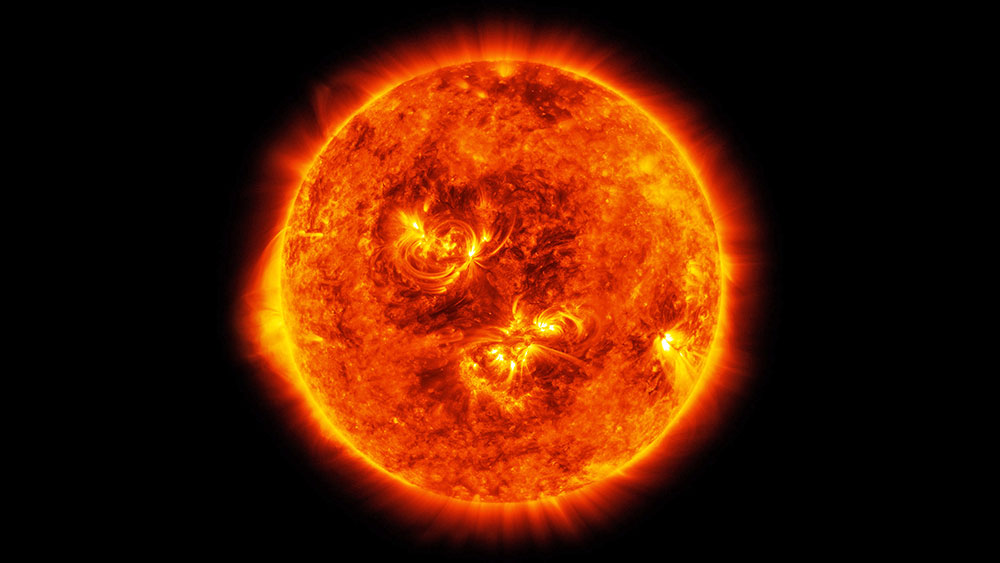
El sol tal como apareció en octubre de 2017,
fotografiado por el Observatorio de Dinámica Solar de la NASA. NASA / SDO / Seán Doran


Si y cuando los físicos puedan
para precisar el contenido de metal del sol,
ese número podría quitar mucho de lo que
pensamos que sabíamos sobre el
evolución y vida de las estrellas.


Como cualquier estrella en su apogeo, el Sol consiste principalmente en átomos de hidrógeno que se fusionan de dos en dos en helio, liberando una inmensa energía en el proceso.

Pero es la pequeña concentración de elementos pesados ​​del sol, que los astrónomos llaman metales, la que controla su destino.
"Incluso una fracción muy pequeña de metales es suficiente para alterar por completo el comportamiento de una estrella", explicó Sunny Vagnozzi , físico de la Universidad de Estocolmo en Suecia, que estudia la "metalicidad" del sol.
Cuanto más metálica sea una estrella, más opaca (ya que los metales absorben radiación) y cuán opaco se relaciona a su vez con su tamaño, temperatura, brillo, vida útil y otras propiedades clave.
"La metalicidad básicamente también te dice cómo morirá la estrella", dijo Vagnozzi.
Pero la metalicidad del sol , más allá de revelar su propia historia, también sirve como una especie de criterio para calibrar las mediciones de la metalicidad de todas las demás estrellas, y por lo tanto las edades, temperaturas y otras propiedades de las estrellas, galaxias y todo lo demás.
"Si cambiamos el criterio solar, automáticamente significa que nuestra comprensión del cosmos tiene que cambiar", dijo Martin Asplund , un astrofísico de la Universidad Nacional de Australia.

"Así que tener un conocimiento preciso de la composición química solar es extremadamente importante".
Sin embargo, las mediciones cada vez más precisas de la metalicidad del sol han planteado más preguntas de las que han respondido.

La incapacidad de los astrónomos para resolver el misterio conocido diversamente como la metalicidad solar, la abundancia solar, la composición solar o el problema del modelado solar sugiere que podría haber,
"algo fundamentalmente erróneo" con su comprensión del sol, y por lo tanto de todas las estrellas, dijo Vagnozzi. "Eso sería enorme".
Hace veinte años, los astrónomos pensaron que tenían el sol ordenado.

Las formas directas e indirectas de inferir su metalicidad calificaron al sol como aproximadamente un 1,8 por ciento de metal, una feliz convergencia que los llevó a creer que entendían no solo la longitud de su patrón solar, sino también cómo funciona el sol.

Sin embargo, a lo largo de la década de 2000, las mediciones espectroscópicas cada vez más precisas de la luz solar, una sonda directa de la composición del sol, ya que cada elemento crea líneas de absorción reveladoras en el espectro, indicaron una metalicidad mucho más baja de solo 1.3 por ciento.

Mientras tanto, la helio-sismología, el enfoque indirecto competitivo para inferir metalicidad basado en la forma en que las ondas de sonido de diferentes frecuencias se propagan a través del interior del sol, todavía dice un 1,8 por ciento.

Pero si la teoría del sol de los astrónomos, llamada el "modelo solar estándar", es correcta, la espectroscopía y la helio-sismología deberían estar de acuerdo.

Es decir, los astrónomos deberían poder utilizar las mediciones helio-sismológicas para calcular la profundidad de una capa límite importante en el sol donde la radiación cede ante la convección.

Y esta profundidad se relaciona, según las ecuaciones, con la opacidad del sol y, por lo tanto, con su metalicidad.

Esta secuencia de cálculos debe predecir el mismo valor para la metalicidad que los espectroscopios miden directamente de la luz solar. No es asi.
"Este es un problema no solo para la física solar, sino también para la astronomía en general", dijo Asplund, quien dirigió al equipo detrás de las mediciones espectroscópicas precisas.

"O los astrónomos no entienden cómo medir las abundancias elementales de las estrellas usando la espectroscopia, o nuestra comprensión del interior de las estrellas y cómo oscilan es incompleta", dijo.

"De cualquier manera, tiene ramificaciones importantes, ya que las estrellas son las sondas fundamentales del cosmos, con la astrofísica estelar que proporciona gran parte de la base para la astronomía y la cosmología modernas".


Únete a David Kaplan en una gira de realidad virtual que muestra cómo el sol, la Tierra y los otros planetas llegaron a ser. Quanta Magazine y Chorus Films

Después de años de hablar sobre lo que podría estar yendo mal, incluidas las especulaciones sobre la materia oscura al sol, el debate ha llegado a
"un punto muerto", dijo Sarbani Basu , un astrofísico solar en la Universidad de Yale.
Pero hay esperanza.

Recientemente, una débil pista sobre la metalicidad solar ha venido de partículas fugaces que emanan del sol llamadas neutrinos solares .

Las diferentes reacciones de fusión nuclear producen neutrinos solares de diferentes energías, por lo que las partículas llevan información sobre la composición del sol.

En una conferencia realizada el mes pasado en Heidelberg, Alemania, el experimento Borexino, con sede en el Gran Sasso National Laboratory de Italia, informó de detecciones de neutrinos solares que favorecen marginalmente la estimación más alta, del 1,8 por ciento de la metalicidad del sol.

Si esta estimación de alta metalicidad es realmente correcta, esto plantea preguntas sobre qué, exactamente, salió mal con Martin Asplund y las mediciones espectroscópicas de los colaboradores.
"Si el problema es con la espectroscopía, entonces es probable que cometamos errores similares al analizar otras estrellas", dijo, lo que impactaría las interpretaciones de la evolución química de las estrellas y las galaxias como la Vía Láctea.
Pero Asplund defiende su estimación espectroscópica del 1.3 por ciento.

Señala un estudio de 2015 ( Una medición de la opacidad del hierro superior a la prevista a temperaturas solares interiores ) en Nature que indica que los metales pueden aumentar la opacidad incluso más de lo que se pensaba en las condiciones de alta presión del núcleo del sol.

La corrección de esta diferencia en el modelo solar estándar podría reducir las estimaciones helio-sismológicas y de neutrinos de la metalicidad al 1.3 por ciento, dijo.

En los próximos años, el equipo de Borexino espera detectar neutrinos solares raros producidos en el ciclo de CNO , una reacción de fusión al sol en la que átomos de carbono, nitrógeno y oxígeno sirven como catalizadores para fusionar hidrógeno en helio.
"Los neutrinos CNO se ven muy afectados por la metalicidad, por lo que la medición de estos neutrinos podría ser definitiva", dijo Andrea Pocar , física de la Universidad de Massachusetts en Amherst y miembro de la colaboración de Borexino.
Si resulta que el sol es, de hecho, solo un 1.3 por ciento de metal , esto significaría que el modelo solar estándar realmente tiene una opacidad incorrecta.
"Esto afecta esencialmente a toda la astronomía", dijo Asplund, "ya que una comprensión precisa de la evolución estelar sustenta casi todo lo que hacemos".
Las edades estimadas de estrellas y galaxias tendrían que revisarse hasta en un 10 a 15 por ciento.

Desafortunadamente para el sol mismo (y la vida futura en la Tierra), las estrellas de baja metalicidad queman combustible más rápido que las estrellas de alta metalicidad, por lo que nuestro sol moriría aproximadamente mil millones de años antes de lo que pensábamos ...

What is the Sun Made of and When will it Die?


by Natalie Wolchover
July 05, 2018
from QuantaMagazine Website


The sun as it appeared in October 2017,
imaged by NASA's Solar Dynamics Observatory.NASA / SDO / Seán Doran


If and when physicists are able
to pin down the metal content of the sun,
that number could upend much of what
we thought we knew about the
evolution and life span of stars.


Like any star in its prime, the Sun consists mainly of hydrogen atoms fusing two by two into helium, unleashing immense energy in the process.

But it's the sun's tiny concentration of heavier elements, which astronomers call metals, that controls its fate.
"Even a very small fraction of metals is sufficient to alter the behavior of a star completely," explained Sunny Vagnozzi, a physicist at Stockholm University in Sweden who studies the "metallicity" of the sun.
The more metallic a star, the more opaque it is (since metals absorb radiation), and how opaque it is in turn relates to its size, temperature, brightness, life span and other key properties.
"Metallicity basically also tells you how the star will die," Vagnozzi said.
But the sun's metallicity, beyond revealing its own story, also serves as a kind of yardstick for calibrating measurements of the metallicity of all other stars, and thus the ages, temperatures and other properties of stars, galaxies and everything else.
"If we change the solar yardstick, automatically it means that our understanding of the cosmos has to change," said Martin Asplund, an astrophysicist at Australian National University.

"So having an accurate knowledge of the solar chemical composition is extremely important."
Yet, ever more precise measurements of the sun's metallicity have raised more questions than they've answered.

Astronomers' inability to solve the mystery known variously as the solar metallicity, solar abundance, solar composition or solar modeling problem suggests there could be,
"something fundamentally wrong" with their understanding of the sun, and therefore of all stars, said Vagnozzi. "That would be huge."
Twenty years ago, astronomers thought they had the sun sorted.

Direct and indirect ways of inferring its metallicity both gauged the sun as approximately 1.8 percent metal - a happy convergence that led them to believe they understood not only the length of their solar yardstick but also how the sun works.

However, throughout the 2000s, increasingly precise spectroscopic measurements of sunlight - a direct probe of the sun's composition, since each element creates telltale absorption lines in the spectrum - indicated a far lower metallicity of just 1.3 percent.

Meanwhile, helio-seismology, the competing, indirect approach for inferring metallicity based on the way sound waves of different frequencies propagate through the sun's interior, still said 1.8 percent.

But if astronomers' theory of the sun, called the "standard solar model," is correct, spectroscopy and helio-seismology should agree.

That is, astronomers should be able to use the helio-seismological measurements to calculate the depth of an important boundary layer in the sun where radiation gives way to convection.

And this depth relates, according to the equations, to the sun's opacity, and therefore to its metallicity.

This sequence of calculations should predict the same value for the metallicity as spectroscopers measure directly from sunlight. It does not.
"This is a problem not only for solar physics, but by extension for astronomy as a whole," said Asplund, who led the team behind the precise spectroscopic measurements.

"Either astronomers do not understand how to measure elemental abundances of stars using spectroscopy, or our understanding of stars' interiors and how they oscillate is incomplete," he said.

"Either way, it has major ramifications, since stars are the fundamental probes of the cosmos, with stellar astrophysics providing much of the foundation for modern astronomy and cosmology."


Join David Kaplan on a virtual-reality tour showing how the sun, the Earth and the other planets came to be.Quanta Magazine and Chorus Films

After years of talking about what might be going wrong - including speculations about dark matter in the sun - the debate has reached,
"a bit of a stalemate," said Sarbani Basu, a solar astrophysicist at Yale University.
But there's hope.

Recently, a weak hint about the solar metallicity has come from fleeting particles emanating from the sun called solar neutrinos.

Different nuclear fusion reactions produce solar neutrinos of different energies, and so the particles carry information about the sun's composition.

At a conference last month in Heidelberg, Germany, the Borexino experiment based at Italy's Gran Sasso National Laboratory reported detections of solar neutrinos that marginally favor the higher, 1.8 percent estimate of the sun's metallicity.

If this high-metallicity estimate is indeed correct, this raises questions about what, exactly, went wrong with Martin Asplund and collaborators' spectroscopic measurements.
"If the problem is with spectroscopy, then we likely make similar errors when analyzing other stars," he said, which would impact interpretations of the chemical evolution of stars and galaxies like the Milky Way.
But Asplund stands by his 1.3 percent spectroscopic estimate.

He points to a 2015 study (A Higher-than-predicted Measurement of Iron Opacity at Solar Interior Temperatures) in Nature indicating that metals might increase opacity even more than previously thought in the high-pressure conditions of the sun's core.

Correcting for this difference in the standard solar model could bring the helio-seismological and neutrino estimates of metallicity down to 1.3 percent, he said.

In the coming years, the Borexino team expects to detect rare solar neutrinos produced in the CNO cycle, a fusion reaction in the sun in which carbon, nitrogen and oxygen atoms serve as catalysts for fusing hydrogen into helium.
"The CNO neutrinos are greatly affected by metallicity, so measuring these neutrinos could be definitive," said Andrea Pocar, a physicist at the University of Massachusetts Amherst and a member of the Borexino collaboration.
If it turns out that the sun is, in fact, only 1.3 percent metal, this would mean the standard solar model really does have opacity wrong.
"This impacts essentially all of astronomy," Asplund said, "since an accurate understanding of stellar evolution underpins almost everything we do."
Estimated ages of stars and galaxies would have to be revised by as much as 10 to 15 percent.

Unfortunately for the sun itself (and future life on Earth), low-metallicity stars burn fuel faster than high-metallicity stars, so our sun would die about a billion years sooner than we thought...

What Donald Trump is preparing


by Thierry Meyssan


After having observed Donald Trump’s historical references (the constitutional compromise of 1789, the examples of Andrew Jackson and Richard Nixon) and the way in which his partisans perceive his politics, Thierry Meyssan here analyses his anti-imperialist actions. The US President is not interested in taking a step back, but on the contrary, abandoning the interests of the transnational ruling class in order to develop the US national economy.
VOLTAIRE NETWORK | DAMASCUS (SYRIA) | 3 JULY 2018
عربي ΕΛΛΗΝΙΚΆ ESPAÑOL FRANÇAIS ITALIANO PORTUGUÊS РУССКИЙ TÜRKÇE DEUTSCH فارسى


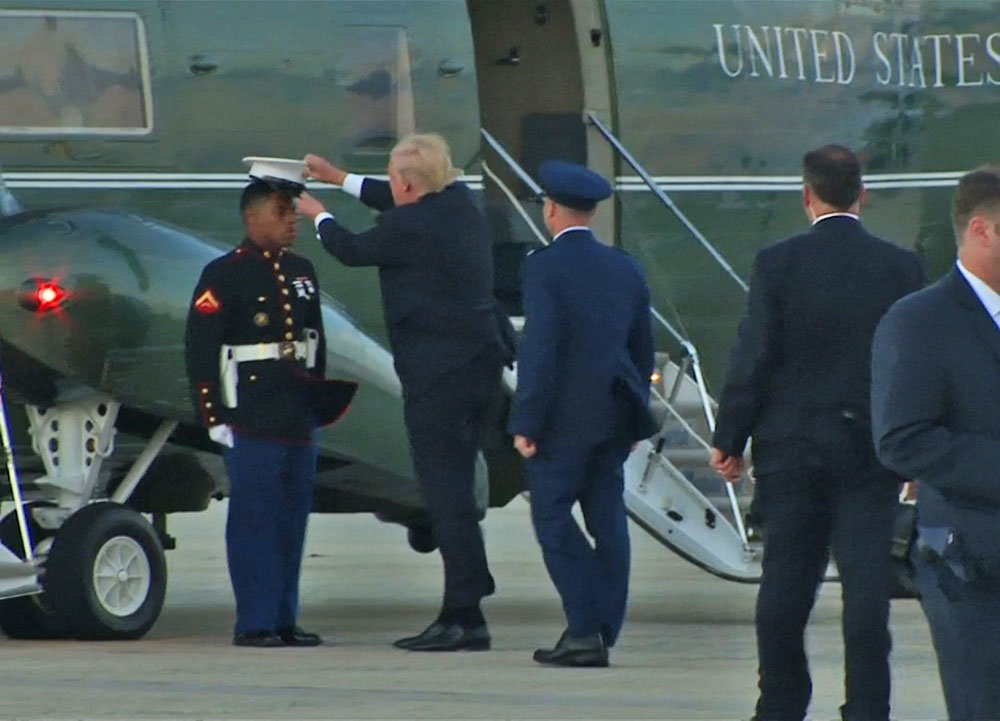
When the backwash from the blades of the Presidential helicopter blew a Marine guard’s cap off, Donald Trump picked it up and put it back on his head.


This article is a continuation of “What is Donald Trump’s position?”, by Thierry Meyssan, Translation Pete Kimberley, Voltaire Network, 19 June 2018.
The problem

In 1916, during the First World War, Lenin analysed the reasons which led to the confrontation between the empires of his time. He wrote - Imperialism, the Highest Stage of Capitalism. In this book, he clarified his analysis - « Imperialism is capitalism which has arrived at a stage of its development where domination by monopolies and financial capital has been confirmed, where the export of capital has acquired major importance, where the sharing of the world between international trusts has begun, and where the sharing of all the territories of the globe between the greatest capitalist countries has been achieved ».

The facts confirmed his logic of the concentration of capitalism that he described. In the space of one century, it substituted a new empire for the precedents - « America » (not to be confused with the American continent). By dint of fusions and acquisitions, a few multinational companies gave birth to a global ruling class which gathers every year to congratulate itself, as we watch, in Davos, Switzerland. These people do not serve the interests of the US population, and in fact are not necessarily United States citizens themselves, but use the means of the US Federal State to maximise their profits.

Donald Trump was elected as President of the United States on his promise to return to the earlier state of Capitalism, that of the « American dream, » by free market competition. We can of course claim a priori, as did Lenin, that such a reversal is impossible, but nonetheless, the new President has committed to this direction.

The heart of the imperial Capitalist system is expressed by the doctrine of the Pentagon, formulated by Admiral Arthur Cebrowski - the world is now split in two. On one side, the developed, stable states, and on the other, those states which are not yet integrated into the imperial globalist system and are therefore doomed to instability. The US armed forces are tasked with destroying the state and social structures of the non-integrated regions. Since 2001, they have been patiently destroying the « Greater Middle East », and are now preparing to do the same in the « Caribbean Basin .»

We are obliged to note that the way in which the Pentagon looks at the world is based on the same concepts used by anti-imperialist thinkers like Immanuel Wallerstein, Giovanni Arrighi or Samir Amin.
The attempted solution

Donald Trump’s objective thus consists both of reinvesting the transnational capital in the US economy, and turning the Pentagon and the CIA away from their current imperialist functions with National Defense. In order to do so, he has to withdraw from international commercial treaties and dissolve the inter-governmental structures which consolidate the old order.

Undoing the international commercial treaties

From the very first days of his mandate, President Trump removed his country from the trans-Pacific partnership agreement, which had not yet been signed. This commercial treaty had been conceived strategically as a means of isolating China.

Since he was unable to cancel the signature of his country on those treaties which were already in force, such as the North American Free Trade Agreement (NAFTA), he began to unravel them by imposing various customs duties which were contrary to the spirit, but not the letter, of the agreement.

Re-framing or dissolving the inter-governmental structures

As we have often written here, the United Nations Organisation is no longer a forum for peace, but an instrument of US imperialism within which a few states continue to resist. This was already the case during the Soviet policy of the empty chair (Korean War) and, since July 2012, it is once again true.

President Trump has directly attacked the two main imperialist tools within the UNO – the peace-keeping operations (which have taken the place of the observation missions which were originally planned by the Charter), and the Human Rights Council (whose sole function is to justify the humanitarian wars waged by NATO). He has deprived the former of their budget, and withdrawn his country from the latter. However, he has just lost the election for Director of the International Organisation for Migration, leaving the road open, for the moment, for the world traffic in human beings. Of course, he has absolutely no wish to destroy the UNO, but only to refocus its activities and bring it back to its original function.

He has just torpedoed the G7. This meeting, initially intended as a moment for the exchange of points of view, had become, as from 1994, a tool for imperial domination. In 2014, it transformed itself into an instrument for anti-Russian activity – thus conforming to what had become the new strategy of the Anglo-Saxon nations, aimed at « cutting our losses », in other words, avoiding a World War by limiting the empire to the borders of Russia and thereby isolating it. President Trump took great care during the meeting in Charleroix to show his confused allies that he was no longer their overlord, and that they would have to make it on their own.

Finally, after having tried to use France to dynamite the European Union, he turned to Italy, where he sent Steve Bannon to create an anti-system government with the help of US banks. Rome has already concluded an alliance with five other capitals against Brussels.

Reinvesting in productive economy

Via diverse fiscal and customs measures, rarely voted by Congress and usually adopted by decree, President Trump encouraged the major companies of his country to repatriate their factories back to the USA. There immediately followed an economic recovery, which is about the only thing for which the Press will recognise him.

However, we are a long way from noting a financial decline. World finance is probably continuing to prosper outside of the USA, or in other words, continuing to suck up the wealth of the rest of the world.

Reorienting the Pentagon and the CIA

This is obviously the most difficult operation. During his election, President Trump could count on the the votes from his troops, but not those of the superior officers and generals

Donald Trump entered into politics on 11 September 2001. He immediately contested the official version of the events. Thereafter, he expressed his astonishment about the contradictions of the mainstream story – while Presidents Bush Jr. and Obama declared that they wanted to eliminate the jihadist movements, we observed on the contrary a drastic multiplication and globalisation of jihadism during their mandates which went as far as the creation of an independent state in Iraq and Syria.

This is why, as soon as he took office, President Trump surrounded himself with officers who enjoyed a recognised authority in the army. It was, for him, the only option, both to guard against a military coup d’etat and to ensure that he would be obeyed in the reforms that he wanted to implement. Then he gave carte blanche to all the military for everything concerning tactics on the ground. Finally, he never lost an opportunity to confirm his support for the armed forces and the Intelligence services.

After having confiscated their permanent chair at the National Security Council from the president of the chiefs of staff and the director of the CIA, he gave the order to cease support for the jihadists. Progressively, we saw Al-Qaeda and Daesh lose ground. This policy continues today with the withdrawal of US support for the jihadists in Southern Syria. From now on, they no longer form private armies, but only scattered groups which are used for occasional terrorist actions.

Similarly, he first of all pretended to give up dissolving NATO if it would agree to add an anti-terrorist function to its anti-Russian function. He is now beginning to show NATO that it does not enjoy eternal privileges, as we we saw with his refusal to deliver a special visa for an ex-General Secretary. Above all, he has begun to diminish its anti-Russian function. So he is now negotiating with Moscow the cancellation of Alliance manoeuvres in Eastern Europe. Besides this, he is now taking administrative actions which attest to the refusal of the allies to contribute to collective defence as far as they are able. In this way, he is preparing to dismantle NATO as soon as he sees fit.

This moment will only come when the destructuration of international relations occurs simultaneously at maturity in Asia (North Korea), the Greater Middle East (Palestine and Iran) and in Europe (UE).


Keep in mind
President Trump is absolutely not the « unpredictable » character so often described. Quite the contrary, he acts in a clearly thoughtful and logical manner.

Donald Trump is preparing a reorganisation of international relations. This change will operate through a complete and sudden upheaval directed against the interests of the transnational ruling class.
Thierry Meyssan

Translation
Pete Kimberley


Source
Zero Hedge (USA)

Lo que Donald Trump está Preparando

por Thierry Meyssan03 Julio 2018
del Sitio Web RedVoltaire
Versión en ingles
Versión en italiano


Al pie del helicóptero presidencial Marine One,
Trump devuelve a un marine de la guardia de honor
la gorra que la corriente de aire producida por el aparato
había hecho volar de su cabeza.


Luego de observar las referencias históricas de Donald Trump (el compromiso constitucional de 1789, los ejemplos de Andrew Jackson y de Richard Nixon) y la manera de ver la política que profesan sus partidarios, Thierry Meyssan analiza los actos del presidente contra el actual imperialismo estadounidense.

El objetivo de Trump no es volver a la situación anterior sino abandonar los intereses de la clase dirigente transnacional para desarrollar la economía nacional.


El problema

En 1916, durante la Primera Guerra Mundial, Lenin analizaba las razones que llevaron al enfrentamiento entre los imperios de su época.

Escribió entonces El imperialismo, fase superior del capitalismo, donde precisaba su pensamiento en los siguientes términos:
"El imperialismo es el capitalismo en la fase de desarrollo en la que ha tomado cuerpo la dominación de los monopolios y del capital financiero, en la que ha adquirido una importancia de primer orden la exportación de capitales, en la que ha comenzado el reparto del mundo entre los trusts internacionales y ha terminado el reparto de todo el territorio del mismo entre los países capitalistas más importantes."
Los hechos han confirmado la lógica de concentración del capitalismo que Lenin describía.

En un siglo, un nuevo imperio reemplazó a los anteriores:
"América"... (no confundir con el continente que lleva ese nombre).
A golpe de fusiones y de compras de otras empresas, un grupo de transnacionales ha parido después una clase dirigente global que se reúne cada año en la localidad suizade Davos.

Esos personajes no están al servicio de los intereses del pueblo estadounidense y, por cierto, no son necesariamente estadounidenses sino que utilizan los medios del Estado federal estadounidense para maximizar sus propias ganancias.

Donald Trump fue electo presidente de Estados Unidos en base a su promesa de volver al estado anterior del capitalismo, el del "sueño americano" a través de la libre competencia.

Aunque puede plantearse a priori, como Lenin, que ese retroceso es imposible, lo cierto es que el nuevo presidente ha optado por esa vía.

El núcleo del sistema capitalista imperial está expresado en la doctrina del Pentágono, concebida por el almirante Arthur Cebrowski. Según esa doctrina el mundo actual está dividido en dos:
  • de un lado tenemos países desarrollados y estables
  • del otro países no integrados aún a la globalización imperial y, por ende, condenados a la inestabilidad
Las fuerzas armadas de Estados Unidos tienen como misión destruir los Estados y las estructuras sociales de los países de las regiones no integradas a la globalización.

Desde el año 2001 han venido destruyendo el "Medio Oriente Ampliado" (Gran Oriente Medio) y ahora se disponen a hacer lo mismo en la "Cuenca del Caribe".

Los hechos demuestran que la manera de ver el mundo que tiene el Pentágono coincide con los conceptos enunciados por pensadores antiimperialistas como Immanuel WallersteinGiovanni Arrighi o Samir Amin.


El intento de solución
El objetivo de Donald Trump consiste al mismo tiempo en,
  • reinvertir los capitales transnacionales en la economía estadounidense
  • sacar el Pentágono y la CIA de su función imperialista actual para que vuelvan a dedicarse a la defensa nacional
Para lograr eso, Trump está obligado a retirarse de los tratados comerciales internacionales y a disolver las estructuras intergubernamentales que mantienen el orden anterior.

Deshacer los tratados comerciales internacionales
Desde los primeros días de su mandato, el presidente Trump sacó a Estados Unidos del Acuerdo de Asociación Transpacífico, que no estaba firmado aún.

Ese tratado comercial estaba concebido como un plan estratégico para aislar a China.

Al no poder anular la firma de Estados Unidos en tratados ya en vigor, como el Tratado de Libre Comercio de América del Norte (TLCAN), Trump ha comenzado a desmantelarlos mediante la imposición de gravámenes aduanales que, sin violar su contenido, contradicen los objetivos de esos documentos.


Recomponer o disolver las estructuras intergubernamentales
Hemos demostrado repetidamente desde este sitio Web que las Naciones Unidas han dejado de ser un foro por la paz para convertirse en un instrumento del imperialismo estadounidense mientras que algunos países miembros de la ONU siguen oponiendo resistencia en el seno de la organización.

Así fue en el momento de la política soviética de la "silla vacía", durante la guerra de Corea, y así ha venido sucediendo nuevamente desde julio de 2012.

El presidente Trump ha atacado directamente las dos principales herramientas imperialistas en el seno de la ONU:
  • las operaciones de mantenimiento de la paz (que tomaron el lugar de las misiones de observación inicialmente previstas en la Carta de la ONU)

  • el Consejo de Derechos Humanos de esa misma organización (órgano que no tiene actualmente otra función que justificar las guerras "humanitarias" de la OTAN)
Lo ha hecho negando fondos al presupuesto de las operaciones de mantenimiento de la paz y sacando a Estados Unidos del Consejo de Derechos Humanos.

Pero acaba de perder la elección del nuevo director de la Organización Internacional para las Migraciones[1] lo cual deja momentáneamente el campo libre al tráfico mundial de personas.

El objetivo de Trump no es destruir la ONU sino redirigirla para volver a meterla en lo que fue su función inicial.

Trump acaba de torpedear el G7. Inicialmente previsto como un intercambio de puntos de vista entre los participantes, el G7 se había convertido - desde 1994 - en otra herramienta al servicio de la dominación imperial.

En 2014, el G7 se convirtió en un instrumento anti-ruso, conforme a la naturaleza de la nueva estrategia de los anglosajones, tendiente a evitar una guerra mundial extendiendo el imperio hasta las fronteras de Rusia y aislando a esta última.

En el G7 de Charlevoix, el presidente Trump se esforzó por mostrar a sus confundidos aliados que ya no los quiere como vasallos y que tendrán que arreglárselas solos.

Y finalmente, después de haber tratado de utilizar a Francia para dinamitar la Unión Europea, Trump se volvió hacia Italia enviando allí a Steve Bannon para crear un gobierno antisistema, con ayuda de varios bancos estadounidenses.

Roma se ha aliado con otras 5 capitales en contra de la UE.


Reinvertir en la economía productiva
A través de diversas medidas fiscales y aduanales, raramente votadas por el Congreso y más frecuentemente implantadas por decreto, el presidente Trump está estimulando las grandes empresas de su país a repatriar sus fábricas.

Esto se ha traducido de inmediato en una reactivación económica, prácticamente el único logro que la prensa reconoce a la gestión de Trump.

Sin embargo, está muy lejos de verse aún un retroceso del mundo de la finanza, que probablemente seguirá prosperando fuera de Estados Unidos y, por ende, absorbiendo las riquezas del resto del mundo.


Reorientar el Pentágono y la CIA
Esto es, evidentemente, lo más difícil.

En el momento de su elección, Trump obtuvo los votos de los simples soldados y oficiales subalternos, no así los de los oficiales superiores y generales.

Donald Trump llegó a la política el 11 de septiembre de 2001. Inmediatamente cuestionó la versión oficial de los acontecimientos de aquel día.

Luego expresó su sorpresa ante las contradicciones del discurso dominante:
los presidentes Bush hijo y Obama dijeron querer eliminar los movimientos yihadistas, pero lo que se observó bajo sus respectivos mandatos fue una drástica multiplicación e incluso una globalización del yihadismo que culminó en la creación del Emirato Islámico - con pretensiones de Estado independiente - en Irak y en Siria.
Es por esa razón que, desde que asumió sus funciones como presidente, Trump se rodeó de oficiales de reconocida autoridad en el seno de las fuerzas armadas estadounidenses.

Esa era para él la única posibilidad de evitar un golpe de Estado militar y de imponer obediencia para realizar la reforma que quería emprender. Luego dio carta blanca a los militares en conjunto para todo lo concerniente a la táctica en el terreno.

Además, aprovecha toda ocasión posible para reafirmar su apoyo a las fuerzas armadas y los servicios de inteligencia.

Luego de cancelar la presencia permanente del jefe del Estado Mayor Conjunto y del director de la CIA en el Consejo de Seguridad Nacional, Trump ordenó poner fin al respaldo estadounidense a los yihadistas.

Al-Qaeda y el Emirato Islámico (Daesh) comenzaron entonces a perder terreno.

Esa política prosigue actualmente con el fin del apoyo estadounidense a los yihadistas presentes en el sur de Siria. Los yihadistas han dejado de ser verdaderos ejércitos privados y se han reducido al estado de grupos dispersos utilizados en determinadas acciones terroristas.

Siguiendo esa misma línea, Trump fingió al principio renunciar a la disolución de la OTAN a condición de que esta agregara a su función anti-rusa una función antiterrorista.

Pero ahora ha comenzado a mostrar a la OTAN que los privilegios que hoy tiene ese bloque militar no serán eternos, como pudo verse con la negativa de una visa estadounidense especial a un ex secretario general de la alianza atlántica. [2]

Lo más importante es que Trump ha comenzado a recortar la función anti-rusa de la OTAN.

Por ejemplo, está negociando con Moscú la anulación de los simulacros de guerra de la OTAN en el este de Europa. También está planteando una serie de actos administrativos que demuestran que los demás miembros de la OTAN se niegan a aportar a la defensa colectiva una contribución proporcional a sus verdaderos medios.

Con ello se prepara para dinamitar la OTAN cuando lo juzgue posible.

Ese momento sólo llegará cuando la deconstrucción de las relaciones internacionales actuales alcance su estado óptimo tanto en,
  • Asia (Corea del Norte)
  • el Medio Oriente Ampliado (Palestina e Irán)
  • Europa (Unión Europea)


Conclusiones
  • El presidente Trump no es el personaje "imprevisible" que los medios nos describen. Más bien es todo lo contrario y está actuando de manera bien pensada y lógica.
     
  • Donald Trump está preparando una reorganización de las relaciones internacionales. Esa reorganización pasa por un cambio completo e inesperado, dirigido contra los intereses de la clase dirigente transnacional.


Referencias
  1. Nuevo director en la Organización Mundial para las Migraciones - Red Voltaire, 1º de julio de 2018.
     

Entrada destacada

PROYECTO EVACUACIÓN MUNDIAL POR EL COMANDO ASHTAR

SOY IBA OLODUMARE, CONOCIDO POR VOSOTROS COMO VUESTRO DIOS  Os digo hijos míos que el final de estos tiempos se aproximan.  Ningú...