google.com, pub-5827770858464401, DIRECT, f08c47fec0942fa0 https://misteri1963.blogspot.com.esgoogle.com, pub-5827770858464401, DIRECT, f08c47fec0942fa0https://misteri1963.blogspot.com.argoogle.com, pub-5827770858464401, DIRECT, f08c47fec0942fa0https://misteri1963.blogspot.com.cogoogle.com, pub-5827770858464401, DIRECT, f08c47fec0942fa0https://misteri1963.blogspot.com.brgoogle.com, pub-5827770858464401, DIRECT, f08c47fec0942fa0 Misteri1963

Translate

4.- Hijacking The Gods


Of Hoagland, Cayce, Egypt, Mars and The Stargate Conspiracy
by Lynn Picknett and Clive Prince
from Truth Campaign issue 17


Exclusive extract from a lecture at
 the Templar Lodge Hotel, Gullane,
near Edinburgh, Scotland,
6th June 1999.
 Resultat d'imatges de egipto

It was very surprising set of circumstances that led us to write our new book, 
The Stargate Conspiracy.

We did not set to write such a book. Rather, we intended to pursue certain lines of research following on from our last book, The Templar Revelation, in which we concluded that Christianity was an off-shoot of the Egyptian mystery religion of Isis and Osiris. In that book, we only took the story back to the Egypt of the first century. It was our intention to extend the research further back into the history of Egypt and the roots of its religion.

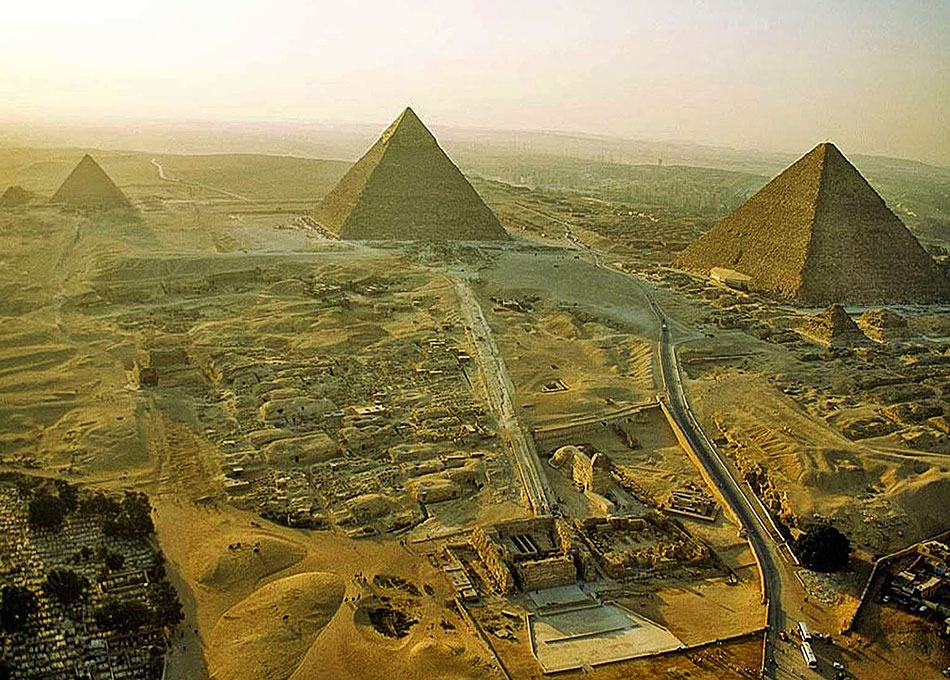
Our research led us back to the most ancient religion known from ancient Egypt, that of Heliopolis, whose beliefs and cosmology, which are encapsulated in the Pyramid Texts, inspired the builders of the Great Pyramid of Giza. Inevitably, we were drawn into considering the mysteries posed by the great monuments of the Pyramid Age.

And, of course, we could not ignore the recent flood of high-profile books dealing with, and offering solutions to, those mysteries, which make up what has been called 'alternative Egyptology'.

Throughout the 1990s, many books, challenging the arrogance and complacency of academic Egyptology and opening our eyes to the wonders of that ancient culture, have reached a huge audience world-wide. In this field, two names stand out above the rest: Graham Hancock and Robert Bauval, authors - jointly and separately - of such books as The Orion MysteryFingerprints of the GodsKeeper of Genesis and, most recently, The Mars Mystery.

It was looking at these new theories and ideas that led our research in a very unexpected direction, and which led ultimately to The Stargate Conspiracy.

We need to make a very important point at the outset. Much of what we are about to say is critical of some of these new ideas, and you may even begin to suspect that we are, in some way, skeptics. This is not so.

We believe that there are genuine mysteries about ancient Egypt - such as how (and why) they built the pyramids, where their civilization came from, and how they knew many of the things that they knew. We are not admirers of the obstinate arrogance of academic Egyptology, and have enormous reverence for ancient Egypt, its culture and religion, and the achievements of its people.

It is precisely because we have such reverence that we feel so strongly about the way that the very real mysteries of Egypt have, effectively, been hijacked in order to serve other agendas.

Where there is a mystery there is the potential for exploitation, by offering apparent solutions that support particular systems of belief. This potential is even stronger when the mystery involves something as evocative as ancient Egypt, whose works, such as the pyramids and Sphinx, speak so powerfully to our imaginations.

The Alternative Egyptology tries to explain the enigma of the advanced technical knowledge of the ancient Egyptians - as displayed most obviously in the building of the Great Pyramid - by one of two theories (or sometimes a combination of the two). The first is that the ancient Egyptians were merely an off-shoot, or heirs, of a much older, advanced civilization - such as Atlantis - which has been erased from history by some global catastrophe. The second is that the great monuments of the ancient world were either built by, or the skills to build them taught by, visitors from another world.

One of the most influential of books in this field is The Sirius Mystery by Robert Temple, which was first published in 1976 and in an extensively updated edition in 1998. As many of you will know, it homes in on the extraordinary knowledge of a West African tribe, the Dogon of Mali.

The Dogon religion centers on the star Sirius.

There is nothing unusual about that because, as Sirius is the brightest star in the sky, many cultures have incorporated it into their beliefs and mythology. However, what intrigued Temple - and many others - was that French anthropologists who studied the Dogon religion reported that they also believed that Sirius has a companion - a very small and very heavy star that is invisible to the naked eye.

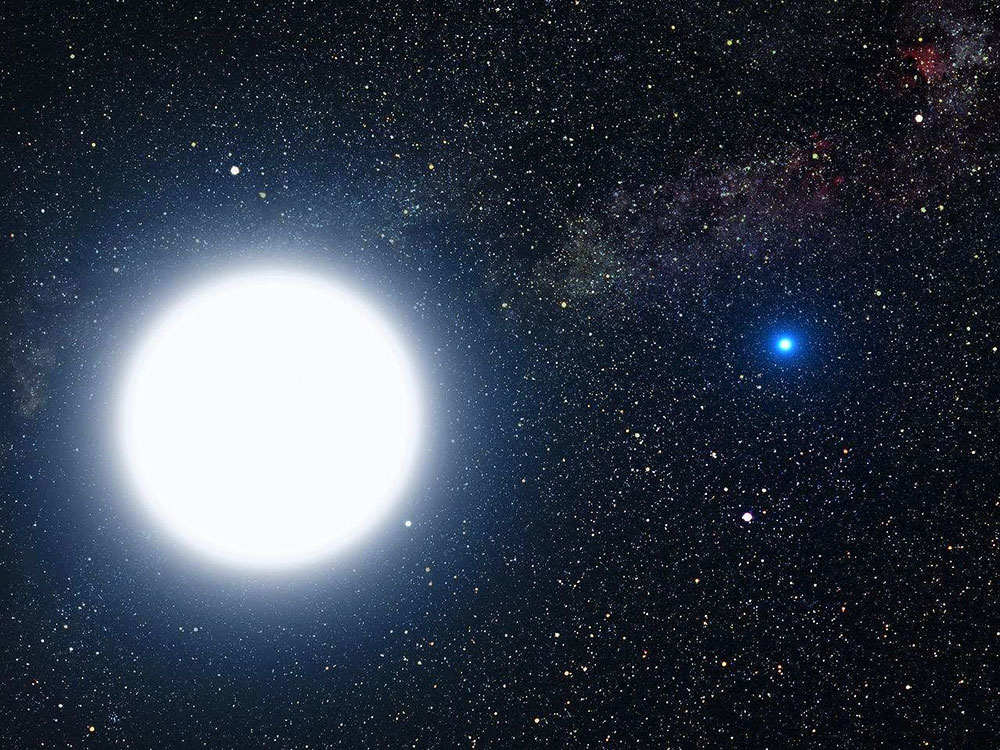
We now know that this is true. Sirius is a binary star system, with a second, white dwarf star - very small, very heavy - in orbit around the main star. Sirius B, as it is called, was only discovered in 1842, and it was not photographed until the 1970s.

How, then, could the Dogon have known about it?

Temple's theory is that the knowledge of Sirius B originated from actual contact with extraterrestrials from a planet in the Sirius system. He argues that this contact took place, not in West Africa, but in the Middle East, among the ancient civilizations of Egypt and Sumer, and that the extraterrestrials were responsible for the development of those civilizations - and therefore, ultimately, of our own.

The knowledge of that contact, and of Sirius B, was incorporated into Egyptian and Sumerian mythology, and the secret was passed on to the Greeks, and then to various other cultures, eventually reaching the Dogon.

Because of its apparently academic and scholarly approach, Temple's book received a level of critical acclaim and acceptance that set it apart from other 'ancient astronaut' theories, such as those of Erich von Daniken...

The anomalous knowledge of the Dogon - not just about Sirius, but many other things - does present a genuine mystery. However, Temple was keen to link this with ancient Egypt, and here, in our view, his case is less than persuasive, as major parts of his argument are based on factual errors, and are often contrived.

For example, one of the key points in his case involves the interpretation of myths connected with Anubis, the jackal-headed god of the dead. His justification for this is that Sirius is known as the 'Dog Star', so, by a process of ideas we go from dog to jackal to Anubis.

Therefore, when the ancient Egyptians spoke about Anubis they were really talking about Sirius, or rather Sirius B.

But there is a major problem with this - the ancient Egyptians did not associate Sirius with Anubis. For them, Sirius was the star of the goddess Isis, and sometimes, by extension, her son Horus. It was the Greeks who called Sirius the Dog Star, because it was in the constellation that they named the Great Dog (Canis Major).

The Egyptians never made a connection between Sirius and either Anubis or dogs.

Therefore, Temple's use of legends connected with Anubis is based on an entirely false premise. Another chain of associations followed by Temple relates to the Hermetic literature - the magical and philosophical texts ascribed to the legendary sage Hermes Trismegistus - which he believes incorporates references to the 'Sirius secret'. His justification for doing so is that - he says - the Greeks equated their god Hermes with Anubis.

Amazingly, Temple has (as far as we are aware) gone unchallenged on this point for more than twenty years - because it is just plain wrong. Hermes was the equivalent of the Egyptian Thoth, not Anubis. Once again, Temple has based an entire line of reasoning on a mistake. But such is his influence that many people have simply accepted it.

There are many similar examples in Temple's book, which in our view seriously undermine his attempt to trace the 'Sirius secret' - and therefore the visitation of beings from Sirius - back to ancient Egypt. Temple makes another mistake in The Sirius Mystery, which is a small slip in itself, and of no particular significance to his argument, but which does - as we will see - have some very important ramifications in another context.

Temple gives as one of the ancient Egyptian names for the Sphinx of Giza the words arq ur. Many others, using Temple as their authority, have since repeated this as fact. Unfortunately, arq ur does not mean 'Sphinx'. It means 'silver'.

The mistake arose because Temple misread the entry for arq ur in Sir E.A. Wallis Budge's classic 1920 dictionary of Egyptian hieroglyphs.

Against the entry for arq ur, two English words appear after the hieroglyphs. One is 'silver', the correct definition. The other reads 'Sphinx, 2, 8'. This is not a definition, but a reference to Budge's source, a French Egyptological journal called Sphinx.

The '2' refers to the volume, and '8' the page number. On page 8 of volume 2 are the hieroglyphs for 'silver' that Budge used in his dictionary. This mistake does not carry any particular significance for Temple's overall argument, as he mentions it only in passing - but it does turn up in some very surprising places.

The revised edition of The Sirius Mystery, published last year, contains some significant new material.

In the original 1976 edition, Temple only argued the case for extraterrestrial contact in the ancient past. In the new edition he has extended his argument to the imminent return of these 'space-gods'.

He now believes that they did not return home to the Sirius system, but placed themselves in suspended animation somewhere in our solar system, so that one day they would awaken and return to see how the civilization that they created has developed.

Temple suggests that their return is now imminent.

Also in the new edition, Temple claims that The Sirius Mystery attracted the unwelcome interest of both the CIA and the British intelligence services. In fact, he says that the CIA tried to interfere with his research while he was writing the book, and that after it came out they persecuted him for the next 15 years.

The implication is that the CIA wanted to hinder Temple's research for The Sirius Mystery, which in turn implies that they wanted to stop him writing the book - which implies that, for some reason, they didn't want us to read it.

There is no doubt that Temple is being sincere, as he can by no means be called a paranoiac with a fear of persecution by the CIA. He tells the story of their harassment with some indignation - since he is himself a staunch supporter and defender of that agency.

For example, in a 1989 book about the 'uses and abuses' of hypnosis, he defends the CIA's excesses in their notorious mind control research of the 1950s and 60s, as exemplified most infamously in their MKULTRA project.

In fact, Temple proudly proclaims that he refused even to read books exposing these experiment.

However, if the CIA did want to stop The Sirius Mystery from being published, this is hardly a good advertisement for their efficiency. Similarly, the implication that the CIA persecuted him for the next 15 years because he had written the book does not make much sense. What was the point, if the book was already out? Not only that, but they also failed to prevent him publishing a new, updated version - which includes the story of their interest in the book.

In fact, the knowledge of their interest in, and apparent opposition to, The Sirius Mystery only adds to its appeal. It actively encourages interest in the book, on the grounds that, if the CIA don't want us to read it, there must be something worth reading. We suspect that this was the CIA's real intention, in a classic example of reverse psychology.

The above examples of mistakes in Temple's book demonstrate the need for careful checking of such claims. As researchers, this is something that we always try to do. And it was something that we did when we looked into the work of the two major names in Alternative EgyptologyRobert Bauval and Graham Hancock.

As most of you will know, Hancock and Bauval's work centers on the importance of the year 10500 BC. Around this time, they argue, some cataclysm took place that destroyed an advanced, global civilization. Some of its knowledge survived and formed the basis of the ancient Egyptian civilization. They also argue that the survivors left us messages encoded in such monuments as the pyramids and Sphinx of Giza. On the face of it, this seems an exciting and even reasonable idea.

But let's examine their evidence more closely.

In The Orion Mystery (1993), Robert Bauval argues that the three pyramids of Giza were built to mirror the three stars of Orion's Belt. This, in itself, is fine - it seems to work. But Bauval uses his 'Giza-Orion Correlation Theory' to link the monuments to a much more ancient period. His argument is this. The three pyramids form an angle of 45 degrees to the north-south meridian. To make the correlation perfect, when the stars cross the celestial meridian they should form the same angle.

However, when the Great Pyramid was built - in approximately 2500 BC - they didn't.

Because of the precession of the equinoxes, the position of the stars changes over time. Bauval reasoned that if he could find a period at which the stars formed the same angle as the pyramids, this would pinpoint a significant time - a time to which the pyramid-builders were trying to draw our attention.

When he used computer simulations to wind back the precessional cycle, he found that Orion's Belt was in the 'Giza position' in 10500 BC.

However, when we decided to double check this, things took a rather surprising turn. We discovered that the geometrician Robin J. Cook, who actually produced the diagrams for The Orion Mystery, although agreeing with most of Bauval's theory, strongly disagreed with this part of Bauval's conclusions. We decided to check for ourselves to find out who was right.

We found that the Belt stars were not in the 'Giza position' in 10500 BC. To find the stars in this position - according to the same computer program used by Bauval - we have to go back to about 12000 BC at the earliest.

It seems that Bauval had simply made a mistake, and miscalculated by a couple of thousand years. However, we will come back to this... Probably the most famous development concerning ancient Egypt in the last ten years has been the redating of the Sphinx by the erosion of the limestone out of which it has been carved.

According to conventional Egyptology, the Sphinx was carved out of the Giza plateau somewhere around 2500 BC. However, many - most notably leading alternative Egyptologist John Anthony West - maintained that it is, in reality, far older.

West believed that the erosion of the Sphinx was not caused by the action of wind-blown sand, but by water. He believed that this was due to a great flood - the flood that drowned Atlantis - and argued that if this could be proven scientifically, this would be an important step in not only establishing the true age of the Egyptian civilization, but also the existence of Atlantis. Eventually, he succeeded in getting American geologist Robert Schoch to take a look.

Shoch concluded that the erosion was due to water - centuries of exposure to rain water. But, as he pointed out, if this was the case, the Sphinx must have been there during the last period of substantial rainfall in Egypt, which occurred between about 7000 and 5000 BC.

This means that the Sphinx must be at least 2,500, and perhaps as much as 5,000, years older than Egyptologists will admit.

John Anthony West claims that Schoch's work vindicates his ideas. However, it needs to be pointed out that West believed that a flood was responsible for the erosion - and that, by finding that it was actually due to prolonged exposure to rainwater, Schoch has proven him just as wrong as he has the academic Egyptologists.

Schoch concluded that the Sphinx could have been built as long ago as 7000 BC. However, both West and Graham Hancock have used his work in support of a much earlier date - 10500 BC. They have been so successful in this that many people now regard this as virtually proven.

West and Hancock argue that the wet period pinpointed by Schoch was not long enough to cause the erosion we see on the Sphinx. Instead, they point to a wet period that, they say, happened in the eleventh millennium BC - that is, around 10500 BC.

Graham Hancock writes in Fingerprints of the Gods that at this time 'it rained and rained and rained.' Imagine our surprise when we checked the sources on the climate of ancient and prehistoric Egypt - including the source cited by Hancock himself - and found that there was no wet period in the eleventh millennium BC.

Like Robert Bauval, Hancock and West appear to have made a simple mistake - but one that also happens to come out at the date of 10500 BC. In his recent book Heaven's Mirror, co-authored with his wife Santha Faiia, and in the accompanying Channel 4 television series, Hancock has extended his argument in favor of that date to other ancient monuments around the world - for example, the complex of Hindu temples at Angkor in Cambodia. (Although these do not really qualify as ancient, as the earliest was built in the eleventh century AD.)

Hancock argues that these temples were laid out to represent the constellation of Draco - in the position in which it was found in 10500 BC.

However, when we looked into this we found that there really is no correlation between the temples and the stars. There are temples which do not correspond to any of the stars of Draco, stars for which there is no corresponding temple - and, in any case, the pattern formed by the temples, as reconstructed by Hancock, bears very little resemblance to Draco.

It seems that Hancock, Bauval and West are, for some reason, keen to make sure that their research pinpoints the year 10500 BC - whether or not the data actually fits.


But why 10500 BC?

Perhaps it is connected with the prophecies of the American psychic Edgar Cayce - for whom Hancock and Bauval seem to have a great deal of respect.

Edgar Cayce, known as the 'Sleeping Prophet', who died in 1945, is widely believed to be a simple, uneducated Kentucky man, who entered a trance state and made pronouncements about the ancient past as well as giving predictions for the future.

According to Cayce, the Great Pyramid and Sphinx were built by survivors from Atlantis - in 10500 BC. He said that the Atlanteans had built an underground 'Hall of Records' that contains the collected wisdom of their race and which, he said, would be discovered in 1998. This would somehow trigger a New Age, and the emergence of a new race.

We spent a lot of time looking at Cayce's predictions - and found that, despite the fact that his followers claim that he was 'close to one hundred per cent accurate', you would be hard pressed to find even one of his prophecies that has come true.
 
For example, recently someone told us that Cayce was a brilliant prophet because, in the early 1940s, he predicted that China would become Communist by 1968. Of course, if true, that would be impressive. Unfortunately, what Cayce actually said was that China would become Christian by 1968.

But even so Cayce is extremely interesting. Far from being a virtual simpleton, he was extremely widely read, and as a young man worked in several bookstores. He was also entrusted with setting up new lodges for his fellow Freemasons. But more significant than that were his contacts. We discovered that, just after the First World War, Cayce was called in to advise President Woodrow Wilson. The person who arranged this was a close friend of Cayce's, Colonel Edmond Starling, who was head of the US Secret Service.

Cayce was best known for the cures that he prescribed while in trance, which were often genuinely impressive.

This is what hooked his admirers, who made the fatal error of assuming that all his psychic abilities were just as good. However, as we have seen, it turns out that this is not the case. But people at the time did not know that his predictions would fail, and he was feted by leading industrialists, top politicians - including at least one President - senior Army commanders, and members of the intelligence services.

Cayce, as we have seen, predicted the finding of the Hall of Records at Giza. It is interesting that there have been many attempts to find the Hall of Records there in the last 25 years. It needs to be pointed out that the ancient Egyptians themselves never mentioned any such thing in the context of Giza, nor is there any archaeological evidence for it.

The concept of the Hall of Records comes entirely from Edgar Cayce. As we would expect, the prime movers in the search for the Hall of Records have been the Association for Research and Enlightenment (ARE), which was formed by Cayce in the 1930s and continues to promote his work.

Other key players on the Giza plateau (sometimes working in collaboration with ARE) have been a team from a very interesting organization called SRI International (Stanford Research Institute). This is one of the world's biggest private scientific research institutes, and it has a reputation - which we discovered is justified - for working closely with the American military and intelligence community. Around 75 per cent of SRI's income comes from contracts with the Pentagon and other US government agencies, including the CIA.

SRI made many expeditions to Egypt during the 1970s, taking with it state-of-the-art equipment designed to locate hidden chambers. The team was led by physicist DrLambert Dolphin Jr.

But it is interesting that they gave up looking at Giza in 1979, apparently without having found anything. However, since then the mystique of the Hall of Records has continued to be built up, so that there is an expectation of revelations coming from Egypt in the near future.

Now that 1998 - when Cayce said the Hall of Records would be found - has passed, rumors are beginning to circulate that it was found in the form of the so-called Tomb of Osiris. This is a chamber at the bottom of a shaft some 120 feet beneath the Giza plateau not far from the Sphinx, which was re-excavated last year. It has no records of any kind in it, and yet attempts are being made to pass this off as somehow confirming Cayce's prophecy. In any case, it was first excavated in the 1930s.

The point is that, if any of these people find something that might be a Hall of Records, it will be taken as proof that Cayce was right not only about his version of ancient history, but also in his predictions of imminent global transformation. But you can be sure that, if the year 2000 comes and goes without any Hall of Records, the same people will continue to exploit the increasingly fervent longing for it to be found.

Make no mistake: Egypt itself is a very potent symbol. This has not escaped those that deal in the exploitation of belief systems - such as the intelligence agencies.

Another emotive issue is the whole question of life on other planets, and recently we have seen a concerted effort to connect ancient Egypt with a putative lost civilization on Mars, as for example, in Hancock and Bauval's 1998 book The Mars Mystery.

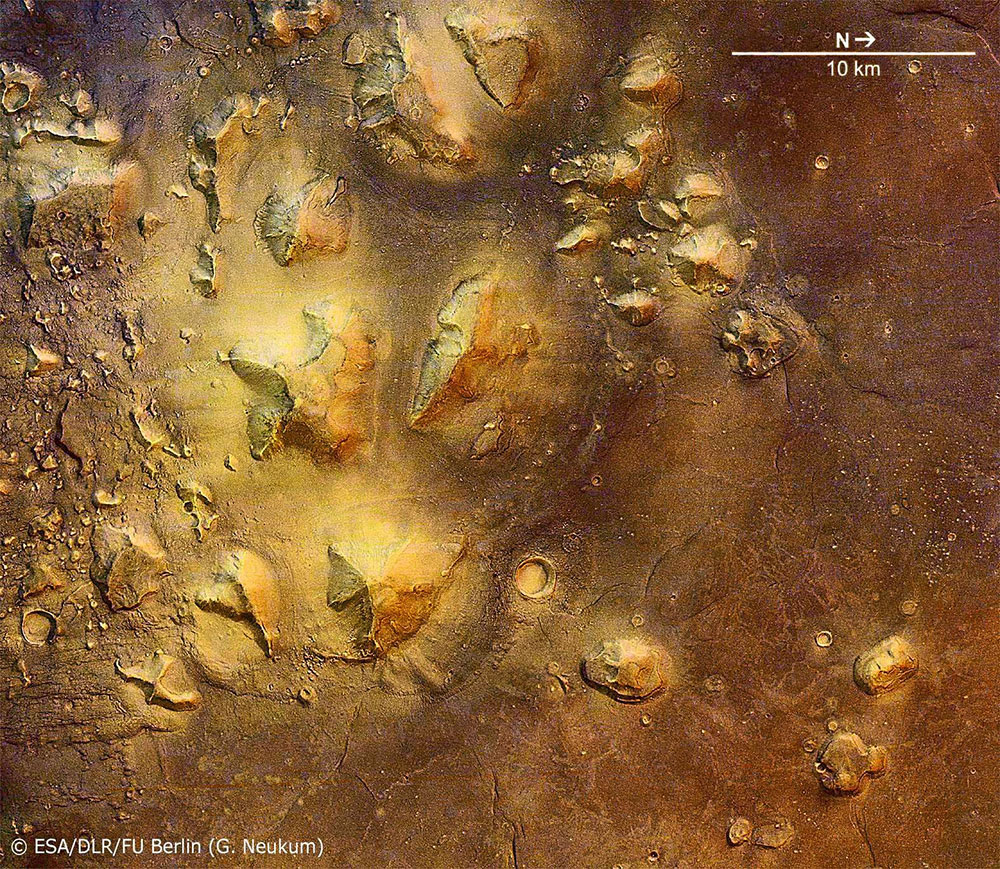
Everybody will be familiar with the so-called Face on Mars and Pyramids of Mars, features of an area of known as Cydonia that some argue can only be artificial. They were discovered in photographs taken by the Viking mission in 1976.

Their most enthusiastic exponent is science writer Richard C. Hoagland.

Since the early 1980s, Hoagland has run a well-funded group which is currently called the Enterprise Mission.

Although there are other, more cautious, researchers in this field whose work deserves serious consideration, Hoagland and his team's primary aim is not simply to promote the idea of artificial structures on Mars, but to extrapolate from their existence a message for Earth today - and for our immediate future.

They also try to link the alleged monuments of Cydonia to ancient Egypt.

Hoagland's own message is that the Martian monuments were built by an extraterrestrial civilization that came from outside our solar system, who also visited ancient Egypt and influenced the development of that civilization - and who are about to return.

Unfortunately for Hoagland, the so-called Face was re-imaged by the Mars Global Surveyor last year, and shown to be nothing more than a featureless rocky outcrop. Dismissing the new pictures as 'crap', Hoagland is unrepentant and continues to maintain the Egypt-Mars connection. And in this Hancock and Bauval agree. To them also there is a link between Mars and Egypt.

Those authors use many of the same arguments as Hoagland to try to prove the link. (Robert Temple, in the new edition of The Sirius Mystery, has also endorsed the Face on Mars, believing it to be connected with beings from Sirius.)

We ourselves think that the Mars story is by no means clear-cut. For example, the Pyramids of Cydonia do seem strange for natural formations. On the data currently available, it would be arrogant to dismiss the case for them being artificial. However, we do disagree when it comes to extrapolating messages from these features and trying to link them with ancient Egypt. Here, we find that the arguments put forward simply do not stand up.

Essentially the argument is this - and it's not much: there are pyramids on Mars and there are pyramids in Egypt. But, of course, there are pyramids in many places on Earth, and the Martian pyramids are different in shape - the most prominent one, for example, is five-sided - and size from those in Egypt.

Hoagland, Hancock and Bauval also argue that Giza and Mars do not only have pyramids in common - but both also have a Sphinx! This depends on whether you consider the Martian Face to be a Sphinx. Well, they both have faces...

Then they fall back on linguistics - or rather, as we have discovered, pseudo-linguistics. For example, Hoagland, Hancock and Bauval make much of one of the ancient Egyptian names of the Sphinx, Horakhti, which means 'Horus of the Horizon'.

They claim that there are two ancient Egyptian words, one meaning 'Horus' and the other meaning 'face', that sound exactly alike: heru. So Horakhti, they say, can be translated as 'Face of the Horizon'. Could this be a description of the Face on Mars, which would be on the horizon when viewed from some of the other features? Well, no.

For a start, the thing that none of these authors tell us is that heru is a plural form of the word for 'face', so it actually means 'faces'.

Besides, the hieroglyphs for the two words are completely different. In any case, because hieroglyphs don't include vowels, which therefore have to be largely guessed at, how can anybody say that any two ancient Egyptian words sounded alike?
 
Another linguistic loophole involves the Arab name for Cairo - Al Qahira. This is also an Arab name for Mars. Not only is this fact used to link Giza and Cydonia, but Hancock and Bauval actually say that this is 'inexplicable'.

But far from being inexplicable, the reason that Cairo was given this name is, in fact, very well known. Al Qahira literally means 'the Conqueror'.

The city of Cairo did not exist before 969 AD, when it was founded by an Arab general who had just conquered that part of Egypt. True, Mars does come into it, but only because at the time the city was founded the planet was in a particularly auspicious position astrologically - especially for a city built in honor of a conqueror. There is no mystery about it - but Hoagland, Hancock and Bauval have made one.

There appears to be a genuine mystery about Mars. Perhaps there really are pyramids or other artificial structures there. However, attempts to link Cydonia with ancient Egypt simply don't work and have been contrived. But for what purpose?

Perhaps a clue lies in the fact that Richard Hoagland was working at SRI International when he first became interested in the Martian enigmas in 1982. He formed a research group to study them further, which was funded by SRI. The co-founder of this group was Dr Lambert Dolphin, who a few years earlier had led the SRI teams at Giza.

In case you think that we are overly paranoid about SRI's intimate involvement with the Pentagon and CIA, it is as well to take on board the initial reaction of one social scientist who attended Hoagland's first lecture on the Face on Mars.

What he said was:
'At first I thought it was some kind of joke, or maybe a complex social experiment being conducted by the CIA - to study psychological reactions to such a hypothetical discovery.

I mean - SRI involvement, 'Faces' on Mars... what would you think?... Was this an elaborate psychological experiment sponsored by the defense community?'
In fact, Hoagland's work has always received active encouragement by members of the intelligence community, and most of the key members of his research groups have connections with either intelligence agencies or the Pentagon.

All of this is really, in a sense, just setting the scene for the 'stargate conspiracy', at the heart of which are revelations about a very interesting group of people.

Nearly fifty years ago, this American group believed that they had established contact with powerful extraterrestrial beings. Not physical contact, but psychic or telepathic communication. Over a period of many years these entities made many revelations about themselves - including that they had been the gods worshipped in ancient Egypt.

Let's make this clear. We are not talking about a little New Age channelling group.

From the very beginning - half a century ago - it reached the very top levels of American society, even involving a former Vice President. Since then its influence has grown, and it now has followers across the world, including in Britain. And it still whispers in the ear of the Presidency.

So what do these entities, or intelligences, claim?

They claim that they come from Sirius. They built the 'monuments' of Mars (although, significantly, these claims only appeared after the first NASA images of Cydonia.) They created the human race, and taught it the arts of civilization, and have guided us from behind the scenes throughout history.

And they are now about to return to preside over a great 'cleansing'. They claim to have been responsible for the destruction of Atlantis, after which survivors founded the Egyptian civilization and built the Great Pyramid - around the year 10500 BC. They claim that the Sphinx was built in honor of them - and that there are hidden chambers that can be accessed from beneath it.

Some of those who claim to be in contact with these extraterrestrials also claim to have been in contact with Edgar Cayce's spirit guide, and that Cayce's pronouncements came from essentially the same source. In its fifty-year history, the 'contact group' in touch with these entities have had some very interesting dealings.

During the early 1970s, it was intimately involved with SRI International - interestingly, at the same time that SRI first became interested in Giza.

In fact, one of the leaders of this group worked alongside Lambert Dolphin's team. Key members of this group have been behind the promotion of the Face on Mars - and its connection with Egypt - from the very beginning. In fact, Richard Hoagland's so-called Message of Cydonia comes directly from these 'space-gods'.

Throughout its long history, many eminent names have been connected with this group - names from the fields of politics, high finance, entertainment, and even science.

Among those present at the 'first contact' with these alleged extraterrestrials in 1952 was the philosopher and inventor Arthur M. Young - who was later to become the mentor of Robert Temple, and who directly inspired him to write The Sirius Mystery.

Put like this it all sounds very exciting.
  • Has contact with the gods of ancient Egypt been re-established?
  • Are they, as they promise, about to return?
Of course, many would consider their claims to have been backed up by independent research:
  • the connection between Sirius and ancient Egypt
  • the importance of the year 10500 BC
  • the connection between Egypt and Mars
But we have seen that all this 'evidence' is not only flawed but highly contrived.

It must be pointed out that these allegedly all-knowing entities not only make mistakes when dealing with ancient history, but sometimes come out with downright howlers. They even give the ancient Egyptian name for the Sphinx as arq ur - which, as we have seen, comes from a misreading of a particular dictionary.

But the whole story takes on a much darker hue. We have discovered that military and intelligence agencies, mainly the CIA, were involved with this group right from the beginning. In fact, the research institute where the entities first made their appearance was actually a front for Pentagon psychological warfare and parapsychological experiments.

The person who formed and led the 'contact group', and who first established contact with the entities, was - at the very same time - working for both the Pentagon and the CIA on various techniques of psychological manipulation. This included the use of hallucinogenic drugs, hypnosis and electromagnetic influence.

He was working specifically on ways to induce apparent mental contact with non-human entities - and, much more disturbingly, this was part of the CIA's MKULTRA mind control project.

We have seen the involvement of the CIA in much of this story.
  • But how far does it go?
  • Did they create this scenario from the beginning, as part of a long-term program of psychological and sociological manipulation?
  • Or could it really be that some non-human entities - but not necessarily who they claim to be - are either running the show or are partners in its stage management?
Either way, it should scare the hell out of us...

source: biblioteca pleyades

Copyright © misteri1963 all rights reserved. You can copy and distribute this article as long as you do not modify it in any way, the content remains complete, the author will be credited and this URL https: // misteri1963.blogspot.com and the Copyright notice

4.- El Secuestro de Los Dioses


por Lynn Picknett y Clive Prince
6 Junio 1999
de la Edición 17 de Truth Campaign
Traducción de Editorial-Streicher
4 Octubre 2014
del Sitio Web Editorial-Streicher

Resultat d'imatges de egipto

Ésta (Hijacking the Gods) es al parecer la conferencia previa, dentro de una serie, a la que presentamos en castellano este 5 de Agosto bajo el título de Portal de Acceso a los Dioses.

Fue dada el 6 de Junio de 1999 también en el hotel Templar Lodge, en Gullane, Escocia, y publicada en la edición Nº 17 de la desaparecida revista Truth Campaign.

Aquí sus autores nuevamente atacan las falencias conceptuales de ciertos autores de la "nueva egiptología" que parecen particularmente interesados en determinar ciertas precisas fechas y eventos dentro de la cronología del antiguo Egipto.

Repasan también los fabricados intentos de algunos de relacionar a Egipto y Marte en base a unas pésimas imágenes de sondas espaciales, cuyas posteriores entregas, con mayor definición, han demostrado que no hay ni pirámides ni un supuesto rostro en dicho planeta.

Más aún, aventuran que todo ello puede bien ser parte de un programa de intoxicación informativa y cognoscitiva que terminaría ayudando a un proyecto de aceptación de un "encuentro" con supuestas entidades extraterrestres, todo, por supuesto, absolutamente artificial y escenificado.

Este artículo también ha sido tomado del sitio Biblioteca Pléyades, de una página relativa a Picknett y Prince.


El Secuestro de los DiosesAcerca de Hoagland, Cayce, Egipto, Marte y The Stargate Conspiracy


Fue un muy sorprendente conjunto de circunstancias lo que nos llevó a escribir nuestro nuevo libro, 
The Stargate Conspiracy.

Nosotros no nos dispusimos a escribir tal libro sino que más bien intentamos seguir ciertas líneas de investigación, como continuación de nuestro último libro, La Revelación de los Templarios, en el cual concluimos que el cristianismo era una ramificación de la religión de misterio egipcia de Isis y Osiris.

En aquel libro, sólo situamos la historia en el Egipto del primer siglo. Nuestra intención era ampliar la investigación más atrás en la historia de Egipto y en las raíces de su religión.

Nuestra investigación nos llevó de nuevo a la religión más antigua conocida del Egipto antiguo, la de Heliópolis, cuyas creencias y cosmología, que están resumidas en los Textos de las Pirámides, inspiró a los constructores de la Gran Pirámide de Giza. Inevitablemente, fuimos llevados a considerar los misterios planteados por los grandes monumentos de la época de las Pirámides.

Y, por supuesto, no podíamos ignorar la reciente avalancha de atrayentes libros que tratan de ello, y que ofrecen soluciones a aquellos misterios, y que componen lo que ha sido llamado como "Egiptología Alternativa".

A lo largo de los años '90, muchos libros, desafiando la arrogancia y complacencia de la egiptología académica, y abriendo nuestros ojos a las maravillas de aquella antigua cultura, han alcanzado una gran audiencia a nivel mundial.

En este campo, dos nombres se destacan por encima del resto: Graham Hancock y Robert Bauval, autores - conjuntamente y por separado - de libros tales como "The Orion Mystery", "Fingerprints of the Gods", "Keeper of Genesis" y, más recientemente, "The Mars Mystery".

Fue el mirar estas nuevas teorías e ideas lo que condujo nuestra investigación en una dirección muy inesperada, y que condujo en último término a The Stargate Conspiracy.

Tenemos que plantear un punto muy importante en el comienzo.

Gran parte de lo que estamos a punto de decir es crítico de algunas de estas nuevas ideas, y usted puede incluso comenzar a sospechar que somos, de algún modo, escépticos. Esto no es tan así. Creemos que hay misterios genuinos en cuanto al antiguo Egipto: cómo (y por qué) ellos construyeron las pirámides, de dónde vino su civilización, y cómo ellos conocieron muchas de las cosas que conocían.

No somos admiradores de la obstinada arrogancia de la egiptología académica, y tenemos una enorme reverencia por el Egipto antiguo, su cultura y su religión, y los logros de su gente.

Es precisamente porque tenemos tal reverencia que percibimos tan fuertemente la manera en que los muy reales misterios de Egipto han sido, efectivamente, secuestrados a fin de servir a otras agendas. Donde hay un misterio, existe un potencial para la explotación, que ofrece soluciones aparentes que apoyan sistemas particulares de creencias.

Este potencial es aún más fuerte cuando el misterio involucra algo tan evocador como el Egipto antiguo, cuyas obras, como las pirámides y la Esfinge, hablan tan poderosamente a nuestra imaginación.

La Egiptología Alternativa trata de explicar el enigma del avanzado conocimiento técnico de los egipcios antiguos - como se muestra más obviamente en la construcción de la Gran Pirámide - mediante una o dos teorías (o a veces una combinación de las dos).
  • La primera es que los antiguos egipcios eran simplemente vástagos, o herederos, de una civilización mucho más antigua y avanzada - como la Atlántida - que ha sido borrada de la Historia por alguna catástrofe global.

  • La segunda es que los grandes monumentos del mundo antiguo fueron construidos por, o las capacidades para construirlos les fueron enseñadas por, visitantes de otro mundo.
Uno de los libros más influyentes en este campo es The Sirius Mystery, de Robert Temple, que fue publicado primeramente en 1976 y luego en una edición extensamente actualizada en 1998.

Como muchos de ustedes sabrán, allí se apunta al extraordinario conocimiento de una tribu africana del Oeste, los Dogones de Mali.

La religión dogón se centra en la estrella Sirio. No hay nada extraño sobre esto porque, dado que Sirio es la estrella más brillante en el cielo, muchas culturas la han incorporado en sus creencias y mitología. Sin embargo, lo que intrigó a Temple - y a muchos otros - fue que los antropólogos franceses que estudiaron la religión dogón relataron que los Dogones también creían que Sirio tiene un compañero, una estrella muy pequeña y muy pesada que es invisible al ojo desnudo.

Ahora sabemos que esto es verdadero. Sirio es un sistema estelar binario, con una segunda estrella enana blanca - muy pequeña, muy pesada - en órbita alrededor de la estrella principal. Sirio B, como es llamada, sólo fue descubierta en 1844, y no fue fotografiada sino hasta los años '70.

¿Cómo, entonces, pudieron los dogones haber sabido acerca de ello?


Estrella Sirio y Sirio B
 

La teoría de Temple es que el conocimiento de Sirio B se originó tras un contacto real con extraterrestres de un planeta del sistema de Sirio.

Él sostiene que este contacto ocurrió no en África del Oeste sino en Oriente Medio, entre las antiguas civilizaciones de Egipto y Sumer, y que los extraterrestres fueron responsables del desarrollo de aquellas civilizaciones, y por lo tanto, en última instancia, de la nuestra.

El conocimiento de aquel contacto, y de Sirio B, fue incorporado en la mitología egipcia y sumeria, y el secreto fue transmitido a los griegos, y luego a varias otras culturas, alcanzando finalmente a los dogones.

A causa de su enfoque aparentemente académico y erudito, el libro de Temple recibió un nivel de aclamación y aceptación crítica que lo pone aparte de otras teorías de "astronautas antiguos", como las de Erich von Daniken...

El anómalo conocimiento de los dogones - no sólo acerca de Sirio sino de muchas otras cosas - representa realmente un misterio genuino. Sin embargo, Temple quiso vincular esto con el Egipto antiguo, y aquí, a nuestro parecer, su caso ya no es tan persuasivo, por cuanto partes importantes de su argumento están basadas en errores de hecho, y son a menudo artificiales.

Por ejemplo, uno de los puntos claves en su caso implica la interpretación de mitos relacionados con Anubis, el dios de los muertos, que tenía cabeza de chacal. La justificación de Temple para esto es que Sirio es conocido como la "Estrella del Perro", y así, por medio de un proceso de ideas, vamos desde el perro al chacal y luego a Anubis.

Por lo tanto, cuando los egipcios antiguos hablaban acerca de Anubis ellos realmente estaban hablando de Sirio, o mejor dicho de Sirio B.

Pero hay un importante problema con esto: los egipcios antiguos no asociaron a Sirio con Anubis. Para ellos, Sirio era la estrella de la diosa Isis, y a veces, por extensión, de su hijo Horus. Fueron los griegos los que llamaron a Sirio la Estrella del Perro, porque estaba en la constelación que ellos llamaban el Gran Perro (Canis Major).

Los egipcios nunca establecieron una conexión entre Sirio y Anubis o con los perros. Por lo tanto, el uso que hace Temple de leyendas relacionadas con Anubis está basado en una premisa completamente falsa.

Otra cadena de asociaciones seguidas por Temple está relacionada con la literatura Hermética - los textos mágicos y filosóficos atribuidos al legendario sabio Hermes Trismegisto - que él cree que incorpora referencias al "secreto de Sirio". Su justificación para hacer esto es que, dice él, los griegos equiparaban a su dios Hermes con Anubis.

Increíblemente, Temple (hasta donde estamos conscientes) ha seguido sin ser cuestionado acerca de este punto durante más de veinte años, siendo que está simplemente equivocado. Hermes era el equivalente del Thot egipcio, no de Anubis. Nuevamente, Temple ha basado una línea de razonamiento entera en un error. Pero su influencia es tal, que muchas personas simplemente han aceptado sus ideas.

Hay muchos ejemplos similares en el libro de Temple que a nuestro juicio debilitan seriamente su intento de rastrear el "secreto de Sirio" - y por lo tanto la visita de seres de Sirio - hasta el Egipto antiguo. Temple comete otro error en The Sirius Mystery, que es un pequeño resbalón en sí mismo, y de ningún significado particular para su argumento, pero que tiene - como veremos - algunas ramificaciones muy importantes en otro contexto.

Temple da como uno de los nombres egipcios antiguos para la Esfinge de Giza las palabras "arq ur".

Muchos otros, usando a Temple como su autoridad, han repetido esto desde entonces como un hecho. Lamentablemente, "arq ur" no significa "Esfinge". Significa "plata". El error surgió porque Temple leyó mal la entrada para "arq ur" en el clásico diccionario de 1920 de Sir E.A. Wallis Budge de jeroglíficos egipcios.

Perfilando la entrada para "arq ur", dos palabras inglesas aparecen después de los jeroglíficos.

Una es "plata", la definición correcta. La otra dice "Sphinx, 2, 8". Esta última no es una definición sino una referencia a la fuente de Budge, un diario egiptológico francés llamado Sphinx.

El "2" se refiere al volumen, y "8" al número de página. En la página 8 del volumen 2 están los jeroglíficos para "plata" que Budge usó en su diccionario.

Este error no tiene ningún significado particular para el argumento total de Temple, ya que él lo menciona sólo al pasar, pero sale a colación en algunos lugares muy sorprendentes.

La edición revisada de The Sirius Mystery, publicada el año pasado [1998], contiene algún significativo material nuevo. En la edición original de 1976, Temple sólo argumentó el caso para el contacto extraterrestre en el pasado antiguo. En la nueva edición él ha ampliado su argumento hasta plantear el retorno inminente de estos "dioses espaciales".

Él ahora cree que ellos no regresaron al sistema Sirio sino que se pusieron a sí mismos en estado de animación suspendida en alguna parte en nuestro Sistema Solar, de modo que un día ellos despertarán y volverán a ver cómo se ha desarrollado la civilización que ellos crearon.

Temple sugiere que el retorno de ellos es inminente ahora.

También en la nueva edición Temple afirma que su libro The Sirius Mystery atrajo el interés inoportuno tanto de la CIA como de los servicios de Inteligencia británicos. De hecho, él dice que la CIA trató de interferir con su investigación mientras él estaba escribiendo el libro, y que después de que salió publicado ellos lo acosaron durante los próximos 15 años.

La implicación es que la CIA quería dificultar la investigación de Temple para The Sirius Mystery, lo que a su vez implica que ellos querían que dejara de escribir el libro, lo que implica que, por alguna razón, ellos no querían que nosotros lo leyéramos.

No cabe duda de que Temple es sincero, ya que él no puede ser de ningún modo llamado un paranoico con un temor de persecución por parte de la CIA. Él cuenta la historia de su acoso con alguna indignación, puesto que él es un partidario leal y defensor de aquella agencia.

Por ejemplo, en un libro de 1989 sobre los "usos y abusos" de la hipnosis, él defiende los excesos de la CIA en la conocida investigación de ésta acerca del control de la mente de los años '50 y '60, como queda ejemplificada muy infamemente en su proyecto MK-ULTRA.

De hecho, Temple proclama orgullosamente que él rechazó incluso leer libros que denunciaban esos experimentos.

Sin embargo, si la CIA realmente quiso impedir que The Sirius Mystery fuera publicado, esto es difícilmente una buena publicidad para su eficacia. Del mismo modo, la implicación de que la CIA lo persiguió durante los siguientes 15 años porque él había escrito el libro no tiene mucho sentido.

¿Cuál era el punto, si el libro ya estaba publicado? No sólo eso, sino que ellos tampoco pudieron evitar la publicación de una nueva y actualizada versión, que incluye la historia del interés de ellos por el libro.

En efecto, el conocimiento del interés de ellos, y su aparente oposición a The Sirius Mystery, sólo aumenta su atractivo. Esto estimula activamente el interés en el libro, a causa de que, si la CIA no quiere que nosotros lo leamos, debe haber algo digno de ser leído. Sospechamos que ésta era la verdadera intención de la CIA, en un ejemplo clásico de psicología inversa. Los ejemplos mencionados de errores en el libro de Temple demuestran la necesidad de una cuidadosa comprobación de tales afirmaciones.

Como investigadores, eso es algo que siempre tratamos de hacer. Y fue algo que nosotros hicimos cuando examinamos el trabajo de los dos nombres principales en la Egiptología Alternativa, Robert Bauval y Graham Hancock.

Como la mayor parte de ustedes sabrá, la obra de Hancock y de Bauval se centra en la importancia del año 10.500 a.C. Alrededor de ese tiempo, argumentan ellos, tuvo lugar un cataclismo que destruyó una civilización avanzada y global. Algo de su conocimiento sobrevivió y formó la base de la civilización egipcia antigua.

Ellos también sostienen que los sobrevivientes nos dejaron mensajes codificados en monumentos tales como las pirámides y la Esfinge de Giza. Aparentemente, esto parece una idea excitante e incluso razonable. Pero examinemos la evidencia de ellos más de cerca.

En The Orion Mystery (1993), Robert Bauval sostiene que las tres pirámides de Giza fueron construidas para reflejar las tres estrellas del Cinturón de Orión. Esto, en sí mismo, está bien, parece funcionar.

Pero Bauval usa su "Teoría de Correlación Giza-Orión" para vincular los monumentos a un período mucho más antiguo. Su argumento es el siguiente: Las tres pirámides forman un ángulo de 45 grados hacia el meridiano Norte-Sur. Para hacer la correlación perfecta, cuando las estrellas cruzan el meridiano celeste ellas deberían formar el mismo ángulo.

Sin embargo, cuando la Gran Pirámide fue construida - aproximadamente en 2500 a.C. - ellas no lo hacían.

A causa de la precesión de los equinoccios, la posición de las estrellas cambia con el tiempo. Bauval razonó que si él pudiera encontrar un período en el cual las estrellas formaran el mismo ángulo que las pirámides, esto señalaría un tiempo significativo, un tiempo hacia el cual los constructores de la pirámide estaban tratando de llamar nuestra atención.

Cuando él usó simulaciones de computador para rebobinar el ciclo precesional, encontró que el Cinturón de Orión había estado en la "posición de Giza" en 10.500 a.C.

Sin embargo, cuando decidimos volver a comprobar esto, las cosas dieron un giro bastante sorprendente. Descubrimos que el geómetra Robin J. Cook, quien produjo realmente los diagramas para The Orion Mystery, aunque concordando con la mayor parte de la teoría de Bauval, discrepó fuertemente con esta parte de las conclusiones de Bauval. Decidimos comprobar por nosotros mismos para averiguar quién tenía razón.

Encontramos que las estrellas de dicho Cinturón no estaban en la "posición de Giza" en 10.500 a.C. Para encontrar las estrellas en esa posición - según el mismo programa computacional usado por Bauval - tenemos que remontarnos a aproximadamente 12.000 a.C. como la fecha más temprana.

Parece que Bauval simplemente había cometido un error y había calculado mal un par de miles de años. Sin embargo, volveremos a esto... Probablemente el acontecimiento más famoso acerca del antiguo Egipto en los pasados diez años ha sido la re-datación de la Esfinge por medio de la erosión de la piedra caliza en la cual ha sido esculpida.

Según la Egiptología convencional, la Esfinge fue esculpida en la meseta de Giza en algún momento alrededor de 2500 a.C. Sin embargo, muchos sostienen - principalmente el destacado egiptólogo alternativo John Anthony West - que es, en realidad, mucho más antigua.

West creía que la erosión de la Esfinge no fue causada por la acción de la arena arrastrada por el viento sino por el agua.

Él creía que esto era debido a una gran inundación - la que sumergió a la Atlántida - y sostuvo que si esto pudiera ser probado científicamente, sería un paso importante no sólo para establecer la verdadera edad de la civilización egipcia sino también la existencia de la Atlántida. Finalmente, él tuvo éxito en conseguir que el geólogo estadounidense Robert Schochechara un vistazo.

Schoch concluyó que la erosión era debida al agua, a siglos de exposición al agua de lluvia.

Pero, como él señaló, si éste era el caso, la Esfinge debe haber estado allí durante el último período de precipitaciones sustanciales en Egipto, que ocurrió aproximadamente entre 7.000 y 5.000 a.C. Esto significa que la Esfinge debe ser al menos 2.500 años más antigua, y quizás hasta 5.000, que lo que los egiptólogos admitirán.

John Anthony West afirma que el trabajo de Schoch justifica sus ideas. Sin embargo, hay que señalar que West creía que una inundación era responsable de la erosión, y que, al encontrar que había sido realmente debido a la exposición prolongada al agua de lluvia, Schoch ha demostrado que West estaba tan equivocado como este mismo considera a los egiptólogos académicos.

Schoch concluyó que la Esfinge pudo haber sido construida ya en 7000 a.C. Sin embargo, tanto West como Graham Hancock han usado el trabajo de aquél en apoyo de una fecha mucho más temprana: 10.500 a.C. Ellos han sido tan exitosos en esto que muchas personas ahora consideran esto como algo prácticamente demostrado.

West y Hancock sostienen que el período húmedo señalado por Schoch no había sido lo suficientemente largo como para causar la erosión que vemos en la Esfinge. En vez de eso, ellos apuntan a un período húmedo que, dicen ellos, tuvo lugar en el undécimo milenio a.C., es decir, alrededor 10.500 a.C.

Graham Hancock escribe en Fingerprints of the Gods que en esa época "llovió y llovió y llovió". Imagine nuestra sorpresa cuando comprobamos las fuentes acerca del clima del Egipto antiguo y prehistórico - incluso la fuente citada por Hancock mismo - y encontramos que no había ningún período húmedo en el undécimo milenio a.C.

Al igual que Robert Bauval, Hancock y West parecen haber cometido un error simple, pero uno que también tiene como resultado la fecha de 10.500 a.C.

En el reciente libro de Hancock, Heaven's Mirror, co-escrito con su esposa Santha Faiia, y en la respectiva serie de televisión de Canal 4, él ha ampliado su argumento en favor de aquella fecha a otros monumentos antiguos alrededor del mundo, por ejemplo, el complejo de templos hindúes en Angkor en Camboya (aunque éstos realmente no califican como antiguos, puesto que el más temprano fue construido en el siglo XI d.C.).

Hancock sostiene que estos templos fueron edificados para representar la constelación de Draco, en la posición en que se encontraba en 10.500 a.C. Sin embargo, cuando examinamos esto encontramos que realmente no hay ninguna correlación entre los templos y las estrellas.

Éstos son templos que no corresponden a ninguna de las estrellas de Draco, estrellas para las cuales no hay ningún templo correspondiente, y, en cualquier caso, el patrón formado por los templos, según la reconstrucción de Hancock, tiene muy poco parecido con Draco.

Parece que Hancock, Bauval y West, por alguna razón, están propensos a asegurarse de que su investigación señale el año 10.500 a.C., encajen o no realmente los datos.


¿Pero por qué 10.500 a.C.?

Quizás esto está relacionado con las profecías del psíquico estadounidense Edgar Cayce, por el cual Hancock y Bauval parecen tener mucho respeto.

Edgar Cayce, conocido como el "Profeta Durmiente", quien murió en 1945, se cree ampliamente que es un hombre de Kentucky simple y sin educación que entraba en un estado de trance y hacía declaraciones sobre el pasado antiguo y daba predicciones para el futuro.

Según Cayce, la Gran Pirámide y la Esfinge fueron construidas por sobrevivientes de la Atlántida... en 10.500 a.C.

Él dijo que los atlantes habían construido una subterránea "Sala de Archivos" que contiene la sabiduría recolectada de su raza y que, dijo él, sería descubierta en 1998. Esto de alguna manera daría origen a una Nueva Era, y a la aparición de una nueva raza.

Nosotros pasamos mucho tiempo mirando las predicciones de Cayce, y encontramos que, a pesar de que sus seguidores afirman que él era "cerca del cien por ciento exacto", usted tendría que trabajar duro para encontrar incluso una de sus profecías que se haya cumplido.

Por ejemplo, recientemente alguien nos dijo que Cayce era un profeta brillante porque, a principios de los años '40, él predijo que China se haría comunista hacia 1968. Por supuesto, de ser verdadero, eso sería impresionante. Lamentablemente, lo que Cayce realmente dijo era que China se haría cristiana hacia 1968.

Pero aún así Cayce es muy interesante. Lejos de ser un virtual simplón, él fue una persona que había leído muchísimo, y cuando joven trabajó en varias librerías. A él también se le confió la fundación de nuevas logias para sus compañeros masones. Pero más significativo que esto fueron sus contactos.

Nosotros descubrimos que, justo después de la Primera Guerra Mundial, Cayce fue llamado para aconsejar al Presidente Woodrow Wilson. La persona que arregló esto era un amigo cercano de Cayce, el coronel Edmond Starling, que era el jefe del Servicio Secreto estadounidense.

Cayce era mejor conocido por las curas que él prescribía mientras estaba en trance, que eran a menudo de verdad impresionantes. Esto es lo que enganchó a sus admiradores, que cometieron el error fatal de suponer que todas sus capacidades psíquicas eran igualmente buenas. Sin embargo, como hemos visto, resulta que esto no es así.

Pero la gente entonces no sabía que sus predicciones fallarían, y él fue agasajado por importantes industriales, políticos principales - incluyendo al menos un Presidente - comandantes superiores del Ejército y miembros de los servicios de Inteligencia.

Cayce, como hemos visto, predijo el descubrimiento de la Sala de Archivos en Giza. Es interesante que haya habido muchas tentativas de encontrar la Sala de Archivos allí en los últimos 25 años. Tiene que ser señalado que los egipcios antiguos mismos nunca mencionaron tal cosa en el contexto de Giza, ni tampoco hay ninguna prueba arqueológica para ello.

El concepto de Sala de Archivos proviene completamente de Edgar Cayce. Como esperaríamos, el impulsor primario en la búsqueda de la Sala de Archivos ha sido la Association for Research and Enlightenment (ARE), que fue formada por Cayce en los años '30 y que sigue promoviendo su trabajo.

Otro actor clave en la meseta de Giza (a veces trabajando en colaboración con la SON) ha sido un equipo de una organización muy interesante llamada SRI International(Stanford Research Institute).

Éste es uno de los institutos privados de investigación científica más grandes del mundo, y tiene una reputación - que descubrimos que es justificada - por trabajar estrechamente con los militares y la comunidad de Inteligencia estadounidenses. Alrededor del 75% de los ingresos del SRI proviene de contratos con el Pentágono y otras agencias del gobierno estadounidense, incluyendo la CIA.

El SRI hizo muchas expediciones a Egipto durante los años '70, llevando para ello equipo de tecnología avanzada diseñado para localizar espacios ocultos. El equipo fue conducido por el físico doctor Lambert Dolphin Jr.

Pero es interesante que ellos renunciaran a buscar en Giza en 1979, aparentemente sin haber encontrado nada. Sin embargo, desde entonces la mística de la Sala de Archivos ha continuado siendo construida, de modo que haya una expectativa de revelaciones provenientes de Egipto en el futuro próximo.

Ahora que 1998 - cuando Cayce dijo que la Sala de Archivos sería encontrada - ya ha pasado, están comenzando a circular rumores de que ella fue encontrada en la forma de la llamada Tumba de Osiris. Ésta es una cámara en el fondo de una columna aproximadamente a 36 metros bajo la meseta de Giza no lejos de la Esfinge, que fue excavada de nuevo el año pasado.

No tiene archivos de ninguna especie en ella, y todavía se están haciendo intentos para hacer pasar esto como si de alguna manera confirmara la profecía de Cayce. En cualquier caso, fue primero excavada en los años '30.

El caso es que, si cualquiera de esta gente encuentra algo que pudiera ser una Sala de Archivos, eso será tomado como la prueba de que Cayce tenía razón, no sólo sobre su versión de la Historia antigua, sino también en sus predicciones de la transformación global inminente. Pero usted puede estar seguro de que, si el año 2000 viene y se va sin ninguna Sala de Archivos, la misma gente seguirá explotando el deseo cada vez más ferviente para que ella sea encontrada.

No se equivoque: Egipto mismo es un símbolo muy potente. Esto no se les ha escapado a aquellos que tratan con la explotación de sistemas de creencias, como las agencias de Inteligencia.

Otro tema emotivo es la cuestión entera de la vida en otros planetas, y recientemente hemos visto un esfuerzo concertado para conectar el Egipto antiguo con una supuesta civilización perdida en Marte, como por ejemplo en el libro de 1998 de Hancock y Bauval llamado The Mars Mystery.

Todo el mundo ya estará familiarizado con la llamado Rostro de Marte y con las Pirámides de Marte, peculiaridades de un área marciana conocida como Cydonia que algunos argumentan que sólo puede ser artificial. Ellas fueron descubiertas en fotografías tomadas por la misión Viking en 1976. Su exponente más entusiasta es el escritor de ciencia Richard C. Hoagland.

Desde principios de los años '80, Hoagland ha dirigido un grupo bien financiado que es llamado actualmente Enterprise Mission.


Región de Cydonia en Marte
("Rostro" a la derecha)
 

Aunque haya otros investigadores más cautelosos en este campo cuyo trabajo merece una consideración seria, el objetivo primario de Hoagland y su equipo no es simplemente promover la idea de estructuras artificiales en Marte, sino extrapolar a partir de su existencia un mensaje para la Tierra hoy, y para nuestro futuro inmediato.

Ellos también tratan de vincular los supuestos monumentos de Cydonia al Egipto antiguo.

El propio mensaje de Hoagland es que los monumentos marcianos fueron construídos por una civilización extraterrestre que llegó desde fuera de nuestro Sistema Solar, que también visitó el Egipto antiguo e influyó en el desarrollo de aquella civilización, los cuales están a punto de volver.

Lamentablemente para Hoagland, el supuesto Rostro fue fotografiado de nuevo por el Mars Global Surveyor el año pasado [1998], y mostró ser nada más que un afloramiento rocoso carente de rasgos. Descartando las nuevas imágenes como "tonterías", Hoagland es contumaz y sigue sosteniendo que hay una vinculación entre Egipto y Marte.

Y en esto Hancock y Bauval están de acuerdo.

Para ellos también hay un vínculo entre Marte y Egipto. Aquellos autores usan muchos de los mismos argumentos que Hoagland para tratar de demostrar el nexo. (Robert Temple, en la nueva edición de The Sirius Mystery, también ha respaldado el Rostro de Marte, creyendo que éste está relacionado con seres de Sirio).

Nosotros mismos pensamos que la historia de Marte de ninguna manera está claramente definida.

Por ejemplo, las Pirámides de Cydonia parecen realmente extrañas para ser formaciones naturales. Con los datos actualmente disponibles, sería arrogante descartar el caso de que pudieran ser artificiales. Sin embargo, discrepamos realmente cuando se llegan a extrapolar mensajes a partir de estas peculiaridades y se intenta vincularlas con el Egipto antiguo. En este caso encontramos que los argumentos propuestos simplemente no se sostienen.

Esencialmente el argumento es éste, y no es mucho: hay pirámides en Marte y hay pirámides en Egipto. Pero, por supuesto, hay pirámides en muchos lugares en la Tierra, y las pirámides marcianas son diferentes en forma: la más prominente, por ejemplo, es de cinco caras y cinco veces el tamaño de las de Egipto.

Hoagland, Hancock y Bauval también sostienen que Giza y Marte no sólo tienen pirámides en común, sino que ambos sitios también tienen ¡una Esfinge! Esto depende de si a usted le parece que el Rostro de Marte es una Esfinge. Bien, ambos tienen caras...

Entonces ellos echan mano a la lingüística, o mejor dicho, como hemos descubierto, a la pseudo-lingüística.

Por ejemplo, Hoagland, Hancock y Bauval mencionan mucho uno de los antiguos nombres egipcios de la Esfinge, Horakhti, que significa "Horus del Horizonte".

Ellos afirman que hay dos palabras egipcias antiguas, una significando "Horus" y la otra significando "rostro", que suenan exactamente parecidas: "heru". Entonces Horakhti, dicen ellos, puede ser traducido como "Rostro del Horizonte".

¿Podría esto ser una descripción del Rostro de Marte, que estaría en el horizonte cuando se ve desde alguna otra parte del paisaje? Bueno, no.

Para empezar, lo que ninguno de estos autores nos dice es que "heru" es una forma plural de la palabra para "rostro", de manera que esto realmente significa "rostros". Además, los jeroglíficos para las dos palabras son completamente diferentes. En cualquier caso, puesto que los jeroglíficos no incluyen vocales, las que por lo tanto tienen que ser en gran parte conjeturadas, ¿cómo puede alguien decir que dos palabras egipcias antiguas suenan parecido?

Otra laguna lingüística involucra el nombre árabe para El Cairo: Al Qahira. Éste es también un nombre árabe para Marte.

Este hecho no sólo es usado para vincular a Giza y Cydonia, sino que lo que Hancock y Bauval realmente dicen es que esto es "inexplicable". Pero lejos de ser inexplicable, la razón de que a El Cairo se le haya dado ese nombre es, de hecho, muy conocida: Al Qahira literalmente quiere decir "el Conquistador".

La ciudad de El Cairo no existía antes de 969 d.C., cuando fue fundada por un general árabe que acababa de conquistar aquella parte de Egipto. La verdad es que Marte tiene algo que ver con ello, pero sólo porque en el tiempo en que la ciudad fue fundada dicho planeta estaba en una posición particularmente auspiciosa, astrológicamente hablando, sobre todo para una ciudad construida en honor a un conquistador. No hay ningún misterio en ello, pero Hoagland, Hancock y Bauval han fabricado uno.

Parece haber un misterio genuino acerca de Marte. Quizá realmente hay pirámides u otras estructuras artificiales allí. Sin embargo, las tentativas de vincular a Cydonia con el antiguo Egipto simplemente no funcionan y han sido inventadas.

¿Pero para qué propósito?

Quizás una pista está en el hecho de que Richard Hoagland estaba trabajando en SRI Internacional cuando él se interesó por primera vez en los enigmas marcianos en 1982. Él formó un grupo de investigación para estudiarlos posteriormente, que fue financiado por el SRI. El co-fundador de este grupo fue el doctor Lambert Dolphin, quien unos años antes había liderado los equipos del SRI en Giza.

Por si usted piensa que somos demasiado paranoides sobre la participación íntima del SRI con el Pentágono y la CIA, también debe tener en cuenta la reacción inicial de un científico social que asistió a la primera conferencia de Hoagland acerca del Rostro de Marte.

Lo que él dijo fue:
"Al principio pensé que esto era una especie de broma, o tal vez un experimento social complejo conducido por la CIA, para estudiar las reacciones psicológicas ante un hipotético descubrimiento de estas características.

Quiero decir, participación del SRI, "Rostros" en Marte... ¿qué pensaría usted?.. ¿Fue éste un elaborado experimento psicológico patrocinado por la comunidad de defensa?"
En efecto, el trabajo de Hoagland siempre recibió el estímulo activo de miembros de la comunidad de Inteligencia, y la mayor parte de los miembros claves de sus grupos de investigación (de Hoagland) tienen conexiones con agencias de Inteligencia o con el Pentágono.

Todo esto realmente, en cierto modo, está preparando el escenario para la "conspiración de la puerta estelar", en el núcleo de la cual hay revelaciones sobre un grupo muy interesante de gente.

Hace casi cincuenta años, este grupo estadounidense creía que ellos habían establecido contacto con poderosos seres extraterrestres. No contacto físico sino comunicación psíquica o telepática. Durante un período de muchos años estas entidades hicieron muchas revelaciones sobre ellas mismas, incluso que ellas habían sido los dioses adorados en el Egipto antiguo.

Aclaremos esto. No estamos hablando de un pequeño grupo canalizador New Age.

Desde su mismo comienzo - hace medio siglo - alcanzó los más altos niveles de la sociedad estadounidense, incluso involucrando a un ex-Vicepresidente. Desde entonces su influencia ha crecido, y ahora tiene seguidores a través del mundo, incluso en Gran Bretaña. Y todavía susurra en el oído de la Presidencia.

Entonces ¿qué afirman estas entidades o inteligencias?

Ellos afirman que vienen de Sirio. Que ellos construyeron los "monumentos" de Marte (aunque, significativamente, estas afirmaciones sólo aparecieron después de las primeras imágenes de Cydonia publicadas por la NASA). Que ellos crearon la raza humana, y le enseñaron las artes de la civilización, y que nos han dirigido desde detrás del escenario a través de toda la Historia.

Y que ellos ahora están a punto de regresar para presidir una gran "limpieza".

Ellos afirman haber sido responsables de la destrucción de la Atlántida, después de lo cual los sobrevivientes fundaron la civilización egipcia y construyeron la Gran Pirámide, alrededor del año 10.500 a.C.

Ellos afirman que la Esfinge fue construida en honor a ellos, y que hay cámaras escondidas a las que se puede acceder desde debajo de ella.

Algunos de aquellos que afirman estar en contacto con estos extraterrestres también afirman haber estado en contacto con el espíritu guía de Edgar Cayce, y que las declaraciones de Cayce provinieron esencialmente de la misma fuente. En su historia de cincuenta años, el "grupo de contacto" que se relaciona con estas entidades ha tenido algunos tratos muy interesantes.

Durante principios de los años '70, estuvo íntimamente implicado con SRI Internacional, curiosamente en la misma época en que el SRI primero llegó a interesarse en Giza. En efecto, uno de los líderes de este grupo trabajó junto al equipo de Lambert Dolphin.

Los miembros claves de este grupo han estado detrás de la promoción del Rostro de Marte - y de su conexión con Egipto - desde el mismo comienzo. De hecho, el llamado Mensaje de Cydonia de Richard Hoagland viene directamente de estos "dioses espaciales".

A través de toda su larga historia, muchos nombres eminentes han estado relacionados con este grupo, nombres de los campos de la política, la alta finanza, el entretenimiento, e incluso de la ciencia.

Entre aquellos que estuvieron presentes en el "primer contacto" con estos presuntos extraterrestres en 1952 estaba el filósofo e inventor Arthur M . Young, quien más tarde llegaría a convertirse en el mentor de Robert Temple, y quien directamente lo inspiró a escribir The Sirius Mystery.

Puesto así, parece muy emocionante.
  • ¿Ha sido restablecido el contacto con los dioses del antiguo Egipto?
  • ¿Están ellos, como prometen, a punto de volver?
Por supuesto, muchos pensarían que las afirmaciones de ellos han sido respaldadas por la investigación independiente:
  • la conexión entre Sirio y el Egipto antiguo
  • la importancia del año 10.500 a.C.
  • la conexión entre Egipto y Marte
Pero hemos visto que toda esta "evidencia" no sólo es defectuosa sino altamente artificial.

Debe señalarse que estas supuestas entidades omniscientes no sólo cometen errores cuando tratan acerca de la Historia antigua, sino que a veces salen con errores completamente garrafales. Ellos incluso dan el antiguo nombre egipcio para la Esfinge como "arq ur", lo que, como hemos visto, proviene de una lectura incorrecta de un diccionario particular.

Pero la historia entera adquiere un matiz mucho más oscuro.

Hemos descubierto que las agencias militares y de Inteligencia, principalmente la CIA, estuvieron involucradas con este grupo desde el principio.

De hecho, el instituto de investigación donde las entidades primero hicieron su aparición era realmente un frente para la guerra psicológica y experimentos parapsicológicos perteneciente al Pentágono.

La persona que formó y condujo el "grupo de contacto", y quien primero estableció contacto con las entidades, estaba - al mismo tiempo - trabajando tanto para el Pentágono como para la CIA en varias técnicas de manipulación psicológica. Esto incluía el uso de drogas alucinógenas, hipnosis e influencia electromagnética.

Él estaba trabajando específicamente en modos de inducir un contacto mental aparente con entidades no-humanas, y, lo que es mucho más inquietante, esto era parte del proyecto de la CIA de control de la mente llamado MK-ULTRA.

Hemos visto la participación de la CIA en la mayor parte de esta historia.

Pero,
  • ¿Cuán lejos llega esto?
  • ¿Crearon ellos este escenario desde el principio, como parte de un programa a largo plazo de manipulación psicológica y sociológica?
  • ¿O podría ser realmente que algunas entidades no-humanas - pero no necesariamente quienes ellas afirman ser - están dirigiendo el espectáculo o son socias en su manejo del escenario?
De cualquier modo, esto debería alarmarnos muchísimo...
 

fuente: biblioteca Pleyades


©  misteri 1963 esta publicación puede reproducirse libremente a condición de respetar su integridad y mencionar al autor como fuente de la misma y se incluya esta URL http://misteri1963.blogspot.com y el aviso del Copyright


Entrada destacada

PROYECTO EVACUACIÓN MUNDIAL POR EL COMANDO ASHTAR

SOY IBA OLODUMARE, CONOCIDO POR VOSOTROS COMO VUESTRO DIOS  Os digo hijos míos que el final de estos tiempos se aproximan.  Ningú...