by Thalia Lightbringer April 09, 2017 from MessageToEagle Website 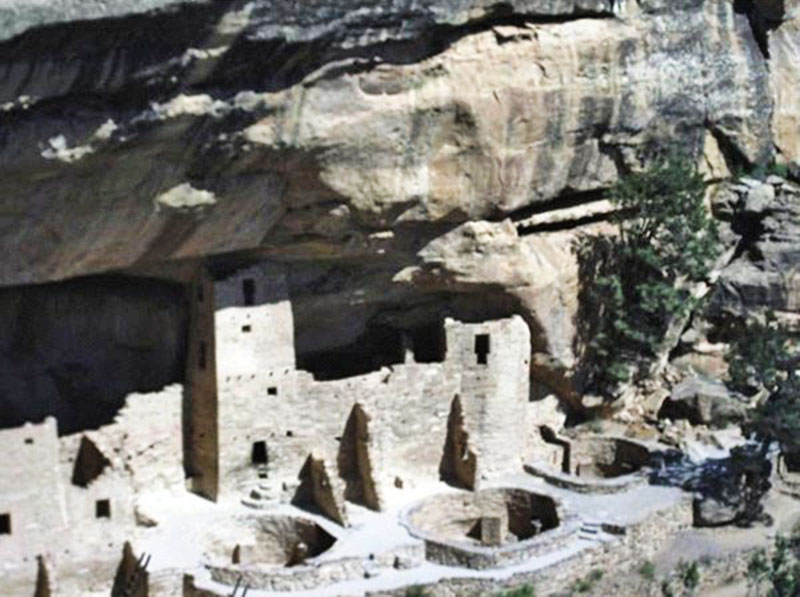 No one really knows for certain what happened to the Anasazi.
They attained a high level of culture for their time, then abandoned it all.
From Nomadic Beginnings To Complex Culture  Example of Native American Rock Art from Utah
Photo Credit: Cherei J. McCarter
The Anasazi began as nomadic hunter-gatherers, perhaps as early as 1500 BC.
They occupied the valleys and plains in the "Four Corners" region of North America, where Utah, Colorado, Arizona, and New Mexico meet at the corners.
They eventually adapted into a basket maker culture, clustering together in settlements with pit houses around 300-700 AD. Then for some reason they felt the need to change their ways drastically.
After this time, the Anasazi built great cities and ceremonial centers with kivas, special sacred buildings which were usually built underground with a hatchway at the top, which were used for religious rituals.
The kivas are also associated with the Pueblo and Hopi tribes, connected with their belief in the Kachina spirits. The hatchway was symbolic of the gateway between our world and the "fourth world", realm of the spirits.
The Anasazi may have adopted some of the ritual beliefs from other people coming to the area, since the Kachinas are thought to bring rain and fertility.
These things became very important to them at the end of their culture.
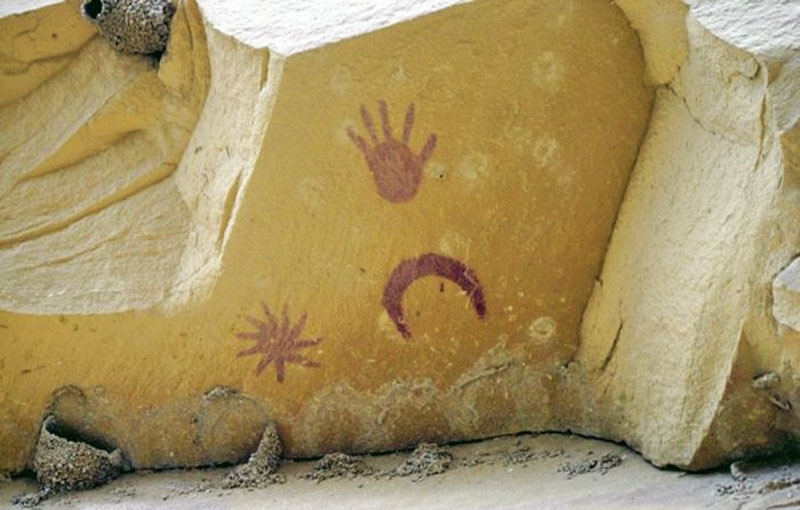
Anasazi pictograph possibly depicting the
Chaco Canyon, New Mexico
The Anasazi studied the stars and developed complex calendars, using astronomical observations to pinpoint the proper times for sowing and harvesting their crops.
Chaco Canyon in New Mexico seems to have been a center for astronomical studies and sacred ceremonies.
They did not have a written language, but left behind beautiful petroglyphs, symbolic art carved into the rocks.
In their final period of development, the Anasazi moved to barely accessible canyons, building cliff houses surrounded by high walls in places with natural springs, such as atMesa Verde, Colorado. This period of cultural development lasted until around 1300 AD.
Then they seem to have decided to suddenly abandon all their achievements, some even leaving their possessions behind.
Need For Defense?
Cliff Dwellings at Mesa Verde, Colorado
Photo Credit: Cherei J. McCarter
The Anasazi are often called the "Ancient Ones", but the term comes from a Navajo word meaning "ancestors of our enemies". Archaeologists refer to them as the "Mogollon" culture.
We do not know what they called themselves, but the Hopi claim that the Ancient Ones are their ancestors.
This might give us a clue as to why the Anasazi abruptly left their settlements less than 50 years after accomplishing the amazingly difficult feat of building dwellings sheltered high in canyon cliffs.
|

EVERTH THENANSHED comandante interestelar de la Federación Galáctica de planetas libres.
martes, 18 de abril de 2017
Anasazi tribe forgotten USA


anasazi: els primers colonitzadors Dels EE.UU.
per Thalia Lightbringer 09 de Abril de 2017
de MessageToEagle Lloc Web
En realitat, ningú sap amb certesa que va passar amb els Anasazi .
Van aconseguir un alt nivell de cultura del seu temps, i després van abandonar tot.
Des de començaments nòmada a la cultura complexa
Exemple de l'art del natiu americà de la roca d'Utah
Crèdit de la imatge: Cherei J. McCarter
Els Anasazi va començar com caçadors-recol·lectors nòmades, potser tan aviat com 1500 AC.
Que ocupaven les valls i planes al " Four Corners regió" d'Amèrica del Nord, on Utah, Colorado, Arizona, Nou Mèxic i es troben a les cantonades.
Amb el temps adaptar-se a una cultura cisteller, agrupar junts en assentaments amb cases de pou al voltant de 300-700 dC. Llavors, per alguna raó que sentien la necessitat de canviar les seves formes dràsticament.
Després d'aquest temps, els Anasazi construït grans ciutats i centres cerimonials amb kivas , edificis sagrats especials que en general es construeixen sota terra amb una escotilla a la part superior, els quals van ser utilitzats per als rituals religiosos.
Després d'aquest temps, els Anasazi construït grans ciutats i centres cerimonials amb kivas , edificis sagrats especials que en general es construeixen sota terra amb una escotilla a la part superior, els quals van ser utilitzats per als rituals religiosos.
Els kivas també estan associats amb els Poble i Hopi tribus, connectats amb la seva creença en els esperits Kachina . La escotilla era un símbol de la porta d'enllaç entre el nostre món i el "quart món", el regne dels esperits.
Els Anasazi pot haver adoptat algunes de les creences rituals d'altres persones que arriben a la zona, ja que es creu que els kachinas per portar la pluja i la fertilitat.
Aquestes coses es van fer molt important per a ells al final de la seva cultura.
Anasazi pictograma que representa possiblement la
Canó del Chaco, Nou Mèxic
Els Anasazi va estudiar les estrelles i desenvolupat complexos calendaris, usant observacions astronòmiques per determinar el moment adequat per a la sembra i la collita dels seus cultius.
Canó del Chaco a Nou Mèxic sembla haver estat un centre d'estudis astronòmics i cerimònies sagrades.
Ells no tenien un llenguatge escrit, però van deixar enrere bells petroglifos, art simbòlic tallat en les roques.
En el seu últim període de desenvolupament, els anasazi es va traslladar als canons gairebé inaccessibles, la construcció de cases penya-segat envoltat per alts murs en llocs amb fonts naturals, com en Taula Verda, Colorado . Aquest període de desenvolupament cultural va durar fins a al voltant de l'any 1300.
Llavors sembla que han decidit abandonar sobtadament tots els seus èxits, alguns fins i tot deixant les seves possessions.
Necessitat de la defensa?
Habitatges de penya-segat a Taula Verda, Colorado
Crèdit de la imatge: Cherei J. McCarter
Els Anasazi sovint són cridats els " els Antics ", però el terme prové d'una paraula Navajo que significa "avantpassats dels nostres enemics". Els arqueòlegs es refereixen a ells com la cultura "mogollón" .
No sabem el que van cridar a si mateixos, però els Hopi afirmar que els Antics són els seus avantpassats.
Això ens pot donar una pista de per què els Anasazi va deixar precipitadament els seus assentaments de menys de 50 anys després d'haver aconseguit la gesta increïblement difícil d'habitatges protegits de construcció d'alta en els penya-segats de canó.
When capitalism meets technology civic


From social networks that connect us with friends across the globe, to smartphones that can provide anything with a few taps, many of Silicon Valley's top companies have created a lot of change over the past decade.
Some of this change has been groundbreaking, while some has been more invisible.
The reality is that many of these groundbreaking companies - Google,Facebook, Amazon - have found their success from pretty unexciting things like clicks, likes, and shares.
Recognizing that these companies can provide much more value to the world than well-placed ads, some are taking their money and using it to explore more critical issues involving,
The reality is that many of these groundbreaking companies - Google,Facebook, Amazon - have found their success from pretty unexciting things like clicks, likes, and shares.
Recognizing that these companies can provide much more value to the world than well-placed ads, some are taking their money and using it to explore more critical issues involving,
The Importance of Cities
In an age of hyper-innovation, our cities have been particularly slow to keep up with the rapid technological growth we've experienced in the past few decades.
Currently, 2 out of 3 people live in cities and billions of people aren't able to reach their potential because their cities are not giving them the opportunities necessary for success.
Whether it's prohibitively high housing prices, traffic-clogged streets, or polluted air and water, the way to create exponential positive change is to create better cities.
As disruptive technologies start to move beyond our pockets and into the larger infrastructures of our cities, we're starting to see ideas that could have major impacts on how we live and interact with one another.
Initiatives like Google's Sidewalk Labs and the impending rush of self-driving cars are seeking to update century-old "operating systems" that our cities run on.
After a few years working under the radar, Google's smart cities research unit, Sidewalk Labs, is ramping up to tackle some of our most significant urban problems.
After a few years working under the radar, Google's smart cities research unit, Sidewalk Labs, is ramping up to tackle some of our most significant urban problems.
Sidewalk Labs has noticed something critical: many of the people who are doing the planning of our cities aren't very tech savvy, and the technologists building the software that is affecting our built environment aren't very knowledgeable about cities.
That's where Sidewalk Labs comes in.
That's where Sidewalk Labs comes in.
Over the next few years, Sidewalk Labs will enable new forms of civic innovation while bridging the gap between technology innovation and traditional urban planning.
 Image by Sidewalk Labs
The "smart city" is an idea that has been around for a while but is still a relatively ambiguous term.
To an organization like Sidewalk Labs, the smart city would be the collective effect of many technologies including the,
As these technologies progress in tandem, the effects will be enormous - like the sort of change cities experienced with the advent of the automobile or the electric grid.
The one public project that Sidewalk Labs has launched so far is LinkNYC, which is a network of kiosks that provide 'free' Wi-Fi and gathers actionable data on the surrounding environment such as,
The one public project that Sidewalk Labs has launched so far is LinkNYC, which is a network of kiosks that provide 'free' Wi-Fi and gathers actionable data on the surrounding environment such as,
The NYC Planning Department is able to connect to the kiosks and use this data to make more informed infrastructure and planning decisions.
It's no secret that Google has a huge amount to gain by helping cities become "smarter".
It's no secret that Google has a huge amount to gain by helping cities become "smarter".
As it starts to roll out its own self-driving car program, it will already have a huge amount of data about cities that can be used to inform traffic models and look for new business opportunities.
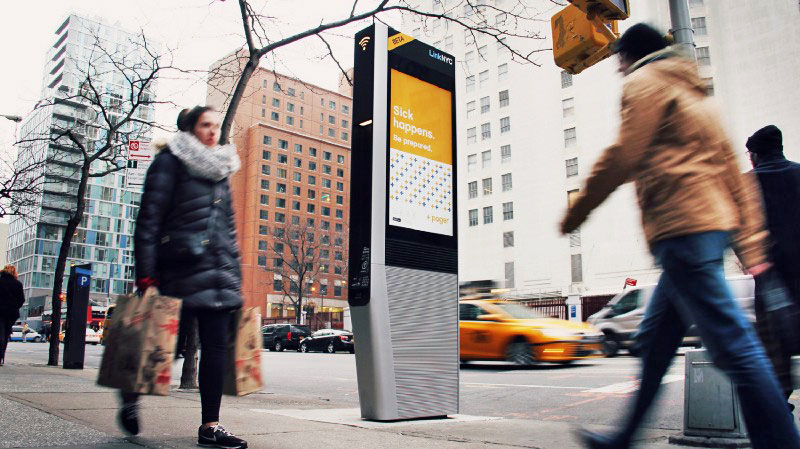
LinkNYC by Sidewalk Labs
Rethinking K-12 Education
Citing an ongoing frustration with the lack of innovation in our public education system, Mark Zuckerberg and Priscilla Chan have decided to use their influence (and bank account) to build a new type of school.
Citing an ongoing frustration with the lack of innovation in our public education system, Mark Zuckerberg and Priscilla Chan have decided to use their influence (and bank account) to build a new type of school.
"The Primary School" in East Palo Alto seeks to help lower income kids improve their learning experience and get more attention than they would in their financially-strapped neighborhood schools.
In addition to its experience-based curriculum and personalized learning approach through software, the school will offer free healthcare for all students from birth until graduation.

The Primary School
The Zuckerberg's earnest effort to create a better educational model began a couple years ago when they started to use engineering resources from Facebook to help a Bay Area school improve its learning software.
Personalized Learning Plan (PLP) software is still in its infancy, but it works by giving students materials that pertain to their interests that they can complete at their own pace.
In most public school classes, there is typically a third of the class that are high performers and a third of the class that are low performers.
In most public school classes, there is typically a third of the class that are high performers and a third of the class that are low performers.
The teacher is then forced to teach in the middle, which benefits nobody. PLP technology frees up classroom time for teachers to mentor students directly, as well as allows students more time to collaborate with or teach each other.
Facebook has said it isn't planning to get into the education sector, but it might find it hard to stay away if other companies don't step up to the plate.
Facebook has said it isn't planning to get into the education sector, but it might find it hard to stay away if other companies don't step up to the plate.

Personalized Learning Plan Software
The Techie Space Race
Amazon has mastered the art of the sale and is now worth over $400 billion.
Amazon has mastered the art of the sale and is now worth over $400 billion.
But Jeff Bezos seems to have goals bigger than perfecting the checkout flow. His space exploration company, Blue Origin, is trying to be the first company to provide affordable space travel to the general population and compete with SpaceX to help humans explore beyond our little blue planet.
In the short time that Blue Origin and SpaceX have existed, they have helped bring innovation back to the stagnant space industry.
In the short time that Blue Origin and SpaceX have existed, they have helped bring innovation back to the stagnant space industry.
Operating their companies more like tech startups, they have created much needed competition to the staid defense companies like Lockheed and Boeing, which have controlled the aviation industry for decades.
In only a few years, Blue Origin and SpaceX have been able to create reusable rockets, provide NASA with supplies at a fraction of the cost of other companies, and start offering more affordable space exploration options.
In only a few years, Blue Origin and SpaceX have been able to create reusable rockets, provide NASA with supplies at a fraction of the cost of other companies, and start offering more affordable space exploration options.
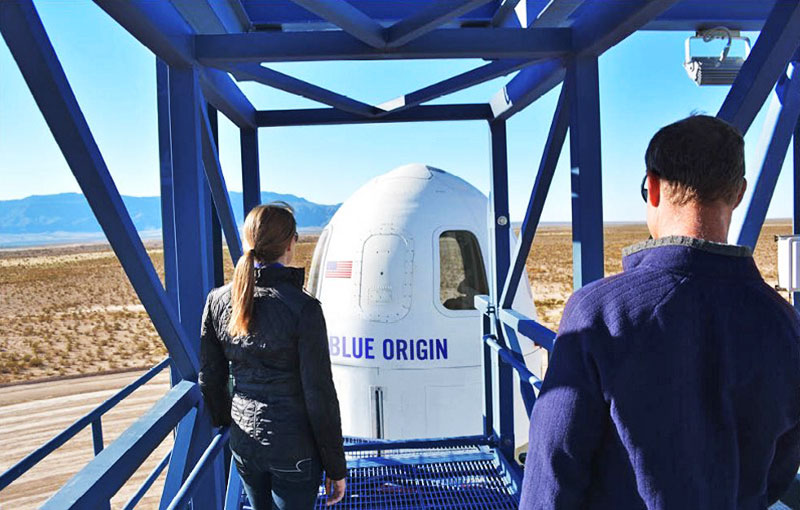
Blue Origin
Elon Musk continues to push forward with his plan to put humans on Mars by 2026 and help humanity become a multi-planetary species.
He's sunk billions into creating SpaceX, with the eventual goal of creating a permanent settlement on Mars.
Critics have asked why he doesn't focus his efforts on improving life on Earth first, but his interests look much further into the future than our lifetimes.
Critics have asked why he doesn't focus his efforts on improving life on Earth first, but his interests look much further into the future than our lifetimes.
His ultimate intention is to "back up the human race's hard drive" in case of some catastrophe hitting Earth in the future.
Yes, it sounds crazy, but in an age of companies looking for quick profits at the expense of our planet, it's refreshing that someone is looking beyond the near term.
Even Stephen Hawking has talked about the importance of humans leaving Earth:
Yes, it sounds crazy, but in an age of companies looking for quick profits at the expense of our planet, it's refreshing that someone is looking beyond the near term.
Even Stephen Hawking has talked about the importance of humans leaving Earth:
"Although the chance of a disaster to planet Earth in a given year may be quite low, it adds up over time, and becomes a near certainty in the next thousand or ten thousand years.By that time we should have spread out into space, and to other stars, so a disaster on Earth would not mean the end of the human race."Stephen Hawking
The colonization of other planets can be compared to the colonization of the US's western states.
In the early 1800s, it wasn't possible to rapidly move people or goods until the Transcontinental Railroad came along to connect existing cities to the frontier.
Similarly, SpaceX and Blue Origin realize that frequent and dependable supply routes are integral to any permanent settlement, so they must lay the initial foundation for future space settlements.
There is definitely much to be gained from things like satellite launching, asteroid mining, and space tourism, but I like to think that companies like Blue Origin or SpaceX have more noble goals than making a few more bucks.
There is definitely much to be gained from things like satellite launching, asteroid mining, and space tourism, but I like to think that companies like Blue Origin or SpaceX have more noble goals than making a few more bucks.
Plus, profit with a purpose is a bit sexier than revenue from clicks and likes...
Quan el capitalisme es reuneix tecnologia cívica
Des de les xarxes socials que ens connecten amb amics de tot el món, als telèfons intel·ligents que poden proporcionar qualsevol cosa amb un parell de tocs, moltes de les principals companyies de Silicon Valley han creat una gran quantitat de canvis en l'última dècada.
Alguns d'aquests canvis han estat transgressors, mentre que alguns ha estat més invisible.
La realitat és que moltes d'aquestes empreses innovadores - Google , Facebook , Amazon - han trobat el seu èxit de coses bastant poc interessants com clics, gustos i accions. Reconeixent que aquestes empreses poden oferir molt més valor per al món que els anuncis ben col·locats, alguns estan prenent els seus diners i utilitzar-lo per explorar els problemes més crítics que impliquen,
La importància de les ciutats en l'era de la hiper-innovació, les nostres ciutats han estat particularment lenta per mantenir-se al dia amb el ràpid creixement tecnològic que hem experimentat en les últimes dècades. Actualment, 2 de cada 3 persones viuen en ciutats i mil milions de persones no són capaços d'arribar al seu potencial a causa de les seves ciutats no els estan donant les oportunitats necessàries per a l'èxit. Ja sigui prohibitivamente alts preus de l'habitatge, carrers congestionades, o aire contaminat i l'aigua, la manera de crear un canvi positiu exponencial és crear millors ciutats. A mesura que les tecnologies de punta comencen a moure més enllà de les nostres butxaques i en les infraestructures més grans de les nostres ciutats, estem començant a veure les idees que podrien tenir un gran impacte en la forma en què viuen i interactuen entre si.
Iniciatives com de Google Labs de vorera i la imminent onada de cotxes auto-conducció estan tractant d'actualitzar "sistemes operatius" centenaris que les nostres ciutats s'executen en. Després d'alguns anys de treball sota el radar, la unitat d'investigació de ciutats intel·ligents de Google, Vorera laboratoris , està augmentant per abordar alguns dels problemes urbans més significatius.
Vorera laboratoris s'ha adonat d'alguna cosa fonamental: moltes de les persones que estan fent la planificació de les nostres ciutats no són molt coneixedors de la tecnologia i els tecnòlegs que construeixen el programari que està afectant el nostre entorn construït no són molt coneixedors de les ciutats.
Aquí és on la vorera laboratoris entra en acció.
En els propers anys, Vorera laboratoris permetrà noves formes d'innovació ciutadana, mentre que la reducció de la bretxa entre la innovació tecnològica i la planificació urbana tradicional.
Imatge de vorera laboratorisLa "ciutat intel·ligent" és una idea que ha estat al voltant per un temps, però segueix sent un terme relativament ambigu.
Per a una organització com la vorera laboratoris , la ciutat intel·ligent seria l'efecte col·lectiu de moltes tecnologies, incloent el,
A mesura que aquestes tecnologies progrés en conjunt, els efectes seran enormes - com el tipus de canvi que ha experimentat ciutats amb l'adveniment de l'automòbil o de la xarxa elèctrica.
El públic que un projecte de vorera laboratoris ha posat en marxa fins ara és LinkNYC , que és una xarxa de quioscs que ofereixen ' lliure' Wi-Fi i recopila dades processables en el medi ambient que envolta com ara,
El Departament de Planificació de Nova York és capaç de connectar-se als quioscos i utilitzar aquesta informació per prendre decisions de planificació d'infraestructura i més informades.
No és cap secret que Google té una quantitat enorme de guanyar per ajudar les ciutats a ser més "intel·ligents".
A mesura que comença a rodar a terme el seu propi programa lloguer d'auto-conducció, ja tindrà una enorme quantitat de dades sobre les ciutats que es poden utilitzar per informar els models de trànsit i buscar noves oportunitats de negoci.
LinkNYC per la vorera laboratoris
Repensant l'educació K-12
Citant una contínua frustració amb la manca d'innovació en el nostre sistema d'educació pública, Mark Zuckerberg i Priscilla Chan han decidit utilitzar la seva influència (i el compte bancari) per construir un nou tipus d'escola.
" L'escola primària " a East Palo Alto pretén ajudar els nens de baixos ingressos a millorar la seva experiència d'aprenentatge i reben més atenció que ho farien a les seves escoles de barri amb problemes financers.
A més del seu pla d'estudis basat en l'experiència i l'enfocament d'aprenentatge personalitzat a través de programari, l'escola oferirà assistència sanitària gratuïta per a tots els estudiants des del naixement fins a la graduació.
L'escola primària
L'esforç seriós de Zuckerberg per crear un millor model educatiu va començar fa un parell d'anys quan van començar a utilitzar els recursos d'enginyeria de Facebook per ajudar a una escola de l'àrea de la Badia de millorar el seu programari d'aprenentatge.
Pla d'aprenentatge personalitzat de programari (PLP) es troba encara en la seva infància, però funciona donant materials estudiants que pertanyen als seus interessos que puguen completar al seu propi ritme.
En la majoria de les classes de les escoles públiques, en general hi ha un terç de la classe que són d'alt rendiment i un terç de la classe que es troben baix rendiment.
El mestre llavors es veu obligat a ensenyar en el medi, que no beneficia ningú. Tecnologia de PLP allibera temps de classe perquè els mestres mentors dels estudiants directament, així com permet als estudiants més temps per col·laborar amb o ensenyar als altres.
Facebook ha dit que no té la intenció d'entrar en el sector de l'educació, però pot resultar difícil que es mantingui allunyat si altres companyies no pas fins a la placa. Programari personalitzat Pla d'Aprenentatge
La Cursa Espacial Techie
Amazon ha dominat l'art de la venda i és ara un valor de més de $ 400 mil milions.
Però Jeff Bezos sembla tenir metes més grans que el perfeccionament del procés de pagament. La seva companyia d'exploració espacial, Blue Origin , està tractant de ser la primera companyia a oferir viatges espacials assequible per a la població en general i competir amb SpaceX per ajudar els humans a explorar més enllà del nostre petit planeta blau. En el poc temps que Blue Origen i SpaceX han existit, han contribuït a la innovació de nou a la indústria espacial estancada.
L'operació de les seves empreses més com a noves empreses tecnològiques, que han creat una competència molt més necessari per a les empreses de defensa seriosos com Lockheed i Boeing, que han controlat la indústria de l'aviació per dècades.
En només uns pocs anys, Blau Origen i SpaceX han estat capaços de crear coets reutilitzables, proporcionar la NASA amb els subministraments a una fracció del cost d'altres companyies, i començar a oferir opcions d'exploració espacial més assequibles. blue Origin Elon Musk segueix empenyent cap endavant amb el seu pla per posar a éssers humans a Mart en 2026 i ajudar a la humanitat es converteixi en una mena de múltiples planetaris.
Està enfonsat mil milions en la creació d'SpaceX, amb l'objectiu final de crear un assentament permanent a Mart.
Els crítics s'han preguntat per què no es centra els seus esforços en la millora de la vida a la Terra en primer lloc, però els seus interessos es veuen molt més en el futur que en les nostres vides.
La seva intenció final és "còpia de seguretat de disc dur de la raça humana" en cas d'alguna catàstrofe colpejar la Terra en el futur.
Sí, sona boig, però en l'era de les empreses que busquen guanys ràpids a costa del nostre planeta, és refrescant que algú està mirant més enllà del curt termini. Fins i tot Stephen Hawking ha parlat de la importància dels éssers humans que surten de la terra:
La colonització d'altres planetes pot ser comparada amb la colonització dels estats de l'oest dels Estats Units.
A principis de 1800, no va ser possible moure ràpidament les persones o els béns fins que el ferrocarril transcontinental va arribar per connectar les ciutats existents a la frontera.
De la mateixa manera, SpaceX i Blue Origin s'adonen que les rutes de subministrament freqüents i fiables són part integral de qualsevol assentament permanent, de manera que ha d'establir les bases inicials per a futurs assentaments espacials.
Definitivament, hi ha molt a guanyar de coses com el llançament de satèl·lits, la mineria d'asteroides, i el turisme espacial, però m'agrada pensar que les empreses com Blue Origin o SpaceX tenen més nobles objectius de fer una mica més de diners.
A més, el benefici amb un propòsit és una mica més atractiu que els ingressos dels clics i gustos ...
|
IMF: the news prior to the introduction of chip
 by Martin ArmstrongApril 08, 2017
from ArmstrongEconomics Website

Click above image for
FULL PDF Report
The International Monetary Fund (IMF) in Washington has published a Working Paper on “de-cashing” the economies and the implications.
This paper clearly demonstrates that this is the direction we are headed into. It provides advice to governments who want to join in the latest thing:
IMF-Analyst Alexei Kireyev recommends in his conclusions:
The paper (The Macroeconomics of De-Cashing - IMF Working Paper) does not advocate eliminating cash. It merely goes through the plus and minus to such a policy.
While governments are pressing this using terrorism as the excuse, you do not eliminate the entire monetary system of the world to even catch 100 terrorists and their camels.
This is all about the collapse in socialism and the desperate need to raise money.
|
Suscribirse a:
Comentarios (Atom)
Entrada destacada
PROYECTO EVACUACIÓN MUNDIAL POR EL COMANDO ASHTAR
SOY IBA OLODUMARE, CONOCIDO POR VOSOTROS COMO VUESTRO DIOS Os digo hijos míos que el final de estos tiempos se aproximan. Ningú...