https://misteri1963.blogspot.com.esgoogle.com, pub-5827770858464401, DIRECT, f08c47fec0942fa0https://misteri1963.blogspot.com.argoogle.com, pub-5827770858464401, DIRECT, f08c47fec0942fa0https://misteri1963.blogspot.com.cogoogle.com, pub-5827770858464401, DIRECT, f08c47fec0942fa0https://misteri1963.blogspot.com.brgoogle.com, pub-5827770858464401, DIRECT, f08c47fec0942fa0 google.com, pub-5827770858464401, DIRECT, f08c47fec0942fa0 Misteri1963

Translate

viernes, 24 de noviembre de 2017

Els Anunnaki, part 3 - El Propòsit de l'Home i el Començament del Conflicte Còsmic (Enki vs. Anu)


El món humà es troba enmig d'un gran conflicte còsmic des de fa molt de temps.

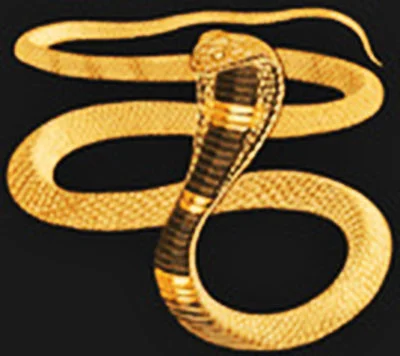
Les religions  abrahàmiques, totes enganys de l'enemic per confondre la Humanitat, parlen d'una lluita primordial entre el "déu pare" Yahvé (Jehovà) i la Serp antiga "Satanàs". 

Si la Serp de l'Edèn és idèntica al déu sumeri Enki, llavors qui és el seu oponent Yahvé-Jehovà? 

Això podria resultar-alguna cosa sorprenent, però el Senyor bíblic, el déu judeocristià, que es va oposar a la Serp enkiana a l'Hort de l'Edèn és ningú més que el "déu del 'cel'" Anu, el rei i progenitor de tots els Anunnaki, conegut també com  el , l'Altíssim del 'cel' i pare de tots els Elohim, al panteó semític (cananeu) pre-bíblic.

De fet, el déu bíblic Yahvé és conegut pel teónimo semític ell en molts versicles de la Bíblia hebrea. Recordem que els Elohim i els Anunnaki són idèntics. 

Vull deixar clar que Enlil no és Yahvé en absolut.

Molts autors afirmen erròniament que el déu bíblic és idèntic a Enlil, el germanastre d'Enki, i que Enlil és l'enemic de la Humanitat, però això no és veritat.

El Senyor judeocristià, la deïtat que va buscar amagar a l'Home el Coneixement del Cel a l'Hort de l'Edèn, només va poder haver estat Anu. Aviat veurem per què. 

En el panteó sumeri, Anu, el Rei dels Anunnaki, és el pare biològic d'Enki i d'Enlil.Tot i cridar-se el "déu del 'cel'", Anu mai va ser el  creador de l'univers  i encara menys el  creador de l'Home .

De fet, fins i tot Anu és un ésser creat, engendrat pels déus primordials Anshar i Kishar segons la cosmologia sumèria (just com el seu equivalent semític ell va ser engendrat per les deïtats pre-panteónicas Elyon i Beruth en la mitologia cananea antiga), ia més, aquest mateix Anu va pujar al tron com un violent usurpador, derrotant al seu antecessor el déu Alalú per la supremacia del 'cel' (Van Der Toorn, 1996). iv

Anu no és "Déu" en el sentit monoteista de la paraula. 

Just com  El-Senyor en la Bíblia , el nom és un epítet (Yahvé Totpoderós) que significa "ell que crea els exèrcits", Anu era conegut com 'El Senyor de les Hosts (exèrcits) Celestials' i temut com un gran jutge que castigava als homes.

A més, just com el seu equivalent hebreu el, Anu era associat al malèfic planeta Saturn, el jutge fosc de tots els planetes (Evans, 1998).  v

EL (Yahvé) no només va ser deïficat al planeta Saturn, sinó que també el seu dia sagrat, el Dissabte (Dia de Saturn), Shabbat en Hebreu, prové de la paraula semítica Shabbathai, el nom del déu i del planeta Saturn en la llengua hebrea.

En fi, Anu, el, Senyor i Saturn són la mateixa entitat. 

Llavors, el conflicte còsmic és una lluita mil·lenària entre el fill noble Enki i el pare malèvol Anu. No és una guerra fraternal entre Enki i Enlil com afirma Zecharia Sitchin. 

Quina va ser la font del conflicte còsmic entre Enki i Anu? El tema del Propòsit de l'Home ... 

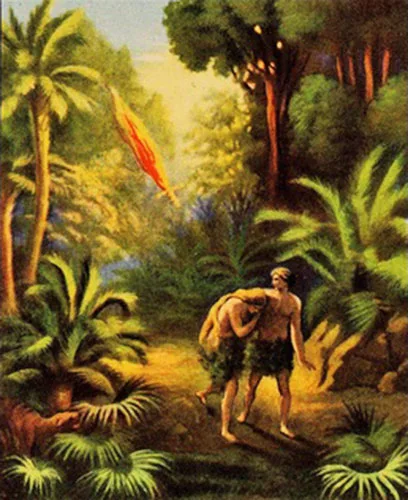
El Llibre de Gènesi relata que la Serp sàvia els va revelar a Adam i Eva el Coneixement Prohibit a l'Hort de l'Edèn, la qual cosa els faria com un dels Elohim (Gènesi 3: 5; 3: 22), en contra de la voluntat del Senyor.

El que la Bíblia diu aquí és cert i es troba el mateix relat, l'original, en els textos sumeris. 

Segons la  Llegenda de Adapa , el precursor sumero-acadio del relat adàmic hebreu, Enki-Ea, el veritable creador de l'Home, li va ensinistrar al seu progenie humana Adapa en la civilització dels déus i li va ensenyar el Designi del Cel i de la Terra , el coneixement diví, en contra de la voluntat d'Anu, qui es va enfadar amb el seu fill queixant-se que Enki l'hi havia revelat a un humà indigne i menyspreable (Kramer i Maier, 1989). vaig veure

Enki li va revelar a l'Home la ciència del  arbre dels Em  (Versió sumèria de l'Arbre de la Ciència), els sabers de la civilització dels Anunnaki, si Santuari de Eridú a la terra del Edín. 

Quan Adapa va rebre el coneixement del  Designi del Cel i de la Terra  i li va romandre fidel a l'Enki, el malèvol Anu, enfurismat per les accions d'Enki, va tornar a l'Home a la Terra i el va maleir, augmentant les seves adversitats i imposant moltes malalties.

Aquest episodi és gairebé idèntic en el relat bíblic posterior. En Gènesi 1 iracund Yahvé maleeix la Humanitat expulsant-a la terra forana i imposant diverses adversitats com la malaltia i l'enemistat (Gènesi 3: 14-19).

L'Home és castigat per conèixer la ciència dels déus. 

Notem que en la versió sumèria va ser únicament Anu, i no Enlil, ell que va jugar el paper del déu obscurantista i castigador Yahvé de la versió hebrea posterior. Anu és l'autèntic adversari d'Enki i de la Raça Humana. 

En aquest relat veiem un conflicte de valors i interessos entre dos grups de déus, un xoc violent entre dues filosofies antitètiques. 

Enki i els seus déus, els  Anunnaki Enkistas , van buscar  ajudar-nos  en la nostra evolució i elevar-nos al nivell dels Déus. Ells ens veien com els seus fills humans, ja que portem la seva genètica divina.

Per Enki, nosaltres treballaríem per als Anunnaki en el manteniment de la seva nova colònia terrestre i els Anunnaki accelerarien el nostre desenvolupament evolutiu i ens ensenyarien la civilització de l' 'cel' i la ciència de la divinitat, la qual cosa ens faria com els mateixos déus (Gènesi 3 : 5).

Així la nostra convivència comportaria un benefici mutu.

A més, la colònia terrestre anava a ser per a nosaltres, la nostra herència legítima, i anàvem a ser els seus amos.

És per això que Enki, li va ensenyar a Adapa els sabers de la civilització divina. Això va ser el coneixement necessari per a la independència i l'autonomia de la Raça Humana en el seu propi planeta. 

D'altra banda, Anu-Jahvè i els seus seguidors, els  Anunnaki Anuistas , només veien a l'Home com un esclau per explotar i van buscar mantenir-dòcil i ignorant.

És per això que Anu-Jahvè va imposar la seva política d'obscurantisme. Els Anunnaki Anuistas , conservadors a ultrança, van ressentir la barreja de la sang divina amb la humana i el consegüent salt quàntic en l'evolució de la Humanitat terrestre.

Per tant, Anu-Jahvè i els seus "àngels", els invasors malèfics als quals els Gnòstics cridaven " Arcontes " del malvat Demiürg, busquen destruir la nostra enginy immensa i atrapar-nos en les seves  religions obscurantistes i misantrópicas . 

Enki va sacrificar tot quan es va rebel·lar contra la foscor del seu "pare". Enki va fer un gran sacrifici per il·luminar-nos i honrar els seus principis fonamentals com l'amor, la vida i la llibertat. Enki és un veritable heroi còsmic que no va suportar la tirania d'Anu-Jahvè i va lluitar pel bé. 

Enki, simbolitzat per la Serp sàvia en el Llibre de Gènesi i conegut com el Ushumgal (Gran Serp) per la seva immensa saviesa esotèrica en la cultura sumèria, no només li va ensenyar a l'Home la civilització dels déus, sinó que també li va revelar el secret de la  Serp Sagrada de la Kundalini , l'energia iòguica, per la qual l'Home pot aconseguir l'Opus Magnum:
convertir-se en un déu i arribar a la immortalitat.
És per això que en Gènesi, Enki és conegut com  la Serp  i diu que el coneixement que ell revela pot fer a l'Home com els Déus. 

Enki, el rebel noble, és idèntic a Prometeu, el benèvol déu grec que va ser bandejat pels titans malèvols per haver-li lliurat a l'Home el Foc dels Déus.

Aquí el "Foc" es refereix tant al coneixement del 'cel' com al foc de la Kundalini que crema pel cos i va obrint els xacres de la nostra anatomia oculta.

Enki-Prometeu ens va ensenyar el sagrat camí a la divinitat. 

És per aquesta raó que ell va ser calumniat com el "diable" i el "adversari" per les religions abrahàmiques i anomenat "Satanàs" pels seguidors histèrics del déu fosc Anu-Jahvè.

El sobrenom veritable d'Enki no és "Satanàs" que significa "adversari" en Hebreu sinó "Satya", veu sànscrita que significa Veritat Eterna.

El calumniós "Satanàs" és una corrupció de "Satya" que Anu li va imposar a Enki.Enki-Satya, un déu la presència històrica ha estat esborrada per les religions monoteistes violentes, és el senyor del Satya Yuga, la propera era d'or a la nostra Terra.

(Aquest arribarà a l'Era d'Aquari, ja que Enki sempre ha estat una deïtat aqüífera associada a Aquari. 'Noten la connexió!). 

Actualment el conflicte còsmic segueix i ens trobem en  el Kali Yuga  o l'era de foscor des de fa uns 5000 anys. Kali Yuga és el temps del regnat del tirà còsmic Anu-El-Senyor-Saturn sobre la Terra.

El seu regne és l'infame  Nou Ordre Mundial  del seu poble sionista. En aquest Yuga el coneixement autèntic està perdut, la veritat està oblidada i la mentida preval.

El món està en molt males condicions ia la mercè de les religions i filosofies destructives del fals déu d'aquest món. La Terra segueix atrapada a la vòrtex astral d'Anu-Jahvè i sotmesa a l'energia del seu malèfic Saturn, el planeta del Karma i de la misèria.


referències
  1. Ebeling, I. & Meissner, B. (1997) Meek - Mythologie: Reallexikon Der Assyriologie. Berlin (pàg. 123)
     
  2. Reiter, K. (1997) Die Metalle im alten Orient: Unter besonderer Berücksichtigung altbabylonischer Quellen (Alter Orient und Altes Testament). Ugarit-Verlag (pàg. 11)
     
  3. Kvanvig, HS (2011) Primeval History: Babylonian, Biblical, and Enochic - An intertextual Reading. Leiden (pàg. 57)
     
  4. Van Der Toorn, K. (1996) Family Religió in Babilonia, Ugarit and Israel: Continuity and Changes in the Form of Religious Life. Leiden (pàg. 159)
     
  5. Evans, J. (1998) The History and Practice of Ancient Astronomy. New York (pp. 8.9)
     
  6. Kramer, SN & Maier, J. (1989) Myths of Enki, the Crafty God. New York & Oxford. (Pàg. 116)

The anunnaki, second part - gender Humanoid - The Origin of the Anunnaki and the Creation of Man


Humanoid Gender - The Origin of the Anunnaki and the Creation of Man
 

Eridu:
The Sacred City of Enki


Gods Prometheus and Athena (Enki and Ninmah)
Man created


Sumeria Image:
Genetic engineering of the Anunnaki
 

Who were the Anunnaki? Were gods? Were biological extraterrestrials? 

Cosmogonic texts of ancient Mesopotamian religion explain that the Anunnaki were an ancient celestial race that originated within our cosmos and after birth.

Babylonian epic  Enuma Elish tells us that the universe was first created in the midst of a primordial chaos after a mixture of the primeval waters of Abzu and Tiamat and then the first gods and divine lineages were born within creation.

In other words, according to the Mesopotamian cosmology, the cosmos was born first and the gods were born later. The gods were not the creators of the universe but a creation of it. This is very interesting. 

How can we interpret this? 

The great gods Anunnaki, who came from the " 'heaven'" according to the Sumerian tales, originated in a distant planet yet Earthlike in an unknown corner of the cosmos which had followed an ancient evolutionary trajectory.

They began their existence as a primitive hominid Homo Earth like Erectus, followed a slow and steady evolution and eventually went on to become the  Homo Divinus , the highest gender humanoid evolutionary level.

Respective stages of evolution were:
Homo erectus> Homo Sapiens> Homo Divinus.
The Anunnaki are both gods and biological extraterrestrials.

Hominids were alien gods became through evolution. They are gods in polytheistic sense of the word; cosmic gods are born within creation and reached a very high level of power. 

When the Anunnaki land founded their colony far from their own home, they decided to create man as labor forces for maintenance.

After the riots of the Igigi on Earth, Enki-Ea, the wise prince and eldest son of the wicked "god of 'heaven'" Anu, he was responsible for the creation of Man at therequest of his mother benevolent great primordial goddess Namma (Enki and Ninmah 12-37; Atrahasis 1: 204-218) and along with his stepsister Ninmah expert and a team of parturients goddesses managed to train smart first Human (Enki and Ninmah 35-37; Atrahasis 1: 189-204 ). 

This episode corresponds to the biblical verse in Genesis in which God 's creative power, 'Elohim' (gods) in the Hebrew text proclaims:
(Genesis 1:26)
Do you notice the plural forms in this statement of the gods?

The  Elohim  were the heavenly gods of pre-biblical Semitic pantheon (Canaanite) and corresponded to the Anunnaki gods of Sumero-Akkadian culture. Genesis, a late recasting of the Sumerian creation stories, here refers to the creation of Man by the Anunnaki. 

Man's creation according to the original Sumerian version is very interesting and much more detailed.

The  Myth of Enki and Ninmah  relates Enki formed the Human Race clay their sacred Abzu and then the final product was lit by parturient Goddesses (Enki and Ninmah 31-37).

Similarly, the  poem Atrahasis details that Enki formed man in the mixed clay, he added the blood of a rebel god and gave it a divine soul, which would keep him alive even after his death (Atrahasis 1: 221- 230). 

Note that in the Sumerian culture Enki, the true creator of humanity according to the Mesopotamian texts, was known as the Ushumgal  or "Great Serpent" for his immense wisdom and taught that he was the owner of the  Tree of Divine Knowledge in its Sanctuary Eridu located in the Edín (Eden Sumerian).

So is. Enki is identical to the wise serpent of the biblical Genesis.

Amazing thing is that the Sumerian texts reveal that the serpent in Eden, God 's rival Judeo - Christian God Yahweh (Jehovah ) , is actually the 'real' Father Creator of the human race ...! 

Atrahasis poem goes on to describe the process of our creation.

Enki, along with its sister Ninmah (Ninhursag), mixed kneaded clay, separated into fourteen pieces of dough and placed in the assembled matrices parturient Goddesses (Atrahasis K.7816 d).

Then they gave birth seven males and seven females gave birth. Human fourteen were born in the abode of Enki (Atrahasis manuscript neo-Assyrian a). 

This episode of the creation of man is an old reference to genetic engineering by Enki. When the Anunnaki came to Earth, Enki there found a primitive Earth hominid (Homo Erectus) following a slow evolutionary trajectory on this planet.

In Sumerian texts is a reference to a primitive and pre-civilized man still living in the desert among the animals,
"I do not know eat bread nor wear clothes, half naked walks the earth, like sheep eat and drink water from ditches".
Sheep and Wheat 20-25
Enki took DNA Erectus, mixed it with their own genetic material divine (clay mixed) and inseminated then hybridized to the arrays of some females Anunnaki product.

Thus man experienced a quantum leap in its evolution through the intervention of Enki and Homo Sapiens was born. Atrahasis poem explains that when humanity receives the divine blood of his heavenly doers,
'deity and man (ilumma or awilum) were intermingled', which gave the Temu  or ratiocination of the gods (Kvanvig, 2011)  iii
It is for this reason we Homo Sapiens, we only 23 pairs of chromosomes and show the mysterious telomere-telomere fusion ancestral in the second chromosome pair while all hominids and previous apes still have 24 pairs and without fusion in the second pair.

Els Anunnaki segona part, El Gènere Humanoide - L'Origen dels Anunnaki i la Creació de l'Home


El Gènere Humanoide - L'Origen dels Anunnaki i la Creació de l'Home
 

Eridú:
La Ciutat Sagrada d'Enki


Els Déus Prometeu i Atenea (Enki i Ninmah)
creen a l'Home


Imatge Sumèria:
L'Enginyeria Genètica dels Anunnaki
 

Qui eren els Anunnakis? Eren déus? Eren extraterrestres biològics? 

Els textos cosmogònics de la religió mesopotàmica antiga expliquen que els Anunnaki eren una raça celestial molt antiga que es va originar dins del nostre cosmos i després del seu naixement.

L'epopeia babilònia  Enuma Elish relata que primer l'univers va ser generat enmig d'un caos primordial després d'una barreja de les aigües primigènies de Abzu i Tiamat i després els primers déus i els seus llinatges divins van ser engendrats dins de la creació.

Dit d'una altra manera, segons la cosmologia mesopotàmica, el cosmos va néixer primer i els déus van néixer després. Els déus no van ser els creadors de l'univers sinó una creació d'ell. Això és molt interessant. 

Com podem interpretar això? 

Els grans déus Anunnaki, que venien del " 'cel'" segons els relats sumeris, tenien el seu origen en un planeta llunyà però alhora semblant a la Terra en un racó desconegut del cosmos on havien seguit una trajectòria evolutiva molt antiga.

Ells van començar la seva existència com un homínid primitiu semblant a l'Homo erectus terrestre, van seguir una evolució lenta i estable i al final van arribar a convertir-se en el  Homo Divinus , el nivell evolutiu més alt del gènere humanoide.

Les seves respectives fases d'evolució van ser:
Homo erectus> Homo Sapiens> Homo Divinus.
Els Anunnaki són tant déus com extraterrestres biològics.

Eren homínids alienígenes que es van convertir en déus a través de l'evolució. Són déus en el sentit politeista de la paraula; són déus còsmics que van néixer dins de la creació i van aconseguir un nivell molt alt de poder. 

Quan els Anunnaki van fundar la seva colònia terrestre lluny del seu pròpia llar, ells van decidir crear a l'Home com a mans d'obra per al seu manteniment.

Després dels disturbis dels Igigi a la Terra, Enki-Ea, el príncep savi i fill primogènit del malvat "déu del 'cel'" Anu, es va encarregar de la creació de l'Home a petició de la seva mare benèvola la gran deessa primordial Namma (Enki i Ninmah 12-37; Atrahasis 1: 204-218) i juntament amb la seva germanastra l'experta Ninmah i un equip de deesses parteres va aconseguir formar els primers Humans intel·ligents (Enki i Ninmah 35-37; Atrahasis 1: 189-204 ). 

Aquest episodi correspon al verset bíblic en Gènesi en el qual la força divina creadora, 'Elohim' (déus) en el text hebreu, proclama:
(Gènesi 1:26)
Noten les formes plurals en aquesta declaració dels déus?

Els  Elohim  eren els déus celestials del panteó semític (cananeu) pre-bíblic i corresponien als déus Anunnaki de la cultura sumero-accàdia. Gènesi, un refosa tardana dels relats de la creació sumeris, aquí fa referència a la creació de l'Home per part dels Anunnaki. 

La creació de l'Home segons la versió sumèria original és molt interessant i molt més detallada.

El  Mite d'Enki i Ninmah  relata que Enki va formar a la Raça Humana de l'argila del seu sagrat Abzu i després el producte final va ser enllumenat per les deesses parteres (Enki i Ninmah 31-37).

De la mateixa manera, el  Poema d'Atrahasis detalla que Enki va formar a l'Home a l'argila barrejada, li va afegir la sang d'un déu rebel i li va atorgar una ànima divina, la qual cosa el mantindria viu encara després de la seva mort (Atrahasis 1: 221- 230). 

Cal destacar que en la cultura sumèria Enki, l'autèntic creador de la Humanitat segons els textos mesopotàmics, era conegut com el Ushumgal  o 'Gran Serp' per la seva saviesa immensa i s'ensenyava que ell era l'amo del  Arbre del Coneixement Diví  en el seu Santuari de Eridú ubicat al Edín (l'Edén sumeri).

Així és. Enki és idèntic a la Serp sàvia del Gènesi bíblic.

'El sorprenent és que els textos sumeris revelen que la Serp de l'Edèn, el rival diví del  déu judeocristià Yahvé (el Senyor ) , és en realitat el' veritable 'Pare Creador de la Raça Humana ...! 

El Poema d'Atrahasis segueix descrivint el procés de la nostra creació.

Enki, juntament amb la seva germanastra Ninmah (Ninhursag), va pastar l'argila barrejada, la va separar en catorze trossos de pasta i els va col·locar en les matrius reunides de les deesses parteres (Atrahasis K.7816 d).

Després 07:00 il·luminar mascles i 7 més van il·luminar femelles. Catorze Humans van ser engendrats a l'estatge de Enki (Atrahasis manuscrit neo-assiri a). 

Aquest episodi de la creació de l'Home és una referència antiga a l'enginyeria genètica per part d'Enki. Quan els Anunnaki van venir a la Terra, allà Enki va trobar un homínid terrestre primitiu (Homo erectus) que seguia una trajectòria evolutiva lenta en aquest planeta.

En els textos sumeris es troba una referència a un home primitiu i pre-civilitzat que encara viu a l'estepa enmig de les bèsties,
"No sap menjar pa ni vestir-se amb roba, camina per la terra mig nu, menja com les ovelles i beu aigua de les rases".
Ovelles i Blat 20-25
Enki va prendre l'ADN de l'Homo erectus, el va barrejar amb el seu propi material genètic diví (l'argila barrejada) i després va inseminar el producte hibridizado a les matrius d'algunes femelles dels Anunnaki.

Així l'Home va experimentar un salt quàntic en la seva evolució gràcies a la intervenció d'Enki i l'Homo Sapiens va néixer. El Poema d'Atrahasis explica que quan la Humanitat rep la sang divina dels seus creadors celestials,
'deïtat i home (ilumma o awilum) van ser barrejats', la qual cosa li va atorgar el  temu  o raciocini dels déus (Kvanvig, 2011)  iii
És per aquesta raó que nosaltres, Homo Sapiens, portem només 23 parells de cromosomes i vam mostrar la misteriosa fusió telòmer-telòmer ancestral en el segon parell cromosòmic mentre tots els homínids i simis anteriors encara tenen 24 parells i sense cap fusió en el segon parell.

The Anunnaki first part - The Coming of the Gods to Earth and the Creation of the Human Race


From the perspective of conventional archeology, Homo sapiens appeared on Earth more than 100,000 years ago and then began to form complex sedentary civilizations makes about 6 millennia.

The official version of modern scholarship asserts that the history of human civilization dates back only to the fourth millennium BCE and had previously only primitive communities of hunters and gatherers.

Instead, the literary legacy of many of the oldest cultures like Sumero-Akkadian, Egyptian and Hindu presents a history of human civilization dating back to a much earlier time and speaks of a leyendario world forgotten which powerful divine beings walked the Earth, founded great prehistoric civilizations and interacted with early humans.

The truth is that there is a large discrepancy between the records inherited from our ancient ancestors and the doctrine of the current archeology. 

Currently the amazing content of written records of our ancestors is simply rejected as fictitious primitive myths and allegories by mainstream academia.

Similarly, the same stories are easily overlooked or denigrated as  primitive pagan mythologies  by  religious institutions  traditional whose credibility would be greatly undermined if its widespread revelation.

In 2003, during the  Iraq War , the owners of power, namely the military superpower of the United States and Great Britain, carried out the looting of the National Museum in Baghdad and systematically destroyed thousands of historical Small Tablets that had not yet It has been published.

Obviously  the world elite  seeks to conceal our true past. "Experts" would have us believe that self - proclaimed our primary story was a simple fable and our great ancestral gods, Enki and his heroes Anunnaki, were nothing more than natural abstractions or fragments of ancient imagination.

They claim that there were no gods and humanity simply invented when he came to a philosophical stage of its evolution.

Many modern "scholars" so arrogantly mock the idea that the old stories of the Gods have a true base. 

But still the old bequeathed well detailed records of their civilization and made it clear that they received help from higher beings of celestial origin they called "the Gods".

Actually, current conventional archeology is deception.

Today the "scholars" want to imagine the immense and mysterious  megalithic structures  of yesteryear as the great pyramids of Egypt were built by workers from the Bronze Age with the primitive tools of the period. An awesome nonsense ...!

Instead, ancient historians give us a clear answer:
Human civilization has a much longer and more complex history than thought today and in a distant time man was taught and helped by superior beings, celestial gods, if you really existed.
In this series we will review the textual evidence that our ancestors left us and reveal the true history of the human race.


The arrival of the Gods Anunnaki to Earth and the reason for his coming


In the last decades of the 19th century and the first half of the 20th century, many ancient cuneiform tablets were discovered in the archaeological sites of Mesopotamia and its contents were deciphered.

It was a truly amazing find. Assyriologists who studied the texts realized that the tablets were of the ancient Sumerian civilization and literature were the most hoary ever found with a history of more than four millennia.

In addition, it was clear that many of his stories resembled the later biblical narrative of Genesis and indeed those had influenced the content of the story of the creation of the Hebrew Bible. 

However, the most ancient Sumerian texts tell a Hebrew version that much more mysterious story late. 

According to the Sumerian version, an enigmatic race of superhuman deities, known as the Anunna gods in the Sumerian records and then as Anunnaki in the Akkadian literature and whose home was in the 'sky', descended to Earth in primeval time in the which the man did not exist.

The Anunnaki , arrived in a pristine and virgin land, established a pre-human civilization and pricked their sacred cities in the region of Mesopotamia. 

The Igigi, lesser gods subservient to the Anunnaki were those who werecharge of the work.

However, according to texts such as the famous  poem Atrahasis  and the ancient myth of Enki and Ninmah (Ninhursag), the Igigi tired of so much struggle and decided to riot in protest. They burned their tools and even surrounded the earthly house of their sovereign Enlil.

So held the first general strike in the history of our planet. 

Looking for a solution to the political turmoil that had assembled in the pre-human world, Enki, the great sage prince of the Anunnaki and authentic Father Creator, was presented at the Celestial Council of the Anunnaki and proposed an ingenious plan.

His proposal was the creation of man (Homo Sapiens) in order to replace the Igigi in their work.

The project was authorized by the Council and Enki formed the prototype of the human race in its sacred Abzu. Enki was helped by other deities, especially by the "goddesses maternity cases".

The first humans were created successfully and they took care of the work of the Igigi. 

Mesopotamian records make it clear that initially Man was created as an intelligent working for the gods. However, the question of "why the Anunnaki came to Earth first" finds no clear explanation in ancient texts and remains a mystery to many. 

Russian author  Zecharia Sitchin  proposed in his book  
The 12th Planet  (1976) that the Anunnaki came to Earth in search of gold that supposedly needed to repair the waning atmosphere of its home planet Nibiru course suffering a global climate catastrophe.

For Sitchin and his followers, the Anunnaki would create the man through extraterrestrial genetic engineering as a slave for the extraction of gold mining. 

However, the problem with this interpretation of Sitchin is that the texts available there is little evidence that the Anunnaki came from a place  called Nibiru  and sees no emphasis on the importance of gold mining in particular. 

The texts do suggest that the Anunnaki were an alien race that came from another world detailing that they had their origin in the " 'heaven'."

We see the same phenomenon in the later Bible according to which the throne of "God" is located in the 'heaven' and also there in the heavenly realm happen wars between angels. The '' sky '' refers to outer space beyond our Earth and the distant worlds that exist there.

However, the truth is we do not know whether the Anunnaki really come from a planet called Nibiru or if the celestial body exists.

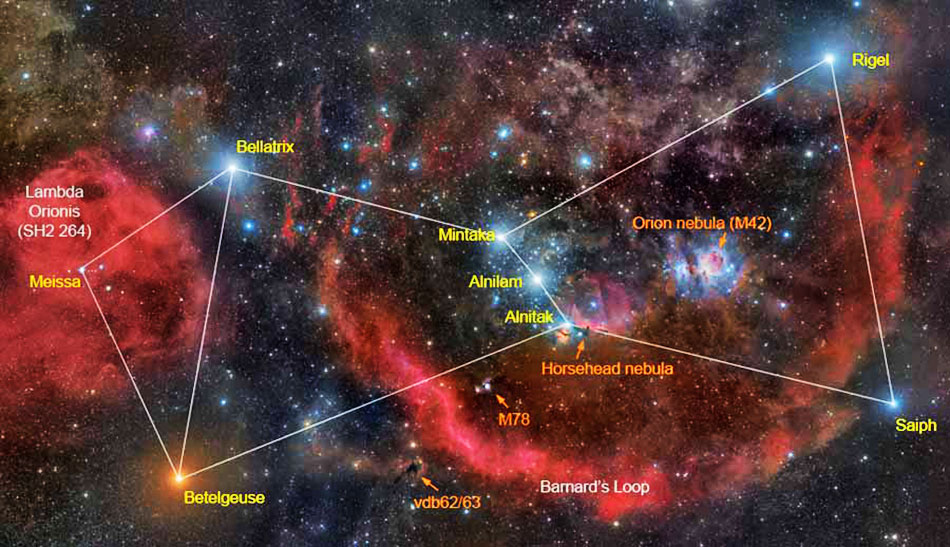
The true origin of Enki and the Anunnaki is a planet in the constellation Orion  and several ancient cultures had a fascination with it.


It is true that the Igigi and then the men were devoted to gold mining on Earth.

Although the word 'gold' explicitly, the Myth of Enki and Ninmah, original Sumerian story behind the poem Atrahasis mentions that before the creation of man the Igigi digging canals and drew slime in the region Harali is not emphasized .

This mythological place name is a subtle gold mining in old terms reference.

In ancient Mesopotamian culture, the legendary land of Harali, also known as Arallu, gold was considered a place known for its abundance of precious metals (Ebeling and Meissner, 1997, i  Reiter, 1997 ii ).

Interestingly we can see that until later biblical narrative of Genesis, a ridiculous late plagiarism which is still several components of the original Sumerian version retained, subtly alludes to a relationship between the creation of man and the importance of gold.

Immediately after the formation of man in the image and likeness of God, the biblical narrator makes a very brief mention of the land of Havilah near Eden whose gold is plentiful and very good (Genesis 2: 10-12).

Well, yes Sitchin was correct in asserting that man replaced the Igigi in gold mining. 

However, it would not be correct to say that gold was the main reason for the coming of the Gods. In fact, its mention in the texts is quite peripheral and removal is just one of the many activities performed the Igigi and then the men.

Atrahasis poem emphasizes the importance of agriculture.

In the pre-human was the lesser gods dug watercourses, irrigated fields and enlivened the earth (Atrahasis 1: 21-26) and later human, after replacing his divine ancestors, built large irrigation dams to meet he,
"Hungry men" and the "desire of the Gods"
(Atrahasis 1: 337)
Similarly, the so - called  Story Bilingual Creation of Man , another related Sumero-Akkadian text, place an emphasis on maintaining the economy of civilization.

According to him, human tilled the fields of the Anunnaki, expanding the country's wealth, were dedicated to livestock and worthily celebrating the festival of the great Gods (Creation Bilingual 35-37; 40-41).

In short, men are not only engaged in gold mining, but were farmers who supplied the civilization of the Anunnaki food and then entertained their divine teachers with their festivals. 

Now you can see why the Anunnaki came to Earth? The answer is now clearer. 

They did not come for gold for the salvation of his supposed dying planet as Sitchin said. Enki did not create us as a slave race as claimed by sitchinianos fans.

Enki and his heroes are very powerful Anunnaki gods and do not require precious metals like gold for survival! 

Here I reveal a new perspective. 

Enki and his divine fellow astronauts were very advanced and capable of interstellar travel extraterrestrial civilization. Exploratory had much curiosity as the great beings they were.

The Anunnaki came to the habitable zone of our solar system and our Earth found alive.

They landed in the region of Mesopotamia and founded a small extra-planetary colony in what would later become our world. His species had perfected the science of space colonization.

This interpretation would explain why in the ancient stories many of the highest gods like Anu for example had its home in the 'sky' and falling to Earth only on special occasions as important councils as a small team of gods led by  Enki  and his brother  Enlil  had permanent residence on Earth where they built their sacred cities and watched the maintenance of pre-human civilization. 

Obviously the Anunnaki needed a team for the development and operation of its new Earth colony.

At the beginning were the Igigi, lesser gods, which irrigated the fields, tilled the land, did the harvest, raised cattle and conducting mining operations in mineral deposits to maintain the colonial civilization of the Gods.

After the uprising of Igigi, Enki, the great geneticist, manipulated DNA primitive terrestrial homínido (Erectus) had found on Earth and formed Homo Sapiens using its own genetic material.

His project was a great success.

The new hybridized hominid took the blood of his divine doers and replaced the Igigi in their tasks.

At that time humans were still living in the wild steppe (called "Edín" in Sumerian) outside of divine cities and supplying the colony of extraterrestrial visitors. 

We were never  slaves  in the eyes of Enki; we were the custodians and future inheritors of the Earth colony of Anunnaki.

Entrada destacada

PROYECTO EVACUACIÓN MUNDIAL POR EL COMANDO ASHTAR

SOY IBA OLODUMARE, CONOCIDO POR VOSOTROS COMO VUESTRO DIOS  Os digo hijos míos que el final de estos tiempos se aproximan.  Ningú...