https://misteri1963.blogspot.com.esgoogle.com, pub-5827770858464401, DIRECT, f08c47fec0942fa0https://misteri1963.blogspot.com.argoogle.com, pub-5827770858464401, DIRECT, f08c47fec0942fa0https://misteri1963.blogspot.com.cogoogle.com, pub-5827770858464401, DIRECT, f08c47fec0942fa0https://misteri1963.blogspot.com.brgoogle.com, pub-5827770858464401, DIRECT, f08c47fec0942fa0 google.com, pub-5827770858464401, DIRECT, f08c47fec0942fa0 Misteri1963

Translate

martes, 5 de septiembre de 2017

De las armas a las urnas, se constituye la Fuerza Alternativa Revolucionaria del Común (FARC)


Después de 5 días de Congreso y deliberaciones, se cierra el Congreso de las Fuerzas Armadas Revolucionarias de Colombia, Ejercito del Pueblo (FARC-EP), para dar paso al nuevo partido político Fuerza Alternativa Revolucionaria del Común (FARC).

Los días del Congreso en el Centro de Convenciones Gonzalo Jiménez de Quesada, situado en el centro de Bogotá a menos de 3 kilómetros en línea recta del Palacio de Nariño, residencia oficial del Presidente y sede de gobierno de Colombia, han reflejado la intensidad de distintas culturas políticas que confluyen en el mismo partido. Principalmente dos, la de los guerrilleros de los diferentes bloques (mediante los que la guerrilla ejercía el control territorial de una parte del país) y la de los militantes del Partido Comunista Clandestino Colombiano (PC3), la expresión política de las FARC en áreas urbanas.

Después del trabajo en comisiones, el último día de debate fue inaugurado por Ernesto Samper, ex presidente de Colombia. El también ex secretario general de la Unasur dio la bienvenida a la política a la ya ex guerrilla, en un discurso en el qué aposto por un socialismo del Buen Vivir (con menciones a Bolivia y Ecuador) en el que se le dé un valor agregado a los recursos naturales, se impulse la economía campesina y el reparto de la tierra, y se tengan relaciones bajo un horizonte sur-sur.

La jornada final del Congreso tuvo varios momentos de discusión. Uno de los puntos centrales fue la orientación ideológico-política del nuevo partido que iba a nacer. La definición final aprobada en votación fue la de una organización que recoge los principios y elaboraciones teóricas de las derivadas del pensamiento crítico y libertario, así como de las experiencias que a partir de ellas se han elaborado tanto a nivel mundial como de América Latina, especialmente las formuladas por los fundadores de las FARC-EP Manuel Marulanda y Jacobo Arenas. Todo ello con una orientación clara destinada a superar el orden social capitalista vigente.

Otro momento de votación importante fue para definir el nuevo nombre y logo del partido. En este caso y aunque se barajaba la alternativa de Nueva Colombia, se decidió por mayoría mantener el acrónimo FARC, unas siglas históricas, en una decisión que intenta mantener la cohesión interna de la hasta ahora organización político-militar, aunque probablemente tenga un costo negativo en la percepción urbana. Junto al nombre, un nuevo logo que simboliza una rosa moderna con una estrella roja en su interior, ya criticado en redes sociales por su semejanza con la tradicional rosa de la socialdemocracia.

Pero el momento culminante del Congreso tuvo lugar cuando los mil 100 delegados y delegadas al Congreso votaron por la dirección del nuevo partido político. Antes ellos, la decisión de escoger a las 111 personas que deben integrar la dirección, una urna, y dos tarjetones; uno rojo con 111 nombres propuestos por el Estado Mayor Central de las FARC, y otro verde con más de 50 nombres que se habían ido proponiendo durante los días del Congreso. El resultado, más allá de la cantidad de votos a cada candidato o candidata, consolidó la dirección de 111 propuesta por el Estado Mayor Central con los principales cuadros políticos del secretariado de las FARC-EP en los primeros lugares: Iván Márquez, Timoleón Jiménez, Pablo Catatumbo, Joaquín Gómez, Pastor Alape o Ricardo Téllez, entre otros.

El propio momento de la votación fue histórico para una buena parte de las y los participantes del Congreso, que como afirmaban con emoción, en sus décadas de vida, y militancia en las FARC, era la primera vez en su historia que depositaban un voto en una urna. A partir de ahora, serán muchas las veces que lo tengan que hacer en un partido que tiene asegurados por los Acuerdos de La Habana 5 senadores y 5 diputados en la Cámara de representantes para la legislatura 2018-2022.

Una vez clausurado el Congreso fundacional del nuevo partido con la elección de su dirección, y presentado la organización naciente en un acto político-cultural en la Plaza Bolívar de Bogotá ─nada es casualidad─ donde la intervención principal estuvo a cargo del antes Comandante en Jefe Timochenko, hoy Timoleón Jiménez, las FARC enfrentan una serie de desafíos que tienen que enfrentar en esta nueva etapa de lucha política y electoral.

El principal, consolidarse como un referente político no solo en determinadas zonas rurales del país, sino sobre todo en lo urbano, donde trabajan cientos de organizaciones sociales y políticas en diversos ámbitos, el de los derechos humanos, civiles o políticos; genero e identidad sexual; economías alternativas y un sinfín de luchas territoriales.
Para ello cuentan con una cierta aceptación en determinados sectores de la sociedad colombiana, que una encuesta 1 de Gallup Colombia divulgada durante los días del Congreso coloca en el 12%, 2 puntos por encima del 10% de aceptación que tienen los partidos tradicionales entre la sociedad colombiana, mientras que la imagen negativa, en el 84% es algo menor que el 87% de los partidos.

Ese descrédito de los partidos políticos tradicionales es una oportunidad, pero también entraña muchos riesgos, el de la normalización política y la institucionalización, que las FARC van a tener que enfrentar en el futuro cercano; incluidos los incumplimientos del gobierno en varios puntos de los Acuerdos de La Habana, y el paso de miles de guerrilleros a la vida civil, muchos de ellos sin haber podido disfrutar de su juventud debido a la guerra.

Y es que, como nos comentaba la ex guerrillera Isabela, a cargo de la zona veredal Antonio Nariño, durante una visita a ese territorio de paz situado en Icononzo, Valle de Tolima, construir la paz es muchas veces más difícil que hacer la guerra.

 www.jornada.unam.mx/2017/08/28/mundo/022n1mun    

Contradictions and tensions in the economy, trade and global politics


PAPERS magazine

FUHEM Ecosocial published a new issue of the journal PAPERS, entitled "Towards a new era?", To identify turning points in the economic and political globalization in recent times.

On August 18 Steve Bannon was dismissed as chief of staff of Trump Management. He had come to the White House after passing through Cambridge Analytica, company aupó Donald Trump for president of the United States, thanks to the automated personalized advertising to a scale never before known. A machine capable of causing major changes in public opinion, as researchers Berit Anderson and Brett Horvarth to explain  "The rise of the propaganda machine guns artificial intelligence" , included in the  SPECIAL  last number of  papers. 

Introduction to number raises the arrival of a  new era full of contradictions  in which we move from the hand of an economic globalization unprecedented whose clearest manifestation are the ecological and environmental changes that humanity is causing and altering the ability of the earth to sustain human life as we know it . 

The  digital economy  is one of those great transformations that occur within the current production model. So says economist  Ignacio Muro : "It's a way to produce that contaminates all activities but turns in the service sectors for consumption (20% of global GDP), laws and values of great impact for life people". Because this model of consumption is responsible for creating new spaces of inequality and exclusion in increasingly numerous layers of population. 

Another element is at this turning point is the  international trade . The continued growth of international transactions from free trade agreements after World War II, is facing two scenarios: "towards outside the rules and potentially negative for citizenship radical liberalization and the environment or towards a scale protectionist unprecedented in the last 50 years , "said  Luis Fernando Lobejón  on" international trade and trade policy . " 

Brexit and Donald Trump 

It is soberanismo a real alternative to this new era of neoliberal globalization? Albert RecioProfessor of Applied Economics at the Autonomous University of Barcelona analyzes its possibilities: "Capitalism is a global system. But its history has been articulated through national processes that have generated international hierarchy manifested in the influence that each state has in international institutions, in their ability to make autonomous decisions. " Examples such as the lack of real power of popular sovereignty in cases like the Greek crisis; the power of the United States to take international decisions unilaterally without regard to the international community or the Brexit show the differences of a soberanismo at different speeds that exemplifies the ongoing conflict between democracy and authoritarianism of this new globalization. 

Some initiatives and proposals that promote local governance are proposed by researchers  Daniele Archibugi and Marco Cellini  in the analysis "levers to achieve global democracy." Since the claim of the commitment of international organizations towards democracy, to build on the work of NGOs to establish links between civil societies to reduce the growing instability in the international community avoiding the use of taxation. "Recent history has shown that democracy is not a product that can be easily exported and imposed from above , " the authors write . 
The magazine is complete with its usual sections: 

The  TEST  "Sustenance and sustainability: to live under one roof with well glued to the ground feet , " signed by the director of the magazine,  Santiago Alvarez Cantalapiedra , which analyzes the possible paths that can guarantee an acceptable level of welfare for all without compromising the natural foundations that sustain life on the planet. 

Section  PANORAMA  includes three items. The agreement signed by  Xavier Bohigas  shows how nuclear energy is not without CO2 emissions. Followed by a focus on economic democracy and mechanisms of collective capital formation, article  Mario del Rosal . Finally,  Ricardo Gayol and Antonio Vicente , reconstruct the cycle change which resulted in the death of Antonio Vicente Mosquete, president of the ONCE and how from that moment, the organization took a more typical path of a commercial enterprise than a service institution. 

Meanwhile, in  PERISCOPIO ,  Ana Cecilia Salazar , a researcher at the University of Cuenca (Ecuador), discusses the conflict between the Shuar indigenous people and extractive interests of transnational corporations that exploit the mineral resources of the Ecuadorian region. 

Finally, the issue offers two interviews: one of  Lucía Vicent  and  José Bellver  , the Ecosocial team FUHEM with  Randall Wray  , about his book  Monetary Theory Moderna: Manual macroeconomics on sovereign monetary systems  , and second, of  Salvador López Arnal  with  César Rendueles  about his book  Unprocessed. A claim of historical materialism .

Contradicciones y tensiones en la economía, el comercio y la política global


Revista PAPELES

FUHEM Ecosocial publica un nuevo número de la revista PAPELES, titulada “¿Hacia una nueva era?”, para identificar los puntos de inflexión en la globalización económica y política de los últimos tiempos.

El pasado 18 de agosto Steve Bannon fue cesado como jefe de gabinete de la Administración Trump. Había llegado a La Casa Blanca tras su paso por Cambridge Analytica, empresa que aupó a Donald Trump a la presidencia de Estados Unidos, gracias a la propaganda automatizada personalizada a una escala nunca antes conocida. Una máquina capaz de provocar grandes cambios en la opinión pública, tal y como explican los investigadores Berit Anderson y Brett Horvarth en “El ascenso de la máquina de armas propagandísticas de inteligencia artificial”, incluido en el ESPECIAL del último número de PAPELES. 

La Introducción al número plantea la llegada de un nuevo tiempo repleto de contradicciones en el que nos adentramos de la mano de una globalización económica sin precedentes cuya manifestación más clara son las transformaciones ecológico-ambientales que la humanidad está provocando y que alteran la capacidad de La Tierra para sostener la vida humana tal y como la conocemos. 

La economía digital es una de esas grandes transformaciones que se dan dentro del actual modelo de producción. Así lo señala el economista Ignacio Muro: “Es un modo de producir que contamina todas las actividades pero que se vuelca en los sectores de servicios destinados al consumo (20% del PIB global), con leyes y valores de gran repercusión para la vida de la gente”. Porque este modelo de consumo es el encargado de crear nuevos espacios de desigualdad y exclusión en capas cada vez más numerosas de población. 

Otro de los elementos que está en este punto de inflexión es el comercio internacional. El continuo crecimiento de las transacciones internacionales desde los acuerdos de libre comercio tras la Segunda Guerra Mundial, se encuentra ante dos escenarios: “hacia una liberalización radical ajena a la normativa y potencialmente negativa para la ciudadanía y el medio ambiente o bien, hacia una escala proteccionista sin precedentes en los últimos 50 años”, apunta Luis Fernando Lobejón en “Comercio internacional y política comercial”. 

Brexit y Donald Trump 

¿Es el soberanismo una alternativa real a esta nueva era de la globalización neoliberal? Albert Recio, profesor de Economía Aplicada de la Universitat Autónoma de Barcelona analiza sus posibilidades: “El capitalismo es un sistema global. Pero su historia se ha articulado a través de procesos nacionales que han generado una jerarquía internacional manifiesta en la influencia que cada Estado tiene en las instituciones internacionales, en su capacidad de tomar decisiones autónomas”. Ejemplos como la falta de poder real de la soberanía popular en casos como la crisis griega; el poder de los Estados Unidos para tomar decisiones internacionales de manera unilateral sin tener en cuenta a la comunidad internacional o el Brexit muestran las diferencias de un soberanismo a distintas velocidades que ejemplifica el conflicto actual entre la democracia y el autoritarismo de esta nueva globalización. 

Algunas iniciativas y propuestas que fomenten la gobernanza local son propuestas por los investigadores Daniele Archibugi y Marco Cellini en el análisis “Las palancas para lograr la democracia global”. Desde la reclamación del compromiso de las Organizaciones internacionales hacia la democracia, pasando por aprovechar el trabajo de las ONG para establecer vínculos entre las sociedades civiles hasta reducir la inestabilidad creciente en la comunidad internacional evitando el uso de la imposición. “La historia reciente ha demostrado que la democracia no es un producto que pueda ser fácilmente exportado e impuesto desde arriba”, señalan los autores. 
La revista se completa con sus secciones habituales: 

El ENSAYO “Sustento y sostenibilidad: vivir bajo un techo con los pies bien pegados al suelo”, firmado por el director de la revista, Santiago Álvarez Cantalapiedra, en el que analiza los caminos posibles que pueden garantizar un nivel de bienestar aceptable para todas las personas sin comprometer las bases naturales que sostienen la vida en el planeta. 

La sección PANORAMA recoge tres artículos. El firmado por Xavier Bohigas muestra cómo la energía nuclear no está exenta de emisiones de CO2. Le sigue un artículo centrado en la democracia económica y los mecanismos de formación colectiva de capital, de Mario del Rosal. Por último, Ricardo Gayol y Antonio Vicente, reconstruyen el cambio de ciclo que supuso la muerte de Antonio Vicente Mosquete, presidente de la ONCE, y cómo a partir de ese momento, la organización tomó una senda más propia de una empresa comercial que de una institución de servicios. 

Por su parte, en PERISCOPIOAna Cecilia Salazar, investigadora de la Universidad de Cuenca (Ecuador), analiza el conflicto entre la población indígena shuar y los intereses extractivistas de las empresas transnacionales que explotan los recursos mineros de esa región ecuatoriana. 

Para finalizar, el número ofrece dos ENTREVISTAS: una de Lucía Vicent José Bellver , del equipo Ecosocial de FUHEM, con Randall Wray , en torno a su libro Teoría Monetaria Moderna: manual de macroeconomía sobre los sistemas monetarios soberanos , y una segunda, de Salvador López Arnal con César Rendueles sobre su libro En bruto. Una reivindicación del materialismo histórico.

SLAUGHTER OF TWO WITNESSES SAY NO BARCELONA ANYONE HAVE SEEN DRIVING WHILE THE PICKUP TRUCK PEOPLE run over. Discover some baffling DATA


dondelaverdadnoslleva.blogspot.com 
reviewer 
August 20th, 2017

Much has been written and much has been said on TV about the driver of the van slaughter of Barcelona.

We can never KNOW THE TESTIMONY OF THE "OFFICIAL GUILTY" AS IS DEAD. Fulfilling THE SCRIPT OF OTHER false flag attacks occurred in recent years.

IN THIS BLOG WE WILL NOT LOSE TIME TO OFFICIAL Publicizing version as EDITORS OF THE OFFICIAL VERSION WHEN MEN WERE NOT THERE, women and children were killed by A STRANGE van.

MAXIMUM CREDIBILITY ON THIS TOPIC ARE WITNESSES OF THE FACTS AND STATEMENTS first, FREE BACK "OFFICIAL POLLUTION".

STREET PEOPLE, CITIZENS WHO ATTAIN NORMAL LIFE SAVING AND IN SOME CASES THAT BECAME HEROES AUTHENTIC IN FIRST INSTANCE succor the wounded.

PEOPLE LIKE Noorullah ESAAKHEL, an Afghan who works in a restaurant ZONE AND GOT A CHILD RESCUE OF LOW van.


AFGHAN THAT EXPLAINS THE CLEARLY not see anyone DRIVING THE WAGON.

ESAAKHEL saw SAYS "THE PICKUP TRUCK AGAINST A AFFIXED advanced to FLOWERS AND KIOSK no one inside."

THIS WAS THE FIRST WITNESS IN PICKUP TRUCK APPROACHING WHEN IT STOPPED his departure. "There was nobody" he says.

I recommend that you see the link below and THE SECOND VIDEO thereof containing the witness statement, saying "He did not see ANY SETTING THE PICKUP". POSSIBLY THE ELITE SCARED BY IMPLICATION, BORRE this valuable information in the coming hours.

BUT THE AFGHAN might have been wrong AMID CONFUSION, is not it?.


WHY WE HAVE ANOTHER WITNESS SAYS exactly the same, fijaros IN WHICH THE FOLLOWING TUIT echoes THE MAGNIFICENT BLOG "IDIOT not die."

http://nomoriridiota.blogspot.com.es/2017/08/con-los-mossados-de-escuadra-y-compas.html?m=1 EL CHICO says emphatically, "VI PICKUP TRUCK UP AND AS IBA STOPPING, NO ONE CAME OUT OF THERE, AND THERE anyone , "says AFRAID.


We already have two witnesses who say they have not seen any DRIVER that van.

At this point it WONDERING, IS IT POSSIBLE TO CARRY A VEHICLE REMOTE CONTROL?.

Yes, here you are a graphic illustration in the next video.

Raising any next question. WHY WE BELIEVE THAT BEFORE A WITNESS TO A JOURNALIST, a police officer or a politician?.

NEITHER THE POLICE OR POLITICAL JOURNALIST OR WERE THERE WHEN the facts.

WITNESSES YES.

SO?.

Do I have to FIAR REPUTATION OF LABELS TO PUT THEM each other ?.

Or perhaps I should judge people by their verifiable facts, BY THEIR ACTS DEMONSTRABLE.

Maybe we are surrounded by HJDGP TO VOTE OR TO WORSHIP vassals?.

Will that be THEN?.

These two witnesses are clear, in the van ran over PEOPLE, CONDUCTOR saw no inside or LEAVING AFTER RUNNING THE FACTS.

SO ........

The hero of Las Ramblas: "I took a child of low van terrorists"  okdiario.com August 20th, 2017 View original


In times of panic and to something unknown, no one knows how they will react. The heroic gesture saved the Noorullah Esaakhel Thursday, August 18 more than a dozen lives in Las Ramblas in Barcelona.


Noorullah is 29 and is Afghan. Restaurant works as a promoter of Istanbul King Street Hospital, perpendicular to Las Ramblas.


As each day at 16:47 hours, Noorullah was on the corner of two streets with a menu in hand ready to convince tourists and locals to take them to their restaurant to eat.


"I heard too much noise, for which there normally, and looked to see what happened.


I suddenly saw a van emblazoned on the front floresde kiosk 50 meters, and how moved slowly to stand there in front , "says the promoter.


Restaurant The King of Istanbul.


"I thought it was a drunk driver"


Noorullah was not afraid and in a fit between curiosity and courage decided to come to see what happened. "I thought it was a drunk driver who had stamped.


I approached the van and that's when I saw a child in the underbody. He was about 5 years and carefully pulled away to take you to the restaurant. It was very bad. Had very bad legs and had to tie these tape, we had inside, then take him to the ambulance when they came doctors , "he says.
"You can carry a bomb"


This unsung hero not only saved the life of little but decided to leave again for more victims were pulled from Las Ramblas as they entered the first troops of the Forces of State Security in the area.


"The police were very quick and that's when they saw me.


An agent approached me and shouted at me: 'Do not approach the van! You can carry a bomb. They are terrorists. That's when, truly, I realized what was happening and continued helping with more forces , "he explains.


Wounded are treated at the scene of the accident.


Noorullah continued to help more people and taking them to the restaurant while the media began to publish the first news.


Some witnesses have told of what happened that saw terrorists run out of the van and just hunker down with hostages in the restaurant El Rey Istanbul.


Something totally false and that after the initial alarm was denied by Mossos d'Esquadra. "Witnesses saw me run with injuries and thought it was the terrorista.De hence the confusion that there was" Noorullah said.


Two people meet again amid Ramblas.Foto: Photo: Nuria Val

Promoter that the local police was the first who arrived at the scene along with the National Police.


"The doctors came later and could help moving to the wounded to ambulances.


The local police told us to stay there with the blind noon local descent, because they were looking for terrorists.


We were there until 11 pm.


When agents was our IDs were recorded and escorted to the exit by the Plaza San Jaime , "says Noorullah.
" I did not see terrorists"


Afghan at no time saw the terrorists.


Bewilderment and amazement are evident on his face when he talks about that at no time saw the terrorists.


And he has his own hypothesis that he told police: "


I saw the van embedded in the kiosk of flowers and how to stop 50 meters from my job and no one was inside!


When I went to cross, a car passed quickly at that time and I did not get to establish who was inside because I played as normal.


They spend millions of cars a day by Las Ramblas. But undoubtedly, the terrorists may have fled in the car because the van was no one and did not see anyone running up wadis , "said Noorullah.


The promoter of the King of Istanbul has become famous throughout the neighborhood and these days, after the attack, residents of the area are close to thank him and ask him to tell you how it all happened and why decided risk his life and go out to help victims without knowing what was going on .


"I do not want recognition.


I just want people do not think that all Muslims are terrorists because it is not.


If I had seen, I would have thrown to hold them until the police had come.


Now more than ever we have to be strong for this not to happen again, "he concludes. For each and everyone.


Tribute to all the victims of the attack in Las Ramblas.Foto: Photo: Val Nuria

'Harvey' did not come out of nowhere


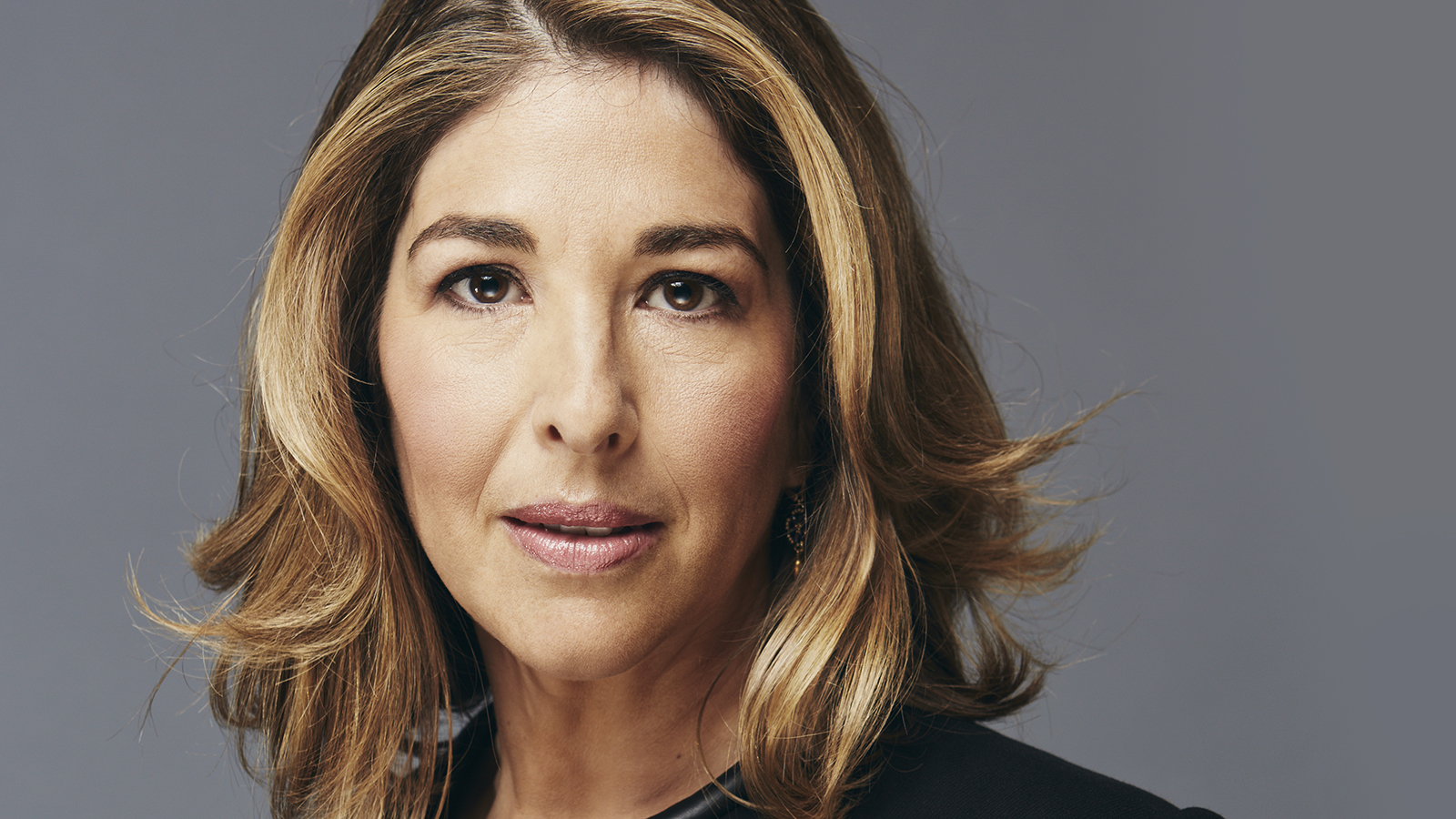
Naomi Klein. FLIPBOARD

Now is the time to talk about climate change and all other injustices - from making systemic detention and interrogation based on racial profiling to economically transform austerity disasters like  Harvey  in human catastrophes.
Seek media coverage of Hurricane  Harvey  and flooding in Houston, and hear about how this kind of rain is unprecedented. You will hear about how no one saw it coming, so no one could prepare properly.
What you hear very little about why these historically unprecedented weather events occur so regularly, to say historic and became a weather cliché. In other words, you do not hear talk much, if anything, about climate change.
This, they say, is because it seeks not to politicize a human tragedy that is still under development, which is understandable, but here's the thing: every time we make as a weather event comes from nowhere, like some action god no one could predict, reporters take an extremely political decision. It is determined not to hurt feelings and avoid controversy at the expense of the truth, however difficult it may be. Because the truth is that these events were predicted long ago by climate scientists. Increasingly warm oceans create more powerful storms. Increasingly high levels of the oceans mean that those storms come to places that were not reached. The increasingly warmer temperatures cause increasing rainfall extremes:
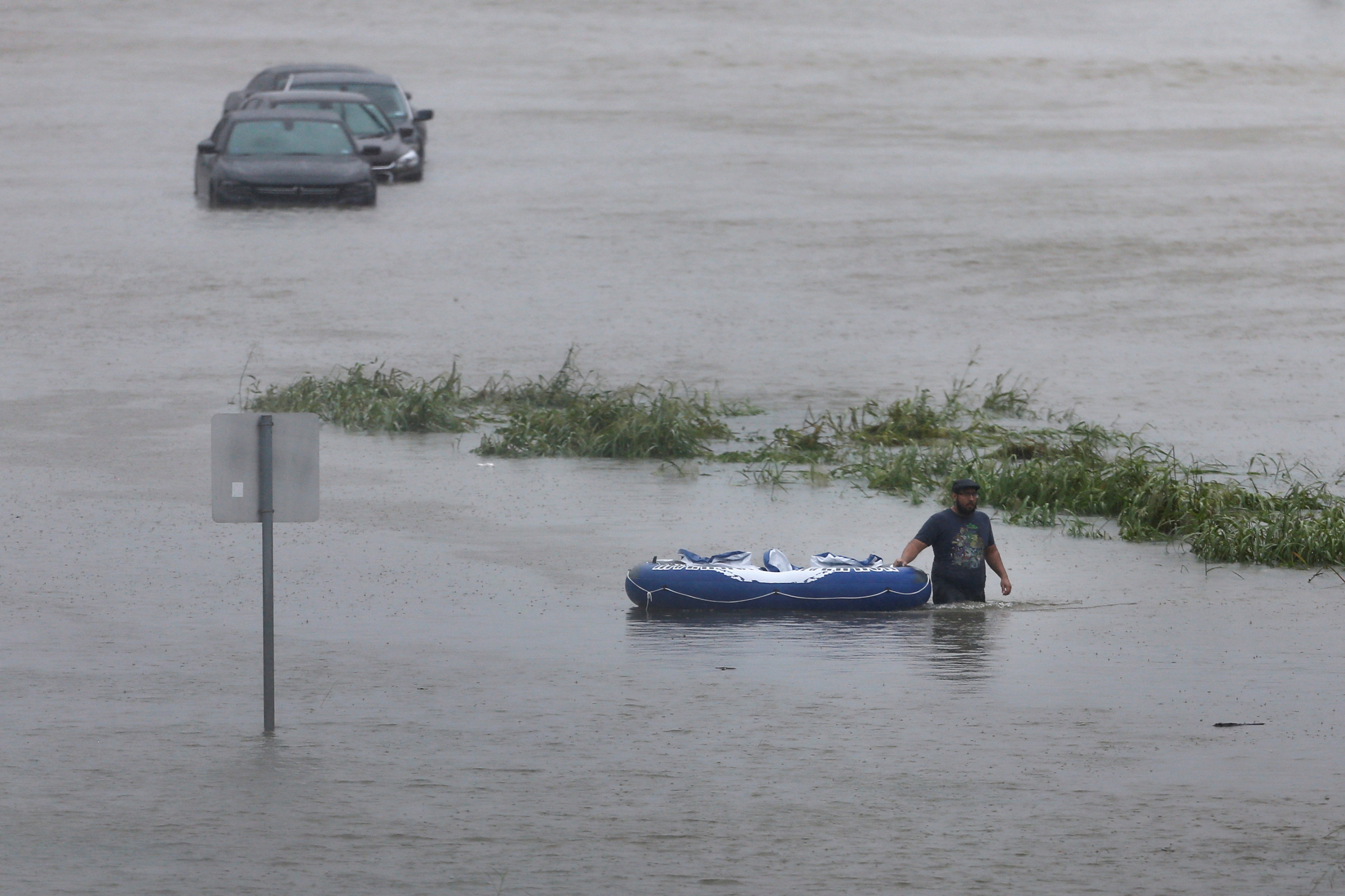
A resident walks through flood waters during Tropical Storm Harvey in Houston, Texas, USA.- REUTERS / Jonathan Bachman
Breaking records year to year- and is drought, storms, wildfires or just warmth occur because the planet is noticeably hotter, more than ever since records began. Covering events like  Harvey while these facts are ignored, not to offer a platform for climate scientists can explain it simply, while the decision of President Donald Trump to withdraw from climate agreements Paris is not mentioned, it involves failing the most basic duty of journalism: offer important facts and relevant context. Leaves the public with the false impression that these disasters do not have a source, which also implies that there could have done something to prevent them (and you can not do anything to prevent that in the future it worse).
Also worth noting that media coverage has been highly politicized Harvey long before the storm made landfall. There have been endless discussions about whether Trump took the storm seriously enough, long speculation about whether this hurricane will be his "moment  Katrina"And they have won political points (with good reason) with the fact that many Republicans voted against supporting Sandy but now cater to Texas. That's called politics a disaster It's the kind of partisan politics that is in the comfort zone of conventional, a policy that opportunistically, ignores the fact that put the interests of media companies fossil fuels the need for decisive control of pollution is a deeply bipartisan affair.
In an ideal world, we should all pause to politics until the emergency has passed. Then, when everyone was safe, we would have a long, meditative and informed public debate about the policy implications of the crisis we had just witnessed. What should imply for the kind of infrastructure that we build? What should imply for the type of energy on which we depend? (A question with tremendous consequences for the dominant industry in the region, which he is hitting harder Hurricane: oil and gas). The hipervulnerabilidad the storm of the sick, the poor and the elderly, what tells us about the kind of safety nets that we weave, given the rough future and ensure ?.
Since there are thousands of displaced, we could even discuss the undeniable links between climatic change and migration-from the Sahel to Mexico and seize the opportunity to discuss the need for an immigration policy that starts with the premise that the United States has a good part of the responsibility of the main forces that draw millions from their homes.
But we do not live in a world that allows such serious and measured debate. We live in a world in which the ruling powers have been too willing to exploit the diversion of attention of a large - scale crisis; and many are willing to use emergency life threatening to impose its regressive policies, policies that take us further down the road correctly described as a form of climate apartheid. We saw after Hurricane  KatrinaWhen Republicans wasted no time and promoted a completely privatized education system, weakened labor laws and tax, increased oil and gas drilling and refining industry, and opened the doors to mercenary companies like Blackwater. Mike Pence was a key architect of this project immensely cynical and we should not expect less after  Harvey , now that he and Trump are in charge.
Hurricane Harvey in the Texas coast as seen from the International Space Station NASA./REUTERS
We saw Trump used as a cover to Hurricane  Harvey  to achieve the highly controversial pardon of Joe Arpaio and further militarization of US police forces. This is especially ominous movements in the context of that posts migration monitoring are still operating with flooded roads (a serious disincentive for migrants evacuate) and in the context of municipal officials talking about applying penalties maximum looters (it is worth remembering that after  Katrina , several African - American residents were shot by police in the middle of this kind of rhetoric).
In short, the right not waste time to exploit  Harvey  and no other disaster like this to spread ruinous and false solutions, such as military police, more oil and gas infrastructure and privatized systems. This means that people informed and that matters is the moral imperative of naming the true roots of this crisis -connect the dots between climate pollution, systemic racism, reduced social services funds and excess funds for police. We also need to seize the moment to propose inter - sectoral solutions that dramatically reduce emissions while we struggle against all forms of inequality and injustice (something we have tried to raise in  The Leap  and groups like the  Alliance for Climate Justice  have driven long).
And it has to happen now same -just when the enormous human and economic costs of inaction are in full public view. If we fail, if we doubt due to a misconception of what is appropriate in a crisis, we leave the door open to ruthless actors exploit this predictable disaster for evil purposes.
It is also a hard truth that the window for these debates is getting closer. We will not have any public policy debate after passing this emergency; return to media obsessively cover Trump tweets and other intrigues. So, although it would seem indecent to be talking about the root causes while people are still trapped in their homes, this is realistically the only time we have the media attention to addressing the issue of climate change . It is worth remembering that Trump's decision to withdraw from the Paris-action climate agreement that will impact on a global scale for decades received more or less two days of decent coverage. Then they returned to Russia to talk about 24 hours.
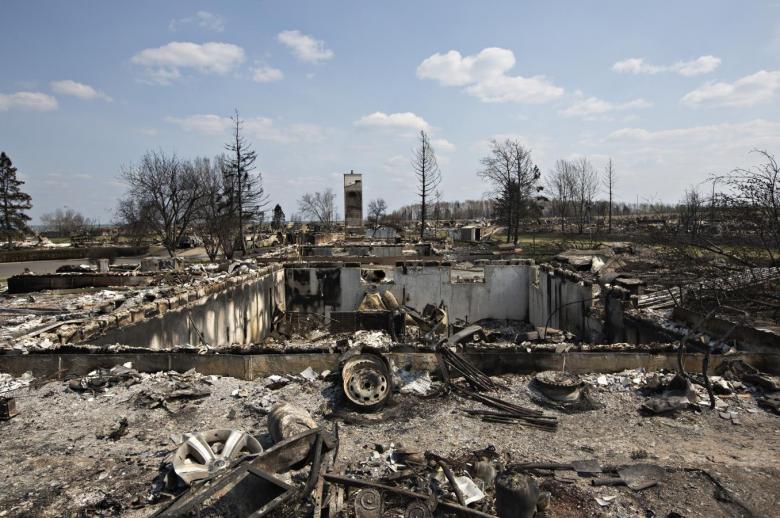
Just over a year Fort McMurray, village in the heart of the oil boom in Alberta oil sands, almost was reduced to ashes. For a time the world was stunned by the images of vehicles they were lined up on a road, with flames coming from both sides. At that time they said it was insensitive and scapegoats are sought only if they talked about how climate change exacerbated wildfires like this. Was even more taboo make any connection between our world, getting hotter, and the industry that energizes Fort McMurray, which employed most of the evictees and produces a particularly high carbon oil. The timing was not right; It was to show compassion, support and not ask difficult questions.
The Beacon Hill neighborhood, after being ravaged by wildfire Fort McMurray, Alberta, Canada, on May 13, 2016. REUTERS / Jason Franson
But, of course, and when it was appropriate to raise these issues reflectors it means that much had been done. And today, while Alberta try to get at least three new pipelines to cover its plans to increase production from tar, that terrible fire and the lessons that could have contributed almost not mentioned.
It is a lesson for Houston. The window to provide a meaningful context and draw important conclusions is reduced. We can not afford to spoil it.
Talk honestly about what fosters this era of serial disasters even as occur- no disrespect to people who are on the site in question. In fact, it is the only way to really pay tribute to their losses, and our last hope to prevent future with countless more victims.
* Naomi Klein  is the author of  This changes everything: capitalism against the weather.  His new book is  No, it is not enough: Resisting shock policies Trump and get the world we need . 
Translation: Tania Molina Ramirez 

This article was published in  the intercept  and the day . 
Source: http://www.publico.es/opinion/naomi-klein-harvey-no-salio.html

Entrada destacada

PROYECTO EVACUACIÓN MUNDIAL POR EL COMANDO ASHTAR

SOY IBA OLODUMARE, CONOCIDO POR VOSOTROS COMO VUESTRO DIOS  Os digo hijos míos que el final de estos tiempos se aproximan.  Ningú...