https://misteri1963.blogspot.com.esgoogle.com, pub-5827770858464401, DIRECT, f08c47fec0942fa0https://misteri1963.blogspot.com.argoogle.com, pub-5827770858464401, DIRECT, f08c47fec0942fa0https://misteri1963.blogspot.com.cogoogle.com, pub-5827770858464401, DIRECT, f08c47fec0942fa0https://misteri1963.blogspot.com.brgoogle.com, pub-5827770858464401, DIRECT, f08c47fec0942fa0 google.com, pub-5827770858464401, DIRECT, f08c47fec0942fa0 Misteri1963

Translate

viernes, 22 de septiembre de 2017

Rusia ha cerrado la mitad de sus bancos en menos de tres años

Elvira Nabiullina, directora del Banco Central
A finales de julio el Banco Central de Rusia cerró el banco Iugra, creado tras la caída de la URSS en 1990. 
Rusia, que acusa al banco de falsificar la contabilidad y de actividades fraudulentas,está endureciendo su control sobre el capital financiero.
Por la cuantía de sus activos, Iugra hacía el número 29 dentro del escalafón de los 600 bancos que existen en Rusia, de los que la mitad han sido cerrados desde que en 2013 llegó Elvira Nabiullina a la dirección del Banco Central con la misión de sanear la banca privada.
En varias ocasiones, Nabiullina ha exigido que los casos más graves de fraude bancario se pasen a los tribunales y se endurezcan las penas a los financieros por malversación de caudales.
A comienzos de julioNabiullina puso a Iugrabajo una estricta tutela pero, finalmente, cerró el banco, al que no quiso rescatar por los elevados importes que hubiera supuesto para los presupuestos públicos.
Quien dirigía el banco “de facto” era Alexei Jotin, un capitalista que utilizaba el banco para captar dinero para sus propios negocios. 
La crisis del capitalismo en Rusia, que sólo en parte procede de las sanciones económicas, generó una situación muy inestable.
Para compensar la reducción de ingresos procedentes de las exportaciones de petróleo y gas, el gobierno dispone de un fondo extraordinario superior a los 10.000 millones de dólares, que no serán suficientes, ni siquiera si el embargo se levanta y el precio del petróleo sigue subiendo.
El cierre de la mitad de los bancos rusos demuestra su naturaleza especulativa. 
Los mayores perjudicados son las empresas que, a diferencia de los particulares, no tienen sus depósitos garantizados.
El resto encuentra cada vez más dificiltades para operar en los mercados internacionales a causa del embargo, que afecta al sistema de pagos Swift. 
El gobierno ruso trabaja en un proyecto que, por un lado reforzará las monedas virtuales, en las que son pioneros, y por el otro, en crear un sistema alternativos de pagos.
Más información: 

Is compulsive consumerism the "new opium of the people"?


The present dominant system or establishment would use the invisible dictatorship of the compulsive consumerism of material goods to annul the ideals of the primordial individual and transform it into an uncritical, fearful and conformist being that will inevitably increase the ranks of a homogeneous, uniform and easily manipulated society through mass manipulation techniques. 
Manipulation of the masses 
Edward L. Bernays,nephew of Sigmund Freud and one of the pioneers in the study of mass psychology, wrote in his book Propaganda (1928), "The deliberate and intelligent manipulation of the structured habits and opinions of the masses is an important element in democratic societies. 
Those who manipulate this hidden mechanism of society constitute an invisible government that is the true ruling power of our country. 
We are governed, our minds are shaped, our tastes formed, our ideas suggested, largely by men we have never heard of. " 
It also bases the support of all systems of government on the "manipulation of public opinion", stating that "Governments, whether monarchical, constitutional, democratic or communist, depend on the acquiescence of public opinion to port their efforts and, in fact, the Government is only Government by virtue of this public acquiescence. " 
In another of his books, "Crystallizing public opinion," he unravels the brain's mechanisms of the group and the influence of propaganda as a method to unify his thinking. 
Thus, according to his words "the mind of the group does not think, in the strict sense of the word. Instead of thoughts it has impulses, habits and emotions. 
When deciding your first impulse is usually to follow the example of a leader you trust. 
This is one of the principles most firmly established by mass psychology, "so the propaganda of the establishment will be directed not to the individual subject but to the Group in which the personality of the one-dimensional individual is diluted and shrouds in fragments of false expectations created and common yearnings that supports it. 
The media manipulation 
American Harold Lasswell (a pioneer in mass communication research) studied post-World War I propaganda techniques and identified a way of manipulating the masses ( hypodermic needle or magic bullettheory ) , a theory embodied in his book "Propaganda techniques in World War (1927) and based on " injecting a concrete idea with the mass media to direct public opinion for their own benefit and that allows to achieve the adherence of individuals to their political ideology without having to resort to violence .  "
To this, contributes the flat encephalogram of the critical conscience of the present society favored by a journalistic practice dangerously mediated by the absence of the exegesis or objectivity in the articles of opinion and the termination of the deontological journalistic code that would have its form in the implementation of self-censorship and in the submission "nolis volis" to the editorial line of its media (fruit of the atavistic endemism of servitude to the factual powers of the status quo) and that would have turned the journalist into a mere transmission belt of the postulates of establishment or dominant system. 
Towards the Multidimensional Individual? 
The German sociologist and philosopher Herbert Marcuse, in his book "The Unidimensional Man (1964), explains that" the basic function of the media is to develop pseudo-necessities of goods and services manufactured by giant corporations, tying individuals to the consumption cart and political passivity ", political systems that will be the breeding ground for the pathogenic virus known as" autos-kratos "or autocracy. 
The autocracy would be a form of government exercised by a single person with an absolute and unlimited power, a kind of endogenous parasite of other systems of government (including so-called formal democracy), starting from the chrysalis of a partisan proposal chosen through free elections, came to power metamorphosed into a presidentialist leader with clear totalitarian tints (inflexible, centralist and authoritarian), which confirms the aphorism of Lord Acton ... 
"Power tends to corrupt and absolute Power corrupts absolutely" . 
However, thanks to the interactivity provided by Internet social networks (the so-called Fifth Power linking and aiding the formation of modern identities), the endemic isolation and passivity of the submissive and uncritical individual of Western consumer societies (One-dimensional Man). 
Thus, a new individual would be emerging, reaffirmed in a solid critical conscience, based on values ​​fallen into disuse but present in our atavistic code as solidarity and collective indignation before the corruption and injustice prevailing and ready to break the rules and imposed laws by the dominant system, Multidimensional Individual generates a popular tsunami denouncing the current democratic, social and values ​​deficit and establishing the constructive chaos that will end up diluting the opioid inhibitor of the critical conscience (compulsive consumerism). 
GERMÁN GORRAIZ LÓPEZ - Analyst

The actual differences between a brand-name ibuprofen and a generic one


When it comes to ibuprofen, there is considerable confusion about the effectiveness of a particular brand compared to its generic counterparts. 
One of the questions that we ask the most is what will be better or if there is any difference of relevance between the two anti-inflammatories to distinguish which is the safest. 
However, there are some characteristics that we must know and take into account.
First we must understand what a generic drug is and what particularities it associates with. 
Generic drugs are an identical or bioequivalent version of a brand-name drug made by another company. 
For the approval of the sale of generic medicines the pharmaceutical company in charge of its distribution must submit an abbreviated application of the drugs to the Federal Agency of Medicines.
For approval of a generic drug, it must contain the following properties:
- Containing the same active ingredients as the brand name drug.
- be identical in terms of their concentration, dosage form and route of administration.
- Have the same instructions for use (leaflet).
- Be bioequivalent.
- Comply with the same batch, purity and quality requirements.
- Be manufactured under the same strict standards as brand name drugs.
This is why a generic ibuprofen has the same active ingredients as a brand-name ibuprofen. 
Assuming we take the same dose, there is no reason why we should worry about whether one product is more effective than another. Generic ibuprofen products differ slightly in their non-active ingredients, but all have the same active ingredient as ordinary ibuprofen.
Generic medicines. Image: Pixabay

Why are generic drugs cheaper?

Generic drugs represent 89% of the prescriptions dispensed in the companies and only 27% of expenses in medicines. 
Part of the reason that generic drugs can be marketed at such low prices is because generic companies have no obligation to carry out clinical trials to explore new drugs. 
The process of receiving market approval for brand new drugs is significantly more expensive and time consuming.
One of the benefits for generic drugs is that they enter a market that already has a customer base that is actively committed to the brand. 
So companies do not have to spend on resources for marketing and advertising, since the drug is familiar to health professionals, prescribers and patients.

Las diferencias reales entre un ibuprofeno de marca y uno genérico


Cuando se trata de ibuprofeno, existe una confusión considerable sobre la eficacia de una marca concreta en comparación con sus equivalentes genéricos. 
Una de las cuestiones que más nos preguntamos es cuál será mejor o si existe alguna diferencia de relevancia entre los dos antiinflamatorios para distinguir cuál es el más seguro. 
Sin embargo, hay algunas características que debemos conocer y tener en cuenta.
En primer lugar debemos comprender qué es un fármaco genérico y qué particularidades se le asocia. 
Los medicamentos genéricos son una versión idéntica o bioequivalente de un fármaco de marca hecho por otra compañía. 
Para la aprobación de la venta de medicamentos genéricos la empresa farmaceutica encargada de su distribución debe presentar una solicitud abreviada de los fármacos a la Agencia Federal de Medicamentos.
Para la aprobación de un medicamento genérico, este debe contener las siguientes propiedades:
- Que contengan los mismos ingredientes activos que el medicamento de marca.
- Ser idénticos en cuanto a su concentración, forma de dosificación y vía de administración.
- Tener las mismas instrucciones de uso (prospecto).
- Ser bioequivalente.
- Cumplir con los mismos requisitos de lote, pureza y calidad.
- Ser fabricado bajo los mismos estándares estrictos que los medicamentos de marca.
Esta es la razón por la que un ibuprofeno genérico tiene los mismos ingredientes activos que un ibuprofeno de marca. 
Suponiendo que tomemos la misma dosis, no hay razón por la que debamos preocuparnos si un producto es más eficaz que otro. Los productos genéricos de ibuprofeno difieren ligeramente en cuanto a sus ingredientes no activos, pero todos tienen el mismo ingrediente activo del ibuprofeno corriente.
Medicamentos genéricos. Imagen: Pixabay

¿Por qué los medicamentos genéricos son más baratos?

Los medicamentos genéricos representan el 89% de las recetas dispensadas en las compañías y sólo un 27% de gasto en medicamentos. 
Parte de la razón por la que los fármacos genéricos pueden comercializarse a precios tan reducidos es a causa de la falta de obligación que tienen las empresas genéricas en llevar a cabo ensayos clínicos que permitan explorar nuevos medicamentos. 
El proceso de recibir aprobación en el mercado para nuevos fármacos de marca es significativamente más costoso e implica más tiempo.
Uno de los beneficios para los medicamentos genéricos es que entran en un mercado que ya tiene una base de clientes activamente comprometidos con la marca. 
Por lo que las empresas no tienen que gastar en recursos para la comercialización y la publicidad, ya que el medicamento es familiar para los profesionales de la salud, prescriptores y pacientes.

The 'Canadian TTIP': a unique gift for transnational corporations


Image result of The 'Canadian TTIP': a unique gift for transnational corporations


Francesca Ricciardi, Lucia Bárcena and Tom Kucharz  
Members of Ecologists in Action and the State Campaign No to TTIP, CETA and TiSA
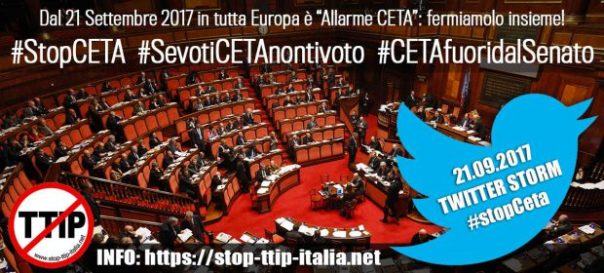
On September 21, the trade and investment agreement between the European Union and Canada (CETA) will be applied on a provisional basis, a gift to economic and financial elites that has clashed with mobilizations and unprecedented political opposition on this political issue.
The first thing to note is that only 4 parliaments from the 28 EU Member States have ratified the agreement. 
However, the CETA will only come into full force when all EU parliaments have ratified it. And we are very far from that. 
In spite of this, most of the agreement provisionally applies, such as the sections on the elimination of tariffs on goods, the chapter on services and public procurement, as well as regulatory cooperation.
With provisional application Canadian beef and pork products with toxic and banned products in the EU (such as hormones or ractopamine) or transgenic salmon can be imported due to the lack of controls and certification procedures for Canadian meat and fish on arrival at European border inspection posts. 
With the sole control of the Food and Veterinary Office in Canada, there is no guarantee for animal welfare, its food and antibiotics supplied, the absolute lack of traceability and the labeling of products containing genetically modified organisms (GMO), as well as the type and levels of pesticides authorized and used.
Canada still allows 46 banned active substances in the EU and that maximum permitted levels of pesticide residues in food products are much less demanding in Canada than in the EU.
Imports of meat are a matter of concern to European family farms because production costs are lower in Canada. 
This could aggravate the price war. With the reduction of tariffs in CETA (for example 87% in processed food), prices for poor food will be further reduced, which will increase health risks.
What are the implications of the chapter on regulatory cooperation?
This chapter will have very negative long-term impacts, delaying or complicating the regulation of parliaments and governments because there will be more mechanisms to block new regulations from the Canadian government and business associations.
We have seen it with the regulation to ban hormone contaminants (endocrine disruptors) and regulation of toxicants in the EU (REACH). 
Canada, the United States lobbying in Brussels, and the transnational corporations that employ these chemicals in their products, have been able to delay the regulation of endocrine disruptors by almost four years.  
Endocrine disruptors alter the hormonal system and by this alteration can produce diseases like cancer and metabolic problems (obesity and diabetes). 
Its health cost in the EU is estimated at a minimum of 160,000 million euros per year.
As of September 21, transparency regarding the work of the regulatory cooperation bodies is not guaranteed. 
We are concerned that the various regulatory co-operation committees will start operating without being obliged to publish ex-ante agenda, activity reports and conclusions, as well as the opinions and positions of the different authorities on draft regulations which will be affected by CETA.
These committees are mainly seeking to increase economic exchanges and not to strengthen standards of protection of health, workers and the environment. 
The mechanisms of dialogue envisaged short-circuit democratic parliamentary processes, and at this stage a risk of interference of private interests in the decision-making process can not be ruled out.
The problem is that many of the effects of regulatory cooperation will be difficult to understand. 
This is the pressure behind closed doors on officials who prepare or change laws, which we will never be able to detect or prove in case of doubt. Parliamentary control of how this chapter will be used will be crucial.
This means increasing control over business lobbies. We must be vigilant and react to any denunciation of deputies and officials when the authorities are pressured by CETA means. And we need officials to make public this pressure.
CETA enables the banking and financial sector to expand the cross-border sale of high-risk financial services to and from the EU's single market. 
And instead of prohibiting speculative trading, CETA will constantly adjust based on the evolution of both markets. 
A step to give more rights to banks and speculators, preventing urgent regulations in this sector that may trigger new outbursts of speculative bubbles such as real estate in Spain.
With the provisional application, the energy sector will also be liberalized, which will deepen the climate crisis. 
Canada will export more products derived from the extraction of hydrocarbons from tar sands, increasing the demand for unconventional oil and the exploitation of fossil fuels. 
It is shameful as the Canadian government itself advertises on its website the "opportunities and benefits of CETA for Canada's oil and gas exporters" by dropping tariffs on tar sands from 2.2% to 0%.
In Spain, no commission has yet been set up to oversee the provisional implementation of CETA, which could be asked to assess the health and environmental impact and to monitor sensitive issues such as new techniques for obtaining genetically modified varieties, as well as the evolution of regulations on plant protection products (eg classification and prevention by endocrine disrupters).
The protection of investors in CETA is one of the most dangerous chapters of this agreement
Arbitration litigation in CETA will be much easier than in other treaties such as the NAFTA, the trade agreement between the United States, Canada and Mexico that is currently being negotiated. 
CETA is the first treaty in the world to explicitly protect the "legitimate expectations" of investors through what is known as a "fair and equitable treatment" clause. 
If this chapter were to come into force, a broad interpretation of this clause could be typified, which would create "the right" to a stable regulatory environment. 
This would give investors an instrument to combat any regulatory change, even if it is adopted in the light of new evidence or democratic options.
Just before the CETA was signed a year ago, the European Union and Canada have tried to divert the substantive debate on the incompatibility of arbitration tribunals and the rule of law with very misleading explanations. They have signed interpretative statements, without changing the content of the chapter. 
But it is sad that this offensive of makeup and propaganda has managed to catch part of the media and political parties.
Without analyzing that the CETA could trigger a rise of litigation of large companies which could constitute a serious threat to the initiatives of the governments and parliaments to protect the citizenship and the environment.
Belgium has used the arbitration system before the Court of Justice of the European Union
There are lawyers who consider it likely that the European Court of Justice will decide that investor protection in CETA is not compatible with EU law. 
The European court could argue that only European courts are responsible for the interpretation of European law and not an international arbitration tribunal. 
But there are, of course, lawyers who see it differently. 
The process of analysis by the CJEU alone is a small victory of the CETA movement and could prolong the ratification process. 
Some parliaments will want to wait for the court's ruling before voting on the treaty if there are concerns about the legality of CETA.
And what happens if a country does not ratify the CETA?
If a country says No, ratification has failed and the treaty will not be legally binding. 
There is also the assumption that some countries will never bring the treaty to ratification for fear of losing the vote. 
That would mean that most of the CETA would be implemented by way of facts, but not legitimately or democratically. 
And without the full ratification and entry into force of CETA, the chapter on investment protection never came to light. 
This, too, would be a victory for the resistance movement against the neoliberal policies of the EU and the Spanish Government.
Nonetheless, the social and political organizations that are part of the campaign against CETA are confident that citizen and legal initiatives will succeed in curbing the CETA and launching alternative trade policies that place the fulfillment of human rights at the center. gender equality, labor rights and social and environmental justice.

Entrada destacada

PROYECTO EVACUACIÓN MUNDIAL POR EL COMANDO ASHTAR

SOY IBA OLODUMARE, CONOCIDO POR VOSOTROS COMO VUESTRO DIOS  Os digo hijos míos que el final de estos tiempos se aproximan.  Ningú...