google.com, pub-5827770858464401, DIRECT, f08c47fec0942fa0 https://misteri1963.blogspot.com.esgoogle.com, pub-5827770858464401, DIRECT, f08c47fec0942fa0https://misteri1963.blogspot.com.argoogle.com, pub-5827770858464401, DIRECT, f08c47fec0942fa0https://misteri1963.blogspot.com.cogoogle.com, pub-5827770858464401, DIRECT, f08c47fec0942fa0https://misteri1963.blogspot.com.brgoogle.com, pub-5827770858464401, DIRECT, f08c47fec0942fa0 Misteri1963

Translate

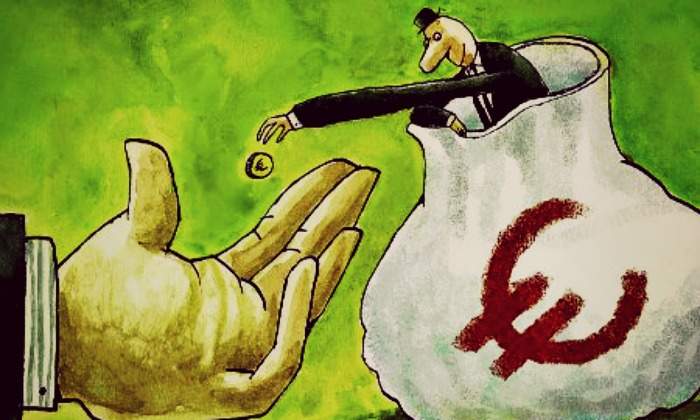
Banco Popular: zombie bank regulators approved and has sold over one euro

Why are back in the banks today?Why the statements in the media call the "calm" encouraging us to suspect that something happens very murky? Are we going to play live the crisis 2.0 and have not left the first?More importantly , what makes Santander  buying companies with good morning rounds of bread ?Then we will try to summarize all this in four key.

It has cost a euro?

Easy: no. It is a symbolic payment .Ana Botin and his family  will increase its capital by 7,000 million euros  for performing the absorption of Banco Popular.

And it will pay all Santander?

Dl U376798 021
Well, the first thing is that all  the shareholders and small and large, have lost their money . And it will trigger a  conversion of the debt , but, having holes possible  he will clog the Santander .

So what of the People is not going to cost the citizens? Can you just give all this?

Guindos Europe and  you swear and rejuran  no, I trust blindly in the Santander can not fall only by an acquisition that represents  less than 10% of the bank's resources . What isnot discussed much is that this bank, like everyone else, were allowed during the crisis  accounted for as equity tax credits . To convert these loans in regulatory capital required them to Europe State guarantee and Spain signed.
Dl U376154 018Economy Minister Luis de Guindos.
After the crisis the European authorities considered it was a hard blow for citizenship national bank bailouts, as happened in many countries, including Spain. The Single Resolution Mechanism was created to European, the FROB in Spain but which  prevents taxpayers are the first to support the rescue  of financial institutions and asks other banks to pay the costs of the resolution.
This  is the first time the MUR have to run the containment plan , and now says that shareholders and subordinated debt take off, probably 100%. And that means that the public endorsement of the tax credit will be executed and the Spaniards will pay part of bankruptcy.

Is this the same tactic rescue did with the savings banks in crisis?

In principle we have tried to avoid this and is expected to Santander to goad the whole mess. It relies on the ability of management Botin  to consolidate their accounts and avoid contagion.

To all this: why do you want to buy a Santander bank debt?

Because  the Santander now has plenty of liquidity  to cope withdebt and thus  wins market loans to SMEs that had the Popular and its offices and customers that from today are effectively clients Grupo Santander with the same rights than others. Return on investment within two or more years and the company becomes  the largest bank in Spain in market share  in loans and and deposits with 17 million euros.

Well, and how the People's Bank has come to this situation?
A00736284 023 DlAngel Ron, president of the Bank of Spain in 2011.

Popular,  very involved in the brick,  and had a zombie accounts for years . In theory that banks were under  the supervision of the ECB after the crisis would prevent could act irresponsibly or unfeasible. But between 2011 and 2016 the People 'sBank  approved three of four tests  of solvency referred to it by the European Central Bank (ECB), the European Banking Authority (EBA) and the Bank of Spain.
Which he suspended, for  2012 , showed that  needed more than 3,000 million  and had many troubled assets, with houses and lands they have lost in recent years to 80% of its value. Europe okayed , or put another way, the stress tests were not worth a long way . The thing was moving in increasingly dangerous cycles: toxic properties have been caused continuous provisions , these provisions have caused losses and these losses have led to continuous declines in the stock market.
Construction 287868 1920
But  facing the gallery everything went relatively well ,  correct to say the least , and since late 2016 its leaders, with  Emilio Saracho  at the head, were doing, in principle, an efficient sanitation work. In February this year after the bank received a  capital increase of 7,000 million euros  that ate in a few days, the solvency of the company was guaranteed by the usual requirements viability of banks (had a  ratio Phased-in ET1 12.12% ).There was no worry.
Two simple figures:  in 2007, when the bank was capitalized by 18,000 million , shares of People  came to reach 35.36 euros . Last Friday was 0.35 euros, and hence BP yesterday had traded worth more than a billion and now be sold to euros.

Are we being lied to and go to a new banking crisis?

Dl U339127 003Banco Popular Chairman Emilio Saracho until today at an extraordinary meeting to shareholders in May.
They do not lie, but  dissimulate .The FROB  has insisted  that the current infeasibility is based on the "deterioration of its deposit base over recent months and uncertainty about their private plans to deal withpossible damage to the balance of the entity". That is, it is a thing of now, not "those dusts these muds" 2012.
But in principle everything should be fine. It is taking advantage now from years ago that the risk premium is short and that people again want tospend money on Spain to  remove dirt from the accounts . But  there are those who look fearful to Italy , where some of its banks are engaged in similar to the People 's problems washing effectiveness has not been very high (yes, the MUR has not found it necessary to get involved in the matter) and new money as in the rest of Europe, is still missing.
If Italian politicians  are talking about a euro exit , it's time to worry.

Banco Popular: el zombi bancario que aprobaron los reguladores y que ha terminado vendido por un euro

¿Por qué vuelven a estar de actualidad los bancos? ¿Por qué las declaraciones en los medios llaman a la "calma" animándonos a sospechar que pasa algo muy turbio? ¿Nos va a tocar vivir la crisis 2.0 y no hemos salido de la primera? Más importante aún: ¿qué hace Santander comprando empresas de buena mañana con las vueltas del pan? A continuación vamos a intentar resumir todo esto en cuatro claves.

¿Ha costado un euro?

Fácil: no. Es un pago simbólico. Ana Botín y los suyos van a ampliar su capital en 7.000 millones de euros para conseguir realizar la absorción del Banco Popular.

¿Y lo va a pagar todo el Santander?

Dl U376798 021
Bueno, lo primero es que todos los accionistas, pequeños y grandes, han perdido su dinero. Y también se va a activar una conversión de parte de la deuda, pero sí, de haber posibles agujeros los va a tapar el Santander.

¿Entonces lo del Popular no nos va a costar a los ciudadanos? ¿Me puede dar igual todo esto?

Europa y De Guindos te juran y rejuran que no, que confían a pies juntillas en que el Santander no pueda caer sólo por una adquisición que le supone menos del 10% de los recursos del banco. Lo que no se comenta tanto es que a este banco, como a todos los demás, se les permitió durante la crisis contabilizar como capital los créditos fiscales. Para convertir esos créditos en capital regulatorio Europa les exigió un aval del Estado y España firmó.
Dl U376154 018Ministro de economía Luis de Guindos.
Tras la crisis las autoridades europeas consideraron que había sido un golpe durísimo para la ciudadanía el rescate nacional de los bancos, como sucedió en muchos países, incluido España. Se creó el Mecanismo Único de Resolución, el FROB de España pero a la europea, que evita que sean los contribuyentes los primeros en soportar el rescate de las entidades financieras y le pide a otros bancos que paguen los costes de la resolución.
Esta es la primera vez que el MUR tiene que ejecutar el plan de contención, y ahora dice que los accionistas y la deuda subordinada asumen quita, seguramente del 100%. Y eso implica que el aval público del crédito fiscal se ejecutará y los españoles pagaremos parte de la quiebra.

¿Es esta la misma táctica de rescate que hicimos con las cajas de ahorros en la crisis?

En principio se ha intentado evitar esto y se espera que el Santander pueda torear todo el desastre. Se confía en la capacidad de gestión de los Botín para sanear sus cuentas y evitar un contagio.

A todo esto: ¿por qué quiere el Santander comprar un banco endeudado?

Porque al Santander ahora mismo le sobra liquidez para afrontar la deuda y de esa forma gana el mercado de créditos a pymes que tenía el Popular así como sus oficinas y clientes, que a partir de hoy son de forma efectiva clientes del Grupo Santander con los mismos derechos que los demás. Retorno de la inversión dentro de dos o más años y la empresa se convierte en la mayor entidad bancaria de España en cuota de mercado en créditos y y depósitos con 17 millones de euros.

Bueno, ¿y cómo ha llegado el Banco Popular a esta situación?
Dl A00736284 023Ángel Ron, presidente del Banco Popular de España en 2011.

Popular, muy implicada en el ladrilloya tenía unas cuentas zombies desde hace años. En teoría que los bancos estuviesen bajo la supervisión del BCE después de la crisis evitaría que pudiesen actuar de forma irresponsable o inviable. Pero entre 2011 y 2016 el Banco Popular aprobó tres de cuatro exámenes de solvencia a los que le han sometido el Banco Central Europeo (BCE), la Autoridad Bancaria Europea (EBA) y el Banco de España.
La que suspendió, de 2012, mostraba que necesitaba más de 3.000 millones y que poseía muchos activos problemáticos, con casas y terrenos que han perdido en estos años hasta el 80% de su valor. Europa dio el visto bueno, o dicho de otra manera, los test de estrés no valían para mucho. La cosa fue avanzando en ciclos cada vez más peligrosos: los inmuebles tóxicos han ido provocado continuas provisiones, estas provisiones han provocado pérdidas y estas pérdidas han provocado continuas bajadas en la bolsa.
Construction 287868 1920
Pero de cara a la galería todo iba relativamente biencorrecto cuanto menos, y desde finales de 2016 sus responsables, con Emilio Saracho a la cabeza, estaban haciendo, en principio, una eficiente labor de saneamiento. En febrero de este mismo año y después de que el banco recibiera una ampliación de capital de 7.000 millones de euros que se comió en apenas unos días, la solvencia de la empresa estaba garantizada según los requisitos habituales de viabilidad de los bancos (tenía una ratio ET1 phased-in del 12,12%). No había de qué preocuparse.
Dos figuras sencillas: en 2007, cuando el banco estaba capitalizado en 18.000 millones, las acciones del Popular llegaron a alcanzar los 35,36 euros. El pasado viernes eran de 0,35 euros, y de ahí que ayer BP tuviera en bolsa un valor de algo más de mil millones y hoy deban venderse a un euros.

¿Nos están mintiendo y vamos a una nueva crisis bancaria?

Dl U339127 003El presidente del Banco Popular hasta hoy mismo Emilio Saracho en una junta extraordinaria ante los accionistas en mayo.
No mienten, pero disimulan. El FROB ha insistido en que la inviabilidad actual se ha basado en el “deterioro de su base de depósitos durante los últimos meses y la incertidumbre sobre sus planes privados para afrontar posibles deterioros del balance de la entidad”. Es decir, que es cosa del ahora, no del “de aquellos polvos estos lodos” de 2012.
Pero en principio todo debería ir bien. Se está aprovechando ahora desde hace un años que la prima de riesgo está bajita y que la gente vuelve a querer gastar dinero en España para sacar la suciedad de las cuentas. Pero hay quien mira temeroso a Italia, donde algunos de sus bancos están inmersos en problemas similares al del Popular, la efectividad del lavado no ha sido muy alta (eso sí, el MUR no ha creído necesario involucrarse en el asunto) y el dinero nuevo, como en el resto de Europa, sigue sin aparecer.
Si los políticos italianos siguen hablando de una salida del euro, es la hora de preocuparse.

Wall Street and more money is spent on paying dividends to buy shares


06/06/2017 - 20:41
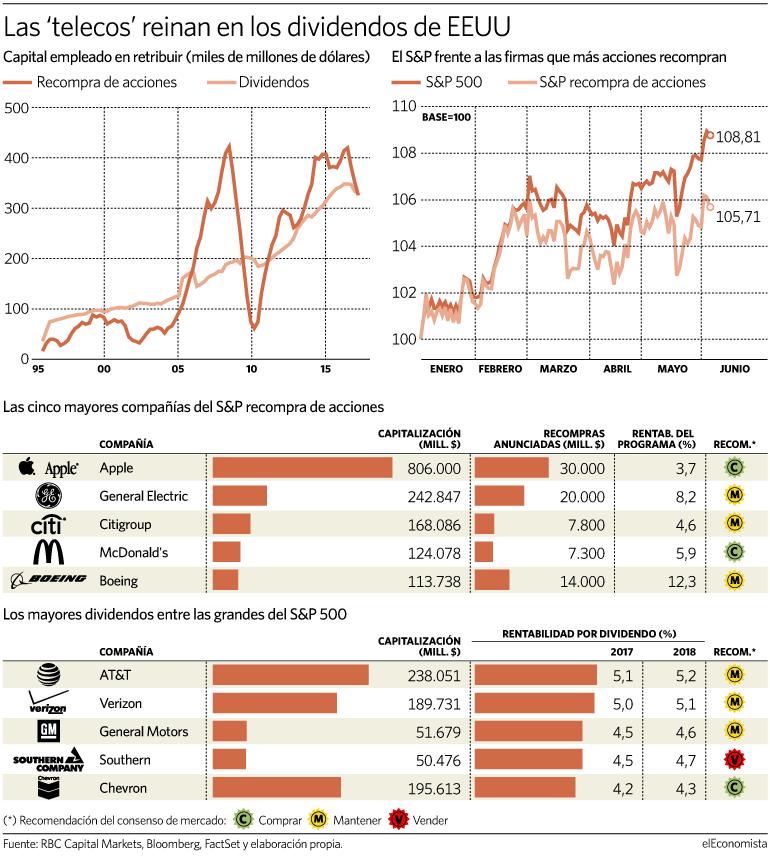
Since 2008, US companies with higher share buyback programs have recurrently beaten the market -only in 2015 were worse than the S & P 500-. However, this situation has changed so far this year, with the  buyback  losing strength on the floor and in the volume of capital for these operations by US companies.
The S & P Index Buyback index rises less than 6% so far this year, 3 percentage points less than the S & P 500. This trend has been accompanied by a decline in the volume of repurchases. According to data compiled by RBC Capital Markets, the amount used by US companies to withdraw some of its securities market has fallen to the area of ​​325.000 million dollars, in contrast to over 400,000 million dollars that came to use just a year ago when he approached near record highs graphic--see.
The volume of capital used by US companies dividend is at the same level as that used to buy back shares, which has not happened since 2010.
According to data collected by the entity, the total amount allocated to dividend payments by US companies has also fallen slightly in recent months, but the decline has been lower.
"As a starting point, we find that dividends are more stable than share buybacks. On average, cuts in payments to shareholders in all recessions since 1970 were only one quarter of the drop in profits. Meanwhile, the culture of the  buyback  find that are freely available, and oscillating with confidence, profits and market conditions ,"explained from UBS.
According to data collected by the Swiss entity, programs to remove outstanding shares across the Atlantic went from renting around 0.5% in 2004 to offer almost 3.5% in 2008 to then dropped to slightly above 0.5% in 2009. the programs buybacks US rented about 2% in 2016 and UBS estimate that this year will fall to 1.5% and environment in 2018 they will remain flat.
According highlight One of the circumstances that are causing such operations have lost prominence are the high valuations of the US market. The S & P 500 is trading at a PER (times benefit in stock price is collected) 17 times to 12 months, implying a 13% premium over the average for doing so since it started millennium. "Analysts estimate that profits will grow 11% in 2017, but valuations have also climbed, so that companies may have to pay more to acquire their own titles , " explains FactSet analysis team.
 from Citi, the US was the only major market where share buybacks exceeded the dividends. "US companies now distribute as much capital as they used to reinvest in your business and have progressively taken the form of share buybacks rather than paying dividends," materialize from the US entity.

The threat of a kind

One of the problems that warn experts on buybacks programs across the Atlantic is the tendency of some companies to buy back their shares into debt.
One of the most significant cases is that of McDonald? S. Between 2014 and 2016 the fast food firm spent over 20,500 million in the same period when the earnings of the company did not reach 14.000 million.
According to data published by FactSet, a total of 119 companies in the S & P used in the last 12 months money buying shares that gained in the period. "With many companies issuing debt to finance their buybacks , rate hikes will make the cost of repurchasing shares is higher , " warn from FactSet. In the meeting that the Fed willhold this month a new rate hike is expected and the company plans to raise the price of money a third time before the end of the year, although the market doubt the latter.

No more 'Trump-trade'

One of the great strengths on which it counted the market for US listed impulsasen benefits were tax cuts announced by Trump, few promises that the market no longer believes. Investors came to price the new president hand cut the corporate tax to 15% and that could make a kind of tax amnesty to repatriate the cash that companies have abroad, which would have supported profits and thus pay . "We expect firms to direct most of its cash to buy back shares repatriated," Goldman claimed in January.

Repurchases will not start in Europe

Historically, US companies have been buying back shares much more active than European, a trend has not been reversed.According to data from UBS, the  buyback in the Old World have offered no shareholder return since the crisis, as share issues , especially the banca- offsetting 

The liquidation of Banco Popular leaves families of Opus way of bankruptcy

Image result of the liquidation of Popular leaves families of Opus way of bankruptcy


"We do not want to hear about the People", he commented this morning a shareholder of the financial institution and a member of Opus Dei . 
"Opus is not a shareholder of People" , also he highlighted this morning an official spokesman of the religious order. 
" It is true that there are many families of Opus who have been shareholders of the bank, but on a personal level , " he added.
The first who will pay for the crisis of  Banco Popular  are its shareholders, who have seen today as its shares in the bank worth zero. 
And among them are many families linked to  Opus  whose faith in the bank his entire life has been broken. Although e l Opus officially denies that a shareholder of the Spanish bank,  the truth is that through foundations and companies linked to the order has always been one of the helmsmen of the entity.

The first group whose directors are recognized members of  Opus  which has already announced that he comes up after resolution and subsequent sale to Santander  of  Banco Popular has been European Union Investment . 
The company, which owns  123.5 million shares of Banco Popular , has informed the National Securities Market Commission that "has proceeded to the redemption" of such shares. 
"Given the impact of this measure for the company, it communicates that the board will meet as soon as possible to discuss the new scenario and promptly informed of any decision that may be adopted for the future of society" reports in its statement to market regulator.
In recent accounts of  European Union Investment,  signed last February, the auditor thereof,  BDO , includes an emphasis paragraph noting that the company "focuses all of its investments in shares of Banco Popular" , so that says the auditor, the future of society is linked to the Spanish bank. 
In fact, the decline experienced by the People 's value during 2016 meant that the net worth of European Union Investment was negative amounting to  117 million euros.
Last year  European Union Investment formalized funding two operations worth 230.8 million used to cancel all previous operations with credit institutions. 
Such funding and the establishment of its shareholders, made  by foundations also linked to Opus,  can cause a cascade of them critical situations following the collapse of the value of shares of  Banco Popular.
In the capital of  European Union Investment  foundations involved also linked to  Opus Dei . 
With 18.7% of capital, at December 31, 2016 , is located  Fund for Social Attentions Foundation , founded in 1986, dedicated, says on its website , to "the promotion, development, protection and promotion of the socio- culture, all aimed at satisfying the needs of all kinds, moral or physical (...) ".  
The foundation is chaired by  Carlos Figuero, who is also manager of the board of Torreciudad , a sanctuary built in  Huesca promoted by the founder of Opus Dei,  José María Escrivá de Balaguer .
Attentions Foundation for the Social Fund "provides grants to institutions or groups that require temporary lease of resources to meet current needs, but later will repay the aid received from its own resources". The foundation does not specify on its website that bodies or associations have received their help. 
Only publishes a reference to its accounts for the years 2013 and 2012. 
In 2013 the foundation had  equity by 24.3 million  euros, and lost more than half amillion euros. 
That year he received donations and grants amounting to 320,442 euros.
Another major shareholders of  European Union Investment  is the  IEISA Foundation , with 18.6% of the capital, also founded in 1986 "to respond to training needs and health care communities around the world." 
Direct the foundation is entitled Institute of Education and Research,  created in 1981 and led by Gregorio Lopez Bravo .
IEISA 35 years ago received a grant / loan granted by  José María Ruiz-Mateos,  in the same period of the expropriation of Rumasa . 
In total, the amount paid by Ruiz-Mateos to IEISA  amounted to 1,770 million pesetas.Lopez Bravo , Minister of Industry and Foreign Affairs between 1969 and 1973, supernumerary of  Opus, Ruiz-Mateos as when they agreed loans, died in the plane crash of Mount  Oiz Bilbao in 1985.
Since then, Spanish entrepreneurs and executives recognized members of Opus have managed the capital of IEISA investing large amounts in the stock market. 
According to the accounts of  2014 Institute of Education and Development, that year had investments in listed companies worth 24 million euros.
In Institute of Education and Development have worked as counselors, among others, Luis Herrando Prat de la Riva  (President), who resigned last year as director of Banco Popular, and is the brother of  Ramón Herrando Prat de la Riva , regional vicar Opus Dei in Spain; Pedro Pasquin Echanove, CEO of Lazard in Spain, and last December resigned as patron of the IEISA Foundation and its seat on the board of the Institute for Education and Development; Alberto Horcajo Aguirre,  CEO of Telxius , the company that brings together infrastructure assets Telefónica; Ramon Mora-Figueroa Domecq , 
The  Foundation for Development and International Cooperation  holds 12.8% of European Union Investment. El  -Vasconia Foundation Cooperation Social Fund , linked to the  University of Navarra , has 8% of the company shareholder of Banco Popular. 
University Foundation of Navarra "formed for the promotion, development and financing of the activities of the University of Navarra and its relations with society", owns 5.8% of European Union Investment.
Service Management Company controlled by  José Ramón Rodríguez García , has 7.1% of European Union Investment. The company, dedicated to real estate, registered losses in the years 2015 and 2014 exceeding half a million euros and bank credit exceeding 16 millio

El Opus Dei al borde de la quiebra

Resultado de imagen de La liquidación de Popular deja a las familias del Opus camino de la quiebra

La liquidación del banco Popular deja a las familias del Opus camino de la quiebra

"No queremos ni oir hablar del Popular", comentaba esta mañana un accionista de la entidad financiera y miembro del Opus Dei
"El Opus no es accionista de Popular", destacaba también esta mañana un portavoz oficial de la orden religiosa. 
"Es cierto que hay muchas familias del Opus que han sido accionistas del banco, pero a nivel personal", añadía.
Los primeros que van a pagar la crisis de Banco Popular son sus accionistas, que han visto hoy como sus acciones en el banco valen cero. 
Y entre ellos hay numerosas familias vinculadas al Opus cuya fe en el banco de toda su vida se ha quebrado. 

Aunque el Opus niega que oficialmente sea accionista del banco español, lo cierto es que a través de fundaciones y empresas vinculadas a la orden siempre ha sido uno de los timoneles de la entidad.
El primer grupo cuyos directivos son reconocidos miembros del Opus que ha anunciado ya la que se le viene encima tras la resolución y posterior venta a Santander de Banco Popularha sido Unión Europea de Inversiones
Esta empresa, que posee 123,5 millones de acciones de Banco Popular, ha comunicado a la Comisión Nacional del Mercado de Valores que "se ha procedido a la amortización" de dichas acciones. 
"Dado el impacto que tiene esta medida para la sociedad, se comunica que el consejo de administración se reunirá a la mayor brevedad posible para analizar el nuevo escenario e informará puntualmente de cualquier decisión que se pueda adoptar en cuanto al futuro de la sociedad", informa en su comunicado al regulador del mercado.
En las últimas cuentas de Unión Europea de Inversiones, firmadas el pasado mes de febrero, el auditor de las mismas, BDO, incluye un párrafo de énfasis advirtiendo que la empresa "concentra la totalidad de sus inversiones en acciones de Banco Popular", por lo que, dice el auditor, el futuro de la sociedad está vinculado al del banco español. 
De hecho, la caída sufrida por el valor de Popular durante 2016 supuso que el patrimonio neto de Unión Europea de Inversiones fuera negativo por importe de 117 millones de euros.
El pasado año Unión Europea de Inversiones formalizó dos operaciones de financiación por valor de 230,8 millones que empleó para cancelar todas las operaciones anteriores con entidades de crédito. 
Dicha financiación y la constitución de su accionariado, integrado por fundaciones igualmente vinculadas al Opus, puede provocar una cascada de situaciones críticas de las mismas a raíz del descalabro del valor de la acción de Banco Popular.
En el capital de Unión Europea de Inversiones participan fundaciones igualmente vinculadas al Opus Dei
Con el 18,7% del capital, a 31 de diciembre de 2016, se sitúa Fundación Fondo para Atenciones Sociales, constituida en 1986, dedicada, según explica en su web, a "la promoción, desarrollo, protección y fomento de lo socio-cultural, todo ello encaminado a la satisfacción de necesidades de todo orden, morales o físicas (...)". 
La fundación está presidida por Carlos Figuero, que es también gerente del patronato de Torreciudad, el santuario construido en Huesca promovido por el fundador del Opus Dei, José María Escrivá de Balaguer.
La fundación Fondo para Atenciones Sociales "concede ayudas a instituciones o colectivos que precisan la cesión temporal de recursos para hacer frente a necesidades presentes, pero que más adelante podrán devolver la ayuda recibida con sus propios recursos". La fundación no precisa en su web qué organismos o asociaciones han recibido su ayuda. 
Tan sólo publica una referencia a sus cuentas de los ejercicios 2013 y 2012. 
En 2013 la fundación tenía fondos propios por 24,3 millones de euros, y perdió más de medio millón de euros. 
Ese año recibió donaciones y subvenciones por importe de 320.442 euros.
Otro de los accionistas principales de Unión Europea de Inversiones es la Fundación IEISA, con el 18,6% del capital, constituida también en 1986 "para dar respuesta a necesidades de formación y asistencia sanitaria de comunidades de todo el mundo". 
El titula directo de la fundación esInstituto de Educación e Investigación, creada en 1981 e impulsada porGregorio López Bravo.
IEISA recibió hace 35 años una donación/préstamo concedido por José María Ruiz-Mateos, en la misma época de la expropiación de Rumasa
En total, la cantidad entregada porRuiz-Mateos a IEISA ascendió a1.770 millones de pesetas. López Bravo, ministro de Industria y Asuntos Exteriores entre 1969 y 1973, supernumerario del Opus, como Ruiz-Mateos cuando acordaron los préstamos, falleció en el accidente de avión del monte Oiz de Bilbao en 1985.
Desde entonces, reconocidos empresarios y directivos españolesmiembros del Opus han gestionadoel capital de IEISA invirtiendo elevadas cantidades en Bolsa. 
Según las cuentas de 2014 de Instituto de Educación y Desarrollo,ese año tenía inversiones en compañías cotizadas por valor de 24 millones de euros.
En Instituto de Educación y Desarrollo han trabajado como consejeros, entre otros, Luis Herrando Prat de la Riva (presidente), que el pasado año cesó como consejero de Banco Popular, y que es hermano de Ramón Herrando Prat de la Riva, vicario regional del Opus Dei en España;Pedro Pasquín Echanove, consejero delegado de Lazard en España, y que el pasado mes de diciembre renunció como patrono de la Fundación IEISA y a su puesto en el consejo de administración de Instituto de Educación y Desarrollo; Alberto Horcajo Aguirre, consejero delegado deTelxius, la compañía que agrupa activos de infraestructura de Telefónica;Ramón Mora-Figueroa Domecq,presidente de la compañía agrícola y ganadera Complejo Agrícola.
La Fundación para el Desarrollo y la Cooperación Internacional posee el 12,8% de Unión Europea de Inversiones. El Fondo Social de Cooperación-Fundación Vasconia, ligada a la Universidad de Navarra, tiene el 8% de la empresa accionista de Banco Popular. 
La Fundación Universitaria de Navarra "constituida para la promoción, desarrollo y financiación de las actividades propias de la Universidad de Navarra y sus relaciones con la sociedad", posee el 5,8% de Unión Europea de Inversiones.
Compañía de Gestión de Servicios, controlada por José Ramón Rodríguez García, tiene el 7,1% de Unión Europea de Inversiones. La compañía, dedicada al negocio inmobiliario, ha registrado pérdidas en los ejercicios 2015 y 2014 superiores al medio millón de euros y deudas con entidades de crédito superiores a los 16 millones

Entrada destacada

PROYECTO EVACUACIÓN MUNDIAL POR EL COMANDO ASHTAR

SOY IBA OLODUMARE, CONOCIDO POR VOSOTROS COMO VUESTRO DIOS  Os digo hijos míos que el final de estos tiempos se aproximan.  Ningú...