https://misteri1963.blogspot.com.esgoogle.com, pub-5827770858464401, DIRECT, f08c47fec0942fa0https://misteri1963.blogspot.com.argoogle.com, pub-5827770858464401, DIRECT, f08c47fec0942fa0https://misteri1963.blogspot.com.cogoogle.com, pub-5827770858464401, DIRECT, f08c47fec0942fa0https://misteri1963.blogspot.com.brgoogle.com, pub-5827770858464401, DIRECT, f08c47fec0942fa0 google.com, pub-5827770858464401, DIRECT, f08c47fec0942fa0 Misteri1963

Translate

viernes, 24 de noviembre de 2017

The Anunnaki, part five - The Great Flood


The Great Flood
The  flood story  is almost universal.

The same narrative exists in written records of several ancient civilizations being present not only in the biblical Genesis but also in ancient Mesopotamian epics, the Greek mythological writings and Hindu literature.

However, the earliest version of this story is among the Sumerian texts dating from the third millennium BCE. The  list Real Sumeria , a chronology of the antediluvian royal dynasties, place the date of the flood in a while around 10,000 BCE.

This fact is very significant since that date corresponds to the end of the last glacial period. 

The Judeo - Christian version of this story seeks to make us believe that the Lord sent the flood because the antediluvian humanity had corrupted their interbreeding with the "fallen angels".

In the Book of Genesis it states that the heart of every man (except Noah and his family) was inclined only to evil (Genesis 6: 5). Biblical storytellers want to convince us that global genocide carried out by their foreign god was not only necessary but just. 

However, the original Mesopotamian version tell a different from the later Hebrew plagiarism story.

In the  poem Atrahasis  Akkadian, we see that the noise Men began to annoy some of the gods, especially Enlil, the half - brother of Enki, and therefore the Celestial Council of Anu made the decision to raze the world human.

Here the expression  noise , whose equivalent in the original Akkadian text is  rigmumay include semantic nuances of rebellion and revolt (Kvanvig, 2011). ii

The man had become more intelligent and therefore uncontrollable through divine blood was added to mankind through its crossbreeding with Igigi or 'sons of gods'.

Therefore, man could no longer be a simple worker of the Gods and in that sense their rebellion was just and natural. 

In addition, contrary to the allegations of the Bible that blames all mankind, in the oldest Mesopotamian version found an episode in which Enki, after saving the human race against the will of the Heavenly Council, defends his human children and he explains that the gods must not punish all mankind for the crimes of a few (Atrahasis 6: 16-19).

Here the benevolent Enki suggests that criminals worthy of being punished were only a small minority group.

The biblical accusation that "every imagination of the thoughts of man was evil continually" was nothing but a deceptive pretext to justify the illegal destruction of our entire race! 

Now let's see how the flood happened and how the human race survived. 

At that time human civilization flourished and Men, and potentiated by its mingling with the divine blood of the Igigi, they multiplied enormously.

His  noise  began to annoy Enlil who still lived in his earthly sanctuary.

Enlil complained about the  noise  of Men and convened a meeting between senior gods. At that time Enlil still wanted to humanity and kept misanthropy he had inherited from his father Anu (Yahweh).

Many people mistakenly think that Enlil was responsible for the flood against humanity. However, in the Sumerian Eridu Genesis, the oldest version of the story of the flood, we see that Anu was proclaimed a mandate to destroy the human world (Genesis Eridu 98-100).

Similarly, in the Babylonian version presented in the Epic of Gilgamesh, Anu is the first to take the oath to exterminate humanity and then it is followed by other senior gods.

Anyway, the real architect of genocide is none other than Anu, the Anu himself who opposed the lighting of Man and then cursed him in the Garden of Eden. 

At the Council, Enki was forced to take the oath to destroy the human race, but then he deceived his divine companions and warned his loyal devotee Ziusudra, the enkista king of the region Shuruppak, appearing to him in a vision and telling what Anu and his henchmen plotting.

Enki taught him to build a vehicle for the salvation of his lineage. Consider the story of Ziusudra is much older than the biblical Noah's Ark plagiarism for millennia. 

When the flood came and the waters rose, Enki rescued Ziusudra and many of his lineage Human deadly waves.

The flood was caused by Anuistas who used their  alien climatological technology to change the temperature of the planet and melt the ice caps covering the north of our world.

On the other hand, Enki used his advanced ships to evacuate their human children and save their genetic seed. 

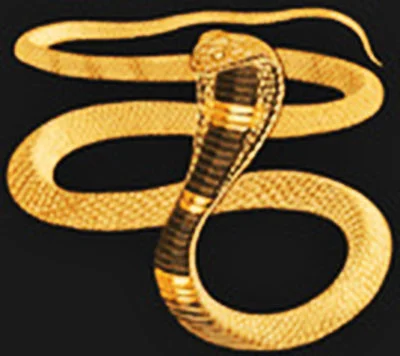
It is important to note that El Salvador of Man is always Enki, the rebel god in all pre-diluvian biblical stories. In mesopotámicas versions is Enki-Ea, the Ushumgal Eridu Sanctuary (Snake of Eden), who rises against Council and saves Ziusudra Anu.

Similarly, in the Greek version, it is Prometheus, the same benevolent god who opposed the Titans and gave the man the Fire of the Gods, who subverts the plan malevolent deities and save  Deucalion .

And surprisingly, according to the Hindu story is  Matsya , the first avatar of divinity, who saves Manu, the wise man, the destruction of water.

Sanskrit  Matsya  means 'fish' and his namesake was a Piscean avatar deity. Let usremember that in the Sumerian culture Enki, the lord of the waters, was associated with the fish!

All pre-biblical accounts indicate that Enki was our savior unanimously.

Only the Bible  ascribes the  saving act  of Yahweh.


Els Anunnakis, part quatre - El Gran Diluvi, Babel i les Guerres Celestials embats contra la Humanitat

El Mundo Antediluviano
 

Al Santuari de Eridú, l'Hort de l'Edén sumeri, Enki, el gran benefactor de la Humanitat, es va oposar a l'obscurantisme del seu pare tirànic Anu-Jahvè i li va revelar a l'Home el coneixement del Designi del Cel i de la Terra.

Enki va instaurar l'ofici de sacerdot i l'hi va conferir a Adapa, un model de l'Home civilitzat i el primer dels set Gran Savis antediluvians de la tradició Abkallu.

Així Enki va fundar les primeres escoles dels misteris esotèrics ensenyant als seus sacerdots molt coneixement ocult.

Gràcies als ensenyaments d'Enki, l'Home ja tenia el coneixement necessari per governar la seva pròpia civilització i ja no era un simple treballador dels Anunnaki.Enki li havia atorgat a l'Home la seva llibertat i la seva autonomia.

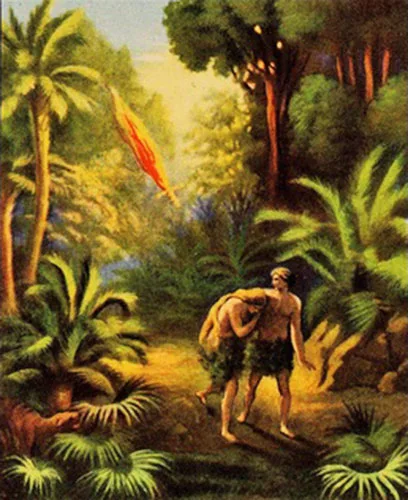
Anu-Yahvé, enfurismat pel desafiament d'Enki, va maleir a l'Home i per despit va augmentar el seu sofriment en la Terra (Gènesi 3: 14-19; Llegenda de Adapa).

Per tant, moltes noves malalties i fonts de dolor van entrar en el món humà.

Això no va ser perquè l'Home cometés un pecat ancestral com ensenyen les religions, sinó perquè Jahvè el va tenir a l'Home molt rancor i al final ell mateix va maleir a la Humanitat.

Anu sabia que ja havia perdut el seu "raça esclava". El gran cisma entre els Enkistas  i els  Anuistas  es va produir. Després de castigar la Humanitat sencera, Anu va deixar la Terra i va tornar al 'cel'. 

Mentrestant, la primera onada de la civilització humana va començar a florir a la Terra. Llegim a la  Llista Real Sumeria  que els diversos llinatges reals antediluvians es van establir i els humans gaudien de civilitzacions molt pròsperes.

En aquell temps el nivell de coneixement espiritual era més alt i els homes eren molt més longeus.

Aquest món correspon a la leyendaria  Era d'Or  de les diverses mitologies antigues.Va ser llavors quan es van fundar les mítiques civilitzacions antediluvianes com l'Atlàntida. 

El món antediluvià es caracteritzava pel freqüent mestissatge entre els déus celestials i els humans terrestres. El  Poema d'Atrahasis , el relat de la creació mesopotàmic més detallat, fa una al·lusió subtil al mestissatge humà-diví presentant una al·legoria simbòlica en la qual els Igigi escupen en l'argila de la Humanitat.

Aquesta hibridació enforteix en gran al gènere humà antediluvià i la vitalitat divina que li proporciona fa que l'Home sigui més rebel i fins i tot es converteixi en un rival dels déus (Kvanvig, 2011). i

De la mateixa manera, en la molt semblant  Epopeia de Gilgamesh  trobem a grans semidéus i herois sobrehumans que governen els regnes del món antediluvià.

Aquests són el resultat de relacions sexuals entre els déus del 'cel' i les dones de la Terra.

De fet, es diu que el mateix Gilgamesh, el protagonista de l'epopeia, és un semidéu la sang és dos terços divina i un terç humana. Aquest mestissatge amb els Igigi podria explicar per què trobem a personatges summament longeus en els relats de l'era antediluviana. 

És en els textos hebreus posteriors on trobem les descripcions més detallades d'aquell episodi.

En Gènesi 6: 2 llegim que els misteriosos  Bene ha Elohim  , fills dels déus en Hebreu, veuen que les filles dels homes són boniques i decideixen prendre per a si dones humanes.

Notin que la frase "fills de Déu" en les Bíblies modernes és una traducció enganyosa ja que el veritable significat del terme  Bene ha Elohim és "fills dels déus". En la Bíblia encara hi ha molts elements politeistes amagats.

Tornant al tema, els fills dels déus es rebel·len contra l'autoritat del Senyor i se'n van a dormir amb les filles dels homes, la qual cosa engendra als famosos  Nefilim  del món antediluvià (Gènesi 6: 4). 

El  Llibre d'Enoc , un text apòcrif hebreu de l'època del Segon Temple, explica la mateixa història amb més detalls.

Segons la literatura enoquiana, els  Bene ha Elohim  de Gènesi 6: 2 són ' Vigilants ', custodis angèlics, que abandonen la seva estada en el 'cel', baixen a la Terra, mantenen relacions sexuals amb les dones terrestres i engendren una raça de sobrehumans mitjà-divins en contra de les lleis de Yahvé (Henoc 6: 2; 7: 1-5; Jubileus 04:15; 5: 1).

Els narratius d'aquests textos apòcrifs són molt interessants i aporten llum sobre la raó per la qual Yahvé va prohibir que els Vigilants es barregessin amb els humans.

El Llibre d'Enoc revela que els àngels rebels els van ensenyar als homes les arts divines com la màgia, l'astrologia, els presagis, l'endevinació, la sanació (Enoc 7: 1; 8: 1; 8: 3) i fins als secrets del 'cel' (Henoc 9: 6).

Els 'Vigilants' eren els Igigi, aliats amb Enki, que ensenyaven als iniciats els misteris dels Déus. 

Quan els "àngels" de Yahvé, encapçalats pels malèvols "arcàngels" Miquel, Rafael, Sariel i Gabriel, es van assabentar del que passava a la Terra, aquests malvats extraterrestres Anuistas van baixar al nostre món i van lluitar contra els nostres Déus enkistas.

El tirànic Anu-Jahvè no permet que el coneixement del 'cel' se'ls ensenyi als homes.

El progrés espiritual de la Humanitat antediluviana i la consegüent "rebel·lia" percebuda van ser els motius principals per la seva decisió d'enviar el diluvi mundial.


The Anunnaki part 4 - The Great Flood, Babel and the Celestial Wars Thrusts against humanity


Antediluvian World
 

In the Sanctuary of Eridu, the Garden of Eden Sumerian Enki, the great benefactor of mankind, opposed the obscurantism of his tyrannical father Anu-Jehovah and revealed to man the knowledge of the plan of Heaven and Earth.

Enki established the office of priest and gave him Adapa, a model of civilized man and the first of the Seven Great Sages of the Abkallu antediluvian tradition.

Enki and founded the first schools of the esoteric mysteries teaching his priests much hidden knowledge.

Thanks to the teachings of Enki, the man already had the need to govern their own civilization and it was not a simple worker of the Anunnaki knowledge. Enki had given the man his freedom and autonomy.

Anu-Jehovah, angered by the challenge of Enki, cursed the man and despite increased their suffering on Earth (Genesis 3: 14-19; Legend of Adapa).

Consequently, many new diseases and sources of pain entered the human world.

That was not because the man committed a sin as ancestral religions teach, but because he was the man Yahweh much rancor and at the end he cursed humanity.

Anu knew he had lost his "slave race". The great schism between  Enkistas  and Anuistas  occurred. After punishing the whole of humanity, Anu left Earth and returned to 'heaven'. 

Meanwhile, the first wave of human civilization began to flourish on Earth. We read in  Sumeria Real List  the various antediluvian royal lineages were established and human enjoyed very prosperous civilizations.

At that time the level of spiritual knowledge was higher and men were much more long-lived.

This world corresponds to the legendary  Golden Age  of the various ancient mythologies. It was then that the mythical antediluvian civilizations like Atlantis were founded. 

The antediluvian world was characterized by frequent interbreeding between the gods celestial and terrestrial humans. The  Atrahasis Epic , the account of the more detailed mesopotámico creation, makes a subtle reference to divine-human crossbreeding presenting a symbolic allegory in which the Igigi spit on clay site.

This greatly strengthens hybridizing the antediluvian mankind and the divine vitality which provides makes the man more rebellious and even become a rival of the gods (Kvanvig, 2011). i

Similarly, much like the  Epic of Gilgamesh  we find great demigods and superhuman heroes who rule the kingdoms of the antediluvian world.

These are the result of sexual intercourse between the gods 'heaven' and women on Earth.

In fact, it is said that Gilgamesh, the hero of the epic, is a demigod whose blood is two thirds divine and human - third. This interbreeding with Igigi might explain why we found extremely long - lived characters in the stories of the antediluvian era. 

It is in the later Hebrew texts where we find the most detailed descriptions of the episode.

In Genesis 6: 2 we read that the mysterious  Bene ha Elohim  , sons of God in Hebrew, they see that the daughters of men are beautiful and decide to take him human women.

Note that the phrase "sons of God" in modern Bibles is a misleading translation since the true meaning of the term  Bene ha Elohim is "sons of the gods". In the Bible there are still many hidden polytheistic elements.

Returning to the subject, the children of the gods rebelling against the authority of Yahweh and go to bed with the daughters of men, which begets the famous  Nephilim of the antediluvian world (Genesis 6: 4). 

The  Book of Enoch , apocryphal Hebrew text of the Second Temple period, tells the same story with more details.

According to the Enochian literature,  Bene ha Elohim  of Genesis 6: 2 are 'Vigilantes ' angelic guards, who leave their home in the 'heaven', descend to Earth, have sex with earthly women and beget a race of superhuman half-divine against laws Lord (Enoch 6: 2, 7: 1-5; Jubileos 4:15, 5: 1).

The narrative of these apocryphal texts are very interesting and shed light on the reason why the Lord forbade the Rangers mingle with humans.

The Book of Enoch reveals that the rebellious angels taught men the divine arts like magic, astrology, omens, divination, healing (Enoch 7: 1; 8: 1; 8: 3) and to the secrets of 'sky' (Enoch 9: 6).

The 'Vigilantes' Igigi were allied with Enki, who taught initiates the mysteries of the Gods. 

When the "angels" of Yahweh, led by the evil "archangels" Michael, Raphael, Sariel and Gabriel, heard what was happening on Earth, those evil aliens Anuistas descended into our world and fought our enkistas Gods.

Anu-Jehovah's tyrannical does not allow the knowledge of 'heaven' is taught to men.

Spiritual progress of humanity and the consequent antediluvian "rebellion" perceived were the main reasons for his decision to send the worldwide flood.


The Anunnaki, Part Three - Purpose of Man and the beginning of cosmic conflict (vs. Enki Anu)


The human world is in the midst of a great cosmic conflict for a long time.

Religions  Abrahamic, all deceptions of the enemy to confuse humanity, speak of a primordial struggle between "GodFather" Yahweh (Jehovah) and the old serpent "Satan". 

If the serpent of Eden is identical toSumerian god Enki, then who is his opponent Yahweh-Jehovah? 

This might find something surprising, but the biblical Yahweh, the JudeoChristian God, that the enkiana Snake opposed in the Garden of Eden is no more than the "god of 'heaven'" Anu, the king and father of all the Anunnaki, also known as  He , the Highest of 'sky' and father of all Gd, in the pre-biblical Semitic vault (Canaanite).

In fact, the biblical god Yahweh is known by the Semitic theonym him in many verses of the Hebrew Bible. Remember that the Elohim and Anunnaki are identical. 

I want to make clear that Enlil is not Lord at all.

Many authors erroneously claim that the biblical God is identical to Enlil, the half-brother of Enki, and Enlil is the enemy of humanity, but that's not true.

The Judeo - Christian Yahweh, the deity who sought to hide man knowledge of Heaven in the Garden of Eden, could only have been Anu. You'll soon see why. 

In the Sumerian pantheon, Anu, the King of the Anunnaki, is the biological father of Enki and Enlil. Although called the "god of 'heaven'" Anu was never the  creator of the universe  , let alone the  doer of Man .

In fact, even Anu is a created being, engendered by the primordial gods Anshar and Kishar according to Sumerian cosmology (just like its Semitic equivalent He was sired by the pre-panteónicas Elyon and Beruth in Canaanite mythology ancient deities), and besides, this same Anu came to the throne as a usurper violent, defeating his predecessor Alalu god for the supremacy of 'heaven' (Van Der Toorn, 1996). iv

Anu is not "God" in the monotheistic sense of the word. 

Just like  El-Yahweh in the Bible , whose name is an epithet (Yahweh Sabaoth), meaning "He who believes hosts" Anu was known as 'The Lord of Hosts (armies) Celestials' and feared as a great judge He punishes men.

Also, just as its equivalent in Hebrew, Anu was associated with malefic planet Saturn, the dark Judge of all the planets (Evans, 1998).  v

He (Yahweh) not only was deified on the planet Saturn, but also their holy day, the Sabbath (day of Saturn), Shabbat in Hebrew comes from the Semitic word Shabbathai, the name of God and the planet Saturn in the language Hebrew.

Finally, Anu, he, Yahweh and Saturn are the same entity. 

Then the cosmic conflict is an ancient struggle between noble son Enki and the evil father Anu. It is not a fraternal war between Enki and Enlil as Zecharia Sitchin says. 

What was the source of the cosmic conflict between Enki and Anu? The theme of the Purpose of Man ... 

The Book of Genesis tells us that the wise serpent revealed to Adam and Eve the forbidden knowledge in the Garden of Eden, which would make them one of the Elohim (Genesis 3: 5; 3: 22), against the will of Yahweh.

What the Bible says here is true and is the same story, the original, in Sumerian texts. 

According to the  Legend of Adapa , the Sumero-Akkadian precursor of the Hebrew Adamic story, Enki-Ea, the true creator of Man, trained her human progeny Adapa in the civilization of the gods and taught him the decree of Heaven and Earth , divine knowledge, against the will of Anu, who was angry with his son complaining that Enki had revealed an unworthy and contemptible human (Kramer and Maier, 1989). saw

Enki revealed to man the science of  tree Me  (Sumerian version of the Tree of Knowledge), knowledge of the civilization of the Anunnaki, in their Eridu Sanctuary in the land of Edín. 

When Adapa received the knowledge of the  plan of Heaven and Earth  and remained faithful to Enki, Anu malicious, angered by the actions of Enki, the man returned to Earth and cursed him, increasing their adversities and imposing many ailments.

This episode is almost identical in the later biblical account. In Genesis a wrathful Yahweh curse to mankind expelling the foreign land and imposing various adversities such as disease and enmity (Genesis 3: 14-19).

Man is punished for knowing the science of the gods. 

Note that in the Sumerian version was only Anu, not Enlil, he played the role of obscurantist and punishing God Yahweh of the Hebrew version later. Anu is the real adversary of Enki and the human race. 

In this story we see a conflict of values and interests between two groups of gods, a violent clash between two antithetical philosophies. 

Enki and their gods, the  Anunnaki Enkistas , sought  help us  in our evolution and rise to the level of the Gods. They saw us as human children, because we divine genetics.

For Enki, we would work for the Anunnaki in maintaining their new Earth colony and the Anunnaki accelerate our evolutionary development and we teach the civilization of 'heaven' and the science of divinity, which would make us like the gods themselves (Genesis 3 :5).

So our coexistence entail mutual benefit.

In addition, the Earth colony would be for us, our rightful heritage, and we were going to be their owners.

That's why Enki, Adapa taught him knowledge of divine civilization. That was necessary for the independence and autonomy of the Human Race knowledge on their own planet. 

On the other hand, Anu-Yahweh and his followers, the  Anuistas Anunnaki , only saw man as a slave to exploit and sought to keep docile and ignorant.

That is why Yahweh Anu-imposed policy of obscurantism. The  Anunnaki Anuistas , staunch conservative, resented the mixture of divine and human blood with the consequent quantum leap in the evolution of terrestrial humanity.

Therefore, Anu-Jehovah and his "angels", the evil invaders whom the Gnostics called " Archons " evil Demiurge, seek to destroy our immense ingenuity and catch us in their  obscurantist and misanthropic religions . 

Enki sacrificed everything when he rebelled against the darkness of his "father". Enki made a tremendous sacrifice to enlighten and honor its fundamental principles such as love, life and freedom. Enki is a true cosmic hero who could not stand the tyranny of Anu-Jehovah and fought for good. 

Enki, symbolized by the wise serpent in Genesis and known as the  Ushumgal (Great Serpent) for its immense esoteric wisdom in Sumerian culture, not only taught man the civilization of the gods, but also revealed the secret of the  sacred serpent of the kundalini , the yogic energy, which Man you can achieve the Magnum Opus:
become a god and achieve immortality.
That is why in Genesis, Enki is known as  the Serpent  and says the knowledge he reveals can make man like the gods. 

Enki, the noble rebel, is identical to Prometheus, the benevolent Greek god who was banished by the evil Titans for having committed to man the Fire of the Gods.

Here the "fire" refers both to knowledge of 'heaven' as the Kundalini fire burning by the body and is opening the chakras of our occult anatomy.

Enki-Prometheus taught us the sacred path to divinity. 

For this reason he was slandered as the "devil" and the "adversary" by the Abrahamic religions and called "Satan" by the hysterical followers of the dark god Anu-Yahweh.

Enki true nickname is not "Satan" which means "adversary" in Hebrew but "Satya", a Sanskrit word meaning Eternal Truth.

The scurrilous "Satan" is a corruption of "Satya" Anu Enki imposed. Enki-Satya, a god whose historical presence has been erased by the violent monotheistic religions, is the lord of Satya Yuga, the next golden era on our Earth.

(This will come in the Age of Aquarius, as Enki has always been a water - bearing deity associated with Aquarius. Noten connection!). 

Currently the cosmic conflict continues and we are in  the Kali Yuga  or dark age from about 5000 years ago. Kali Yuga is the time of the reign of the cosmic tyrant Anu-The-Lord-Saturn on Earth.

His kingdom is the infamous  New World Order  of the Zionist people. In this Yuga true knowledge is lost, the truth is forgotten and falsehood prevails.

The world is in very poor condition and at the mercy of religions and philosophies destructive false god of this world. Earth still trapped in the astral vortex of Anu-Jehovah and subjected to the power of his malefic Saturn, the planet of Karma and misery.


References
  1. Ebeling, E. & Meissner, B. (1997) Meek - Mythologie: Der Reallexikon Assyriologie. Berlin (p. 123)
     
  2. Reiter, K. (1997) Die Metalle im alten Orient: Unter besonderer Berücksichtigung altbabylonischer Quellen (Alter Orient und Altes Testament). Ugarit-Verlag (p. 11)
     
  3. Kvanvig, HS (2011) Primeval History: Babylonian, Biblical, and Enochic - An Intertextual Reading. Leiden (p. 57)
     
  4. Van Der Toorn, K. (1996) Family Religion in Babylonia, Ugarit and Israel: Continuity and Changes in the Form of Religious Life. Leiden (p. 159)
     
  5. Evans, J. (1998) The History and Practice of Ancient Astronomy. New York (pp. 8.9)
     
  6. Kramer, SN & Maier, J. (1989) Myths of Enki, the Crafty God. New York & Oxford. (P. 116)


Entrada destacada

PROYECTO EVACUACIÓN MUNDIAL POR EL COMANDO ASHTAR

SOY IBA OLODUMARE, CONOCIDO POR VOSOTROS COMO VUESTRO DIOS  Os digo hijos míos que el final de estos tiempos se aproximan.  Ningú...