martes, 26 de diciembre de 2017

Tres segles de maçoneria, secrets, regles i discussions


Amb motiu del 300 aniversari de l'organització maçònica, Sputnik va entrevistar a Peter Doderer, vicepresident de l'organització alemanya, sobre la història i l'activitat moderna dels maçons al país germànic, que avui compta amb al voltant de 15.000 membres.


Se sap que el 24 de juny de 1717, els paletes lliures van fundar la primera Gran Lògia a Londres. Com que no pertanyien a cap gremi en particular, podien treballar a tot Europa. En la seva major part, es dedicaven a la construcció de catedrals. En aquest període van aparèixer dos símbols importants de la francmaçoneria: el compàs i l'escaire.

Avui, passats tres segles, el nombre de membres de la societat secreta oscil·la entre els 2,6 i 5 milions a tot el món, segons diverses estimacions. A Alemanya hi ha al voltant de 15.000 paletes lliures. Un d'ells és Peter Doderer, sotsdirector de la lògia maçònica germànica, encarregat de les relacions públiques. Sputnik li va preguntar com compatibilitza el seu càrrec amb el secretisme que se li suposa a la maçoneria. "Aquest és el nostre problema. La francmaçoneria no va ser creada per tenir publicitat", reconeix Doderer.

"La maçoneria va néixer a l'època de la Il·lustració. En aquell moment, va ser un pas correcte: no parlar públicament sobre certes coses i mantenir un estret cercle intern. De fet, la difusió d'idees revolucionàries, com la llibertat, la igualtat i la abolició de la servitud, no les donaven suport ni l'església ni els governants ", ha explicat. 

Secrets i exclusivitat


Primer es van unir als paletes els representants del Tercer Estat i la noblesa, va comentar Doderer. Després van venir els pensadors i els artistes. Els més famosos d'ells en el territori de parla alemanya van ser Mozart i Goethe. "Pertànyer a aquest cercle era un signe d'algun tipus d'exclusivitat", va assenyalar l'interlocutor de l'agència. 

El poeta Lessing descrivia les reunions dels francmaçons com "pensar en veu alta juntament amb un amic", ha recordat Doderer. Els pensaments són lliures. Però per ser internament lliure, cal mantenir la boca tancada. 

Per tant, avui en dia, els maçons també segueixen la regla de mantenir en secret els noms dels membres, però sí que poden revelar el propi, va explicar Doderer.

Tres coses segueixen classificades fins avui: el senyal, la paraula i el encaixada de mans. 

"Es tracta d'un determinat signe, una contrasenya i un especial encaixada de mans, que només coneixen els membres de la societat i serveixen com un signe d'identificació. Als maçons no els agrada que aquestes coses es facin públiques". 

Fa molt temps, els francmaçons van introduir pensions per als membres de les famílies dels seus companys morts. A més, col·laboren amb organitzacions benèfiques. 

Doderer assenyala que només els homes poden unir-se a les files de la maçoneria. Però també hi ha lògies exclusives de dones. 

Boles blanques i negres decideixen si algú serà maçó


Un no pot convertir-se en maçó en una nit. "És un procés llarg. Jo vaig trigar quatre anys a fer-me membre", va explicar Doderer. "Durant tres anys vaig ser-hi en qualitat de convidat. Després vaig demanar ser membre de la societat. Els membres presents decideixen sobre l'admissió del candidat amb l'ajuda de boles blanques i negres. Si el nombre de boles negres supera certa quantitat, la decisió sobre el nomenament del sol·licitant es posposa per un any ". 

Doderer es va convertir en maçó fa gairebé 20 anys. "Aquests anys m'han ensenyat una cosa: la francmaçoneria està més ben integrada en els gens. No es pot aprendre". 

El maçó qualifica el que passa a les reunions de la societat com una cosa "emocionant".

"Quan una persona es nega a servir en l'Exèrcit, però en el mateix lloc està present un general, comandant d'un cos de l'Exèrcit, és interessant. El fet que aquestes dues persones mantinguin una discussió i en el sentit espiritual estiguin al mateix nivell genera una experiència emocionant ". La maçoneria és una escola de la vida, va concloure Doderer.

Three centuries of freemasonry, secrets, rules and discussions


On the occasion of the 300th anniversary of the Masonic organization, Sputnik interviewed Peter Doderer, vice president of the German organization, about the history and modern activity of Freemasons in the German country, which today has around 15,000 members.


It is known that on June 24, 1717, free masons founded the first Grand Lodge in London. As they did not belong to any particular guild, they could work all over Europe. For the most part, they were dedicated to the construction of cathedrals. In this period appeared two important symbols of Freemasonry: the compass and the square.

Today, after three centuries, the number of members of the secret society ranges between 2.6 and 5 million worldwide, according to various estimates. In Germany there are around 15,000 free masons. One of them is Peter Doderer, deputy director of the German masonic lodge, in charge of public relations. Sputnik asked how he reconciles his position with the secrecy that is supposed to Freemasonry. "This is our problem, Freemasonry was not created to have publicity," acknowledges Doderer.

"Freemasonry was born at the time of the Enlightenment, at that time, it was a correct step: not to speak publicly about certain things and maintain a narrow internal circle, in fact, the diffusion of revolutionary ideas, such as freedom, equality and abolition of servitude, they were not supported by either the church or the rulers, "he explained. 

Secrets and exclusivity


First the masons joined the representatives of the Third Estate and the nobility, said Doderer. Then came the thinkers and the artists. The most famous of them in the German-speaking territory were Mozart and Goethe. "Belonging to this circle was a sign of some kind of exclusivity," said the interlocutor of the agency. 

The poet Lessing described the meetings of the Freemasons as "thinking aloud together with a friend," Doderer recalled. Thoughts are free. But to be internally free, you have to keep your mouth shut. 

Therefore, today, freemasons also follow the rule of keeping the names of members secret, but they can reveal their own, Doderer explained.

Three other things remain classified until today: the signal, the word and the handshake. 

"It is a certain sign, a password and a special handshake, that only members of society know and serve as a sign of identification, Freemasons do not like these things to be made public." 

A long time ago, Freemasons introduced pensions for members of the families of their deceased companions. In addition, they collaborate with charities. 

Doderer points out that only men can join the ranks of Freemasonry. But there are also exclusive women's lodges. 

Black and white balls decide if someone will be a Mason


One can not become a Mason in one night. "It's a long process, it took me four years to become a member," Doderer said. "For three years I was there as a guest, then I asked to be a member of the society, the present members decide on the admission of the candidate with the help of black and white balls, if the number of black balls exceeds a certain amount, the decision on the appointment of the applicant is postponed for one year ". 

Doderer became a Mason almost 20 years ago. "These years have taught me one thing: Freemasonry is rather integrated into genes, it can not be learned." 

The freemason qualifies what happens in the meetings of the society as something "exciting".

"When a person refuses to serve in the Army, but a general, commander of an Army corps, is present in the same place, it is interesting that these two people maintain a discussion and in the spiritual sense are in the same level generates an exciting experience. " Freemasonry is a school of life, Doderer concluded.

Tres siglos de masonería, secretos, reglas y discusiones


Con motivo del 300 aniversario de la organización masónica, Sputnik entrevistó a Peter Doderer, vicepresidente de la organización alemana, sobre la historia y la actividad moderna de los masones en el país germano, que hoy cuenta con alrededor de 15.000 miembros.


Se sabe que el 24 de junio de 1717, los albañiles libres fundaron la primera Gran Logia en Londres. Como no pertenecían a ningún gremio en particular, podían trabajar en toda Europa. En su mayor parte, se dedicaban a la construcción de catedrales. En este período aparecieron dos símbolos importantes de la francmasonería: el compás y la escuadra.

Hoy, pasados tres siglos, el número de miembros de la sociedad secreta oscila entre los 2,6 y 5 millones en todo el mundo, según diversas estimaciones. En Alemania hay alrededor de 15.000 albañiles libres. Uno de ellos es Peter Doderer, subdirector de la logia masónica germana, encargado de las relaciones públicas. Sputnik le preguntó cómo compatibiliza su cargo con el secretismo que se le supone a la masonería. "Este es nuestro problema. La francmasonería no fue creada para tener publicidad", reconoce Doderer.

"La masonería nació en la época de la Ilustración. En aquel momento, fue un paso correcto: no hablar públicamente sobre ciertas cosas y mantener un estrecho círculo interno. De hecho, la difusión de ideas revolucionarias, como la libertad, la igualdad y la abolición de la servidumbre, no las apoyaban ni la iglesia ni los gobernantes", explicó.

Secretos y exclusividad


Primero se unieron a los albañiles los representantes del Tercer Estado y la nobleza, comentó Doderer. Luego vinieron los pensadores y los artistas. Los más famosos de ellos en el territorio de habla alemana fueron Mozart y Goethe. "Pertenecer a este círculo era un signo de algún tipo de exclusividad", señaló el interlocutor de la agencia.

El poeta Lessing describía las reuniones de los francmasones como "pensar en voz alta junto con un amigo", recordó Doderer. Los pensamientos son libres. Pero para ser internamente libre, hay que mantener la boca cerrada.

Por lo tanto, hoy en día, los masones también siguen la regla de mantener en secreto los nombres de los miembros, pero sí pueden revelar el propio, explicó Doderer.

Otras tres cosas siguen clasificadas hasta hoy: la señal, la palabra y el apretón de manos.

"Se trata de un determinado signo, una contraseña y un especial apretón de manos, que solo conocen los miembros de la sociedad y sirven como un signo de identificación. A los masones no les gusta que estas cosas se hagan públicas".

Hace mucho tiempo, los francmasones introdujeron pensiones para los miembros de las familias de sus compañeros fallecidos. Además, colaboran con organizaciones benéficas.

Doderer señala que solo los hombres pueden unirse a las filas de la masonería. Pero también hay logias exclusivas de mujeres.

Bolas blancas y negras deciden si alguien será masón


Uno no puede convertirse en masón en una noche. "Es un proceso largo. Yo tardé cuatro años en hacerme miembro", contó Doderer. "Durante tres años estuve allí en calidad de invitado. Luego pedí ser miembro de la sociedad. Los miembros presentes deciden sobre la admisión del candidato con la ayuda de bolas blancas y negras. Si el número de bolas negras supera cierta cantidad, la decisión sobre el nombramiento del solicitante se pospone por un año".

Doderer se convirtió en masón hace casi 20 años. "Estos años me han enseñado una cosa: la francmasonería está más bien integrada en los genes. No puede aprenderse".

El masón califica lo que sucede en las reuniones de la sociedad como algo "emocionante".

"Cuando una persona se niega a servir en el Ejército, pero en el mismo lugar está presente un general, comandante de un cuerpo del Ejército, es interesante. El hecho de que estas dos personas mantengan una discusión y en el sentido espiritual estén en el mismo nivel genera una experiencia emocionante". La masonería es una escuela de la vida, concluyó Doderer.

Morgan Stanley: The real price of the bitcoin could be zero dollars


An analyst at the bank highlights the weak side of the most popular virtual currency in the world.


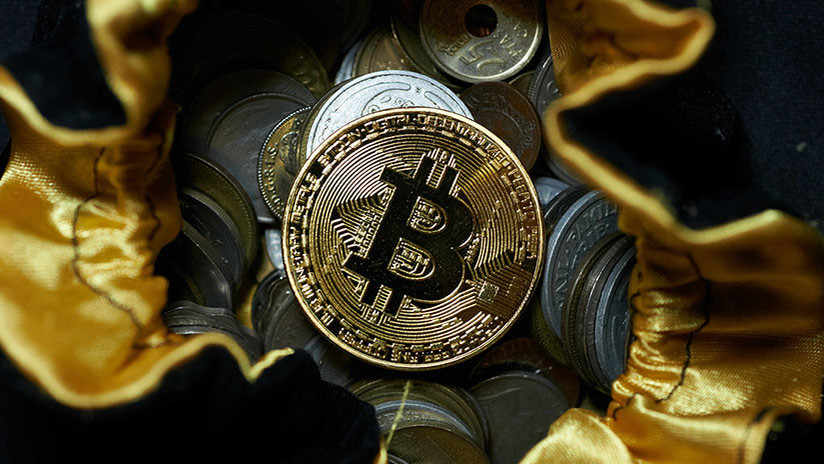
The price of Bitcoin could become void if the criptodivisa literally is not officially recognized at par with the US dollar and other currencies legal tender, says an analyst at financial giant Morgan Stanley, according picks Business Insider. 

"If nobody accepts this technology as a means of payment, then its value would be zero," reads the statement of the specialist James Faucette and his team of consultants, sent to the clients of the entity.

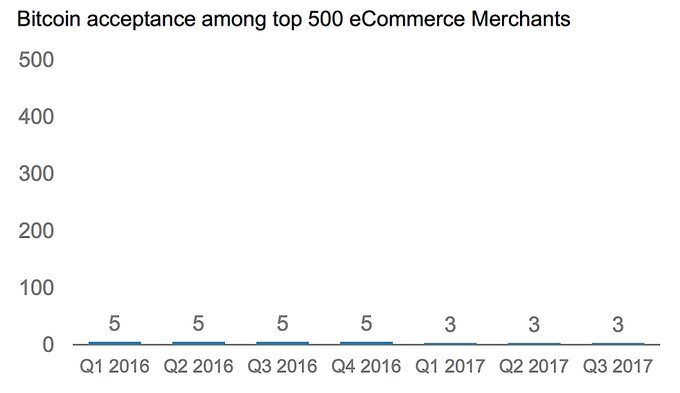
Specifically, Faucette refers to the acceptance of electronic currency between online currency buying and selling platforms. The analyst attached a table where he analyzes the scenario in which bitcoin operations are no longer admitted by these platforms and the consequent contraction of the virtual currency market. In addition, the analyst stressed that bitcoin differs from official currencies, since it does not have an associated interest rate. And at the same time, it differs from gold since it does not have an intrinsic use. Finally, Faucette highlighted that the virtual currency market is substantially lower than the official foreign currency, with an average daily volume of 3,000 million and 5,400 billion dollars, respectively.


However, the data from the online platform Coinmarketcap contradict the values ​​mentioned by Faucette and indicate a daily market volume of 27,000 million dollars, of which 11,500 million dollars correspond only to the bitcoin. 

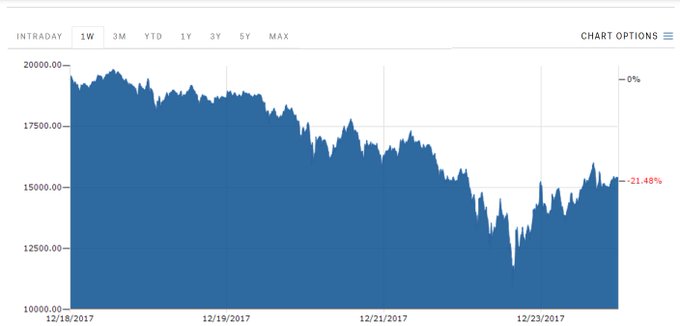
In turn, the founder of the famous antivirus program and great bitcoin enthusiast, John McAfee, attributed the recent drop of more than 25% of the cryptocurrency to stationary factors and maintains his faith that the price will grow exponentially in the future.

Morgan Stanley: El preu real del Bitcoin podria ser de zero dòlars


Un analista de l'entitat bancària destaca el costat feble de la moneda virtual més popular del món.


El preu del Bitcoin podria arribar a ser literalment nul si la criptodivisa no és reconeguda oficialment a l'una del dòlar nord-americà i altres monedes de curs legal, adverteix un analista del gegant financer Morgan Stanley, segons recullBusiness Insider. 

"Si ningú accepta aquesta tecnologia com a mitjà de pagament, llavors el seu valor seria zero", diu el comunicat de l'especialista James Faucette i el seu equip de consultors, enviat als clients de l'entitat.

Concretament, Faucette es refereix a l'acceptació de la moneda electrònica entre les plataformes de compra i venda de divises en línia. L'analista va adjuntar un quadre on analitza l'escenari en què les operacions amb el Bitcoin deixen de ser admeses per aquestes plataformes i la conseqüent contracció del mercat de divises virtuals. A més, l'analista ha subratllat que el Bitcoin difereix de les monedes oficials, ja que no té una taxa d'interès associada. I al mateix temps, es diferencia de l'or atès que no posseeix un ús intrínsec. Finalment, Faucette va destacar que el mercat de la moneda virtual és substancialment menor al de les divises estrangeres oficials, amb un volum diari mitjà de 3.000 milions i 5.400 milions de dòlars, respectivament.


No obstant això, les dades de la plataforma en línia Coinmarketcapcontradiuen els valors esmentats per Faucette i indiquen un volum de mercat diari de 27.000 milions de dòlars, dels quals 11.500 milions de dòlars corresponen només a Bitcoin. 

Al seu torn, el fundador del famós programa antivirus i gran entusiasta de l'Bitcoin, John McAfee, va atribuir la recent caiguda de més del 25% de la moneda digital a factors estacionaris i manté la seva fe en què el preu creixerà exponencialment en el futur.

Morgan Stanley: El precio real del bitcóin podría ser de cero dólares

Un analista de la entidad bancaria destaca el lado débil de la moneda virtual más popular del mundo.


El precio del bitcóin podría llegar a ser literalmente nulo si la criptodivisa no es reconocida oficialmente a la par del dólar estadounidense y otras monedas de curso legal, advierte un analista del gigante financiero Morgan Stanley, según recoge Business Insider.

"Si nadie acepta esta tecnología como medio de pago, entonces su valor sería cero", reza el comunicado del especialista James Faucette y su equipo de consultores, enviado a los clientes de la entidad.

Concretamente, Faucette se refiere a la aceptación de la moneda electrónica entre las plataformas de compra y venta de divisas en línea. El analista adjuntó un cuadro donde analiza el escenario en que las operaciones con el bitcóin dejan de ser admitidas por estas plataformas y la consecuente contracción del mercado de divisas virtuales.


Además, el analista subrayó que el bitcóin difiere de las monedas oficiales, ya que no tiene una tasa de interés asociada. Y al mismo tiempo, se diferencia del oro dado que no posee un uso intrínseco.

Por último, Faucette destacó que el mercado de la moneda virtual es sustancialmente menor al de las divisas extranjeras oficiales, con un volumen diario promedio de 3.000 millones y 5.400 mil millones de dólares, respectivamente.

Sin embargo, los datos de la plataforma en línea Coinmarketcap contradicen los valores mencionados por Faucette e indican un volumen de mercado diario de 27.000 millones de dólares, de los cuales 11.500 millones de dólares corresponden solo al bitcóin.

A su vez, el fundador del famoso programa antivirus y gran entusiasta del bitcóin, John McAfee, atribuyó la reciente caída de más del 25 % de la criptomoneda a factores estacionarios y mantiene su fe en que el precio crecerá exponencialmente en el futuro.


lunes, 25 de diciembre de 2017

THE LARGEST PRIVATE AIRPORT IN SPAIN, DRUG TRAFFICKING AND HIDDEN TUNNELS. ONE OF THE LARGEST SECRETS OF THE CLAN BOTÍN


"El Castaño": Emilio Botín's money-making factory

News classified in:Exclusive Bank of Santander
Emilio Botín died of natural death, in the family residence of Somosaguas, at 9 o'clock in the morning of September 10, 2014 or was murdered the night before, by the lover of his daughter Ana Patricia, the Colombian drug trafficker Jesús Samper, in the Financial City of Boadilla del Monte?

This is a story, like all the ones that surround the Botín family, with all the ingredients of the best genre of the crime novel: money, lots of money, weapons, private plane, hunting farm with its own airstrip and drugs. The drug appears mixed with the Botín clan  always, in a tangential way, as if touching them but not touching them at all. And all the ingredients, which are many, all the pieces of this huge puzzle must be put together to offer this Case Botín, what we have called in La Tribuna de Cartagena "Rojo Botín " and that, although it seems a serial novel, It deals with truths like fists.

Since we published in a rigorous news scoop the possible murder of Emilio Botín, commissioned by his wife Paloma O'Shea and his daughter Ana Belén Botín, (the current president of Banco Santander) according to the lawsuit filed before judge Santiago Pedraz , in the National Court, we have been offering information, each of them more scandalous, but always treated with absolute rigor, running away from the sensationalism  and trying to compose for you that complicated puzzle that I referred to before. By the way:  despite the enormous seriousness of the information published, so far no one has been sued against La Tribuna de Cartagena ... for something will be .

The objective that we have set for ourselves at La Tribuna de Cartagena, within the most rigorous and methodical investigative journalism we have been carrying out around the possible murder of Spain's banker par excellence, is to break down each and every one of the hidden and inaccessible secrets of the Booty clan and that can be key pieces to know if Emilio Botín died of natural death, in his bed in the family residence of Somosaguas (a residence he had not used for months because he was separated from his wife, Paloma O'Shea), at the 9 in the morning of September 10, 2014, as the official version maintains, or if he died the night before, September 9, 2014, in the luxurious apartment that had been built inside the fort of the Financial City of Boadilla del Monte, murdered by the lover of his daughter Ana Patricia, the Colombian drug trafficker Jesús Samper, in collaboration with the security officers of Banco de Santander, Carlos Martínez, Carlos Rubio and José Manuel García Entrena, as stated in the complaint presented before the Central Court of Instruction number 1 of the National Court.


Jaime Botín will be judged for defrauding one million euros


Well, it turns out that Jaime Botín, brother of the deceased (or assinated) Emilio Botín, had accepted a penalty of nine months in prison for defrauding a million euros. What was the modus operandi ?The family plane acquired in 2012 and belonging to the company World Tour, owned by  the Botín clan . Since the plane was registered in Torrejón de Ardoz, Jaime Botín decided to "relocate" it and take it to Portugal to pay less aeronautical charges; yes, although it seems to be a lie, the Booties are capable of anything to save 50 euros!
[Img #8266]
Jaime Botín another old friend of the Spanish justice


Now it has been shown that the Spanish company diverted necessary funds to Portugal through the same checking account that was included as a financial guarantee in the rental contract with option to purchase the aircraft, current account of Banco Santander Totta, the Portuguese subsidiary of the Bank Santander. But the company, which had assumed the position of buyer of the plane, had given it to Air Nimbus.

The Public Ministry also points out that the defendants, who were aware of the existence of an inspection by the Tax Agency " at least since October 2016 ", agreed a month later to hold a General Shareholders' Meeting that ordered the liquidation of the World Tour and the award of the total of his social assets to Jaime Botín, former president of Bankinter.

In short and so that they do not get caught up in this fiasco, Jaume Botín did not contemplate the operation, neither in his personal income tax and income tax returns for the year 2016, nor in the informative declaration on assets and rights abroad.

In the end, Jaime Botín had accepted a conviction (when the surname is Botín is never convicted and the pacts with the Justice, the State Prosecution and Attorney's Office are common) or previously negotiated sentences are accepted, something like " condemnations to the letter ") of nine months of prison and 506,134 euros of fine for having allegedly defrauded one million euros for a crime of creating a network of companies in order to avoid facing the special tax on certain means of transport.

But this morning the surprise has jumped: although the former banker acknowledged before the judge had defrauded a million euros, rectified his position and did not accept the pact to have disclosed the news; thus things, we will attend the trial of a Booty but do not expect much. Los Botín are old acquaintances of the Spanish justice, great friends of the Spanish justice ...

Up to now, everything is normal: the  Botín clan is  used to eating crimes and the Attorney General's Office and the State Advocacy are accustomed to reaching agreements so that no Loot will ever step on any penitentiary center. In fact, to this Booty, Jaime, brother of the former president of the Bank of Santander, still has another " negotiation with the justice " to see why he gets an initial request of four years in prison and 105 million euros of fine for the Fraudulent sale of a Picasso painting. They neglect that in the end they will not pay 5 percent of the amount requested as a fine nor, under any circumstances, will anyone in prison who has such an illustrious and Cantabrian name surrender.

But the issue of airplanes and airstrips persecutes the Botín family so we are forced to tell you about the jewel of La Corona, the " El Castaño " farm .

The farm " El Castaño " consists of almost 5,000 hectares of land, in the province of Ciudad Real and has always been presented to the public as the place chosen by the great patron of banking to rest. According to the press of the system (almost all of the large Spanish media, that " bought press ", with shareholdings, advertising commitments or financial operations), Emilio Botín enjoyed at certain times of the year his farm, which he attended to enjoy nature. The farm " El Castaño " had a small airfield, current runway of 900 meters, which at the end of 20013 Botín did extend to the current 1,500 meters in length.

Located 38 kilometers from Ciudad Real and 170 from Madrid, bordering, to the north, with the municipality of Piedrabuena, to the south with Abenójar, to the east with Los Pozuelos de Calatrava and to the west with Puebla de Don Rodrigo and with Saceruela, the " El Castaño " farm is the real money factory of  the Botín clan .


What is the extension of the runway of the " El Castaño " farm? " farm "?


This aerodrome was used by Emilio Botín in his displacements and his extension had been decided before the necessity to be able to adapt it to be used by aircrafts of greater capacity of flight. Why did Botín need such a long runway on a farm that, in theory, only received small planes and small planes from the distinguished guests of the Botín family?

It has to be said that Botín has always won wills based on buying them. Money was never a problem for the president of Banco de Santander; so things, it was necessary to keep silent the mayor of the municipality closest to where the farm " El Castaño " is located: Piedrabuena, a town in the province of Ciudad Real, with less than five thousand inhabitants. The "generous " banker acquired Miraflores Castle for the town. In Piedrabuena all happy and grateful to the banker: no reply to his strange movements in " El Castaño". It also met the needs of Luciana, the municipal area of ​​the farm, a small town of less than five hundred inhabitants. Any social response was controlled.
[Img #8263]
Extension works of the runway


To build this new kilometer and a half long track, Emilio Botín personally made the management with the then Minister of Agriculture, Miguel Arias Cañete, with whom he was joined by a long friendship. The other necessary complicity was that of the president of Castilla La Mancha, and it would not be María Dolores de Cospedal who  refused the banker's wishes.

Finally Botín got the license to replace the old airfield in a real " private airport",  with a runway similar to the airports of La Coruña, San Sebastian or San Javier and even bigger than the airports of Córdoba, Melilla, La Gomera, El Hierro or Gibraltar.To give you an idea, the new " private airport"  of Emilio Botín (according to data from AENA itself) made only 200 operations a year, while Melilla, with a track 72 meters smaller, exceeds 8,000 operations and it transports 300,000 passengers in the same period of time.
[Img #8262]
Private airport of Botín where a plane crashed loaded of dorga


However, this extension of the airstrip is more than suspicious. Do not forget that six years earlier, on April 25, 2008, a plane loaded with more than 200 kilos of hashish, crashed on that same aerodrome. The official explanation of the accident was spread and accepted without any questioning by all that "bought press ". In the accident two people died (a Spanish and a Moroccan) and, according to the then government delegate in Castilla-La Mancha the transported drug was going to be loaded in several vehicles waiting for the goods in the "El Castaño" farm, leaving Loot completely outside this operation of clear case of drug trafficking.

The press of the system spoke of a tremendous scare for poor Botín, who, without eating or drinking it, saw how thenarcoavión  de marras crashed on his farm  The official version was that the plane, registration F-GSGT, would have crashed trying to land, on the private runway of the hacienda. Civil Guard agents found two young people dead inside and nine large burlap bales that held 200 kilos of hashish. And immediately the unanswerable version spread that it was a fraudulent use of the runway that did not have any type of authorization or with the knowledge of its owner. Something possible, but strange, do not you find it strange that no media would question this official version?

But let's get back to that extension of the airstrip. The aerodrome of the " El Castañofarm , before its extension, was already the largest private aerodrome in Spain.Why did Botín need an airport with a kilometer and a half track? What planes did you expect to land on your farm?What would be the origin of the aircraft that required such a long runway, perhaps trans-Atlantic flights? Did Botín need a runway in which they could land - with the utmost discretion and without any police control - aircraft coming from Colombia?

In successive articles we will surprise you with the " peculiar " relationships between the   existets between the  Clan Botín  and the largest drug trafficking network in the world, a rigorous journalistic investigation promoted by La Tribuna de Cartagena, nonexistent until now in Spain, and in which they have been working for an international network of reporters for months, coordinated by this journalist who subscribes. 


The lover of Ana Patricia Botín installed in the farm " El Castaño "


Jesús Samper Gaviria, sobrino del expresidente colombiano Ernesto Samper Pizano, vinculado al narcotráfico como gran capo de todos los cárteles, era el amante de Ana Patricia Botín, la actual presidenta del Banco de Santander. No se trató del caprichoso desliz de la hija del banquero sino de una relación amorosa de años que contó con el conocimiento –se supone que, también con el consentimiento- del marido de Ana Patricia, el aristócrata jerezano Guillermo Morenés, o Wily, como se le conoce en sus círculos más íntimos.
[Img #8267]
Ana Patricia Botín is suspected of inducing the murder of her father


Guillermo Morenés and Ana Patricia Botín were married in 1983. It was an agreed and convenient marriage, the aristocrat Emilio Botín needed for his family and the perfect wife for the youngest of the Marquesses of Borghetto, a family of Jerez landowners.Emilio Botín knew that these marriages, in the end, were the ones that worked best for the banking family business. In fact, that was how he had married Paloma O'Shea, following his father's orders, after an ugly affair between the young banker and a young prostitute of the famous Riscal, in Madrid in the fifties.At the official level, Guillermo Morenés was in charge of the agricultural business of the farm "El Castaño " farmEl Castaño ", the same one whose security was taken care of by the lover of his wife, Jesús Samper. Previously, the husband of the current president of Banco de Santander had worked with his brother-in-law, Javier Botín, in M ​​& B Capital Advisers, a company from which he had to leave after the " Madoff scandal " scam Later he was an advisor to Inmoskye, a real estate development company, a partner of Alakin, a company dedicated to brokerage operations and a partner of Inversora Oquendo SL, a company dedicated to the rental of real estate.

But let's go back to the farm " El Castaño ";In addition to the largest private airport in Spain, the farm has the main house and twelve additional houses. It currently belongs to Javier Botín (brother of the president of the Banco de Santander) and adjoins the Santa María farm, owned by Ana Patricia Botín that exceeds 3,000 hectares.

But despite the excellent agricultural use of the hacienda and its enormous interest as a hunting ground, the great value of the " El Castaño " farm resides, precisely, in that airstrip and in the hidden tunnels that are hidden under it. that communicate with the neighboring farm of Santa María.


The hidden tunnels of the " El Castaño " farm " farm"


Nothing has ever been published about the hidden tunnels of the " El Castaño "farm , something that seems to have been taken from a science fiction movie but which, I assure you, are real and exist as life itself.

Precisely because of the importance of these tunnels stayed overnight on the farm, practically every day of the year, Jesús Samper, the lover of Ana patricia Botín, drug trafficker and security expert. What do these tunnels hide? This is the best kept secret of the  clan Botín , a secret of which the current King Emeritus was perfect connoisseur .

From La Tribuna de Cartagena we will continue to offer you timely information about these hidden tunnels that no one, to date, has referred to: " the authentic money making factory of the Botín clan ".

All the details of the hitherto unknown hidden tunnels of the " El Castaño " farm will be offered in successive deliveries of this " Rojo Botín ", perhaps the most courageous journalistic investigation of recent years, an investigation that we started uncovering the possible murder of the banker and the lawsuit filed before the National Court that accuses the lover of the current president of the Bank of Santander, Jesús Samper Gaviria  and the security officers of the Carlos Martínez Bank, Carlos Rubio and José Manuel García Entrena of executing Emilio Botín, following the instructions of his wife, Paloma O'Shea and his daughter Ana Patricia, also defendants.

The news scandal over the reports published by La Tribuna de Cartagena has had the absolute silence of the mainstream media, sold to the interests of  the Botín clan ; despite this and to date, more than three million readers! they have known the facts denounced by La Tribuna de Cartagena , information that social networks multiply inversely proportional to the silence of the large journalistic groups.

Entrada destacada

PROYECTO EVACUACIÓN MUNDIAL POR EL COMANDO ASHTAR

SOY IBA OLODUMARE, CONOCIDO POR VOSOTROS COMO VUESTRO DIOS  Os digo hijos míos que el final de estos tiempos se aproximan.  Ningú...